Previous events - Page 92

We combine a pressure correction scheme with interior penalty discontinuous Galerkin (dG) discretisation to solve the time-dependent Navier–Stokes equations. We prove unconditional energy stability and a priori error estimates for the velocity. With duality arguments, optimal L2 error rates are obtained. Convergence of the discrete pressure is also established. Further, we propose a splitting scheme, integrating the pressure correction approach, for the Cahn–Hilliard–Navier–Stokes system The numerical analysis of dG combined with this scheme is discussed. Namely, we show well--posedness, stability, and error estimates. Numerical results with manufactured solutions display our theoretical findings, and a spinodal decomposition example portrays the robustness of our approach.
Assessing extinction risk: a Population Viability Analysis of the Norwegian population of harbour seals (Phoca vitulina)
Blood Parasites, Fitness and MHC in the Bluethroat (Luscinia svecica)

Daniela Sueldo is an Associate Professor at the Department of Biology, NTNU. Daniela’s research focus is deciphering the molecular mechanisms that lead to the execution and control of cell death in photosynthetic organisms as part of the response to environmental stress
Dr. Joachim Mossige, Dept. of Physics, UiO.
Welcome to our weekly lunch seminar held in the dScience lounge area. This Thursday we are happy to welcome Olivier Lartillot and Lars Monstad from RITMO Centre for Interdisciplinary Studies in Rhythm, Time and Motion.
Welcome to this conference for CompSci PhD candidates and supervisors. The conference is also open for people interested in these topics, and for the CompSci partners.

Traditional quantile estimators are not well-suited for data streams because the memory and computational time increase with the volume of data received from the stream. Incremental quantile estimators refer to a class of methods designed to maintain quantile estimates for data streams. These methods operate by making small updates to the estimate every time a new observation is received from the stream. In this presentation, I will introduce some of the incremental quantile estimators we have developed.
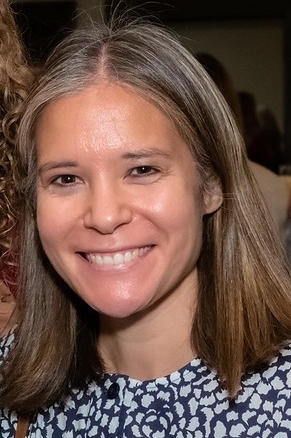
Elise Lockwood:
Computational thinking and activity are becoming an increasingly important aspect of what it means to conduct scientific and mathematical work. In light of this, there is a need for mathematics education studies that examine the ways in which students engage with computational tools as they reason about scientific and mathematical concepts.
In this talk, I provide an example of how such computational activity can support the desirable mathematical practice of generalizing. I provide data from an interview with a student who engaged in generalizing activity while using Python to solve combinatorial problems.
I connect his work to the literature on generalization and suggest that there are promising avenues to pursue in leveraging computing for such mathematical practices. I conclude by framing this work within ongoing efforts to better understand the nature of computational thinking and activity for undergraduate students.
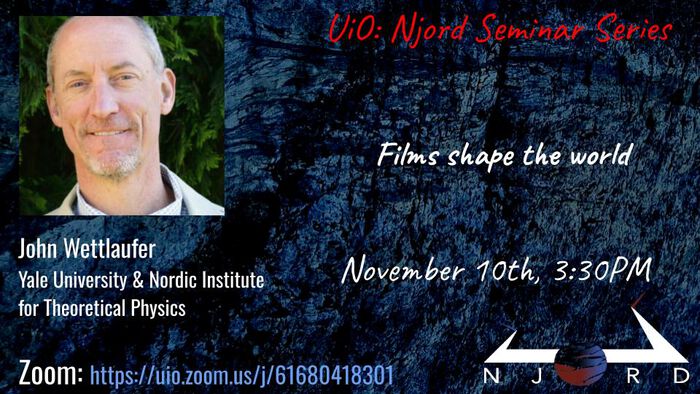
John Wettlaufer is a professor at both Yale and the Nordic Institute for Theoretical Physics in Stockholm.
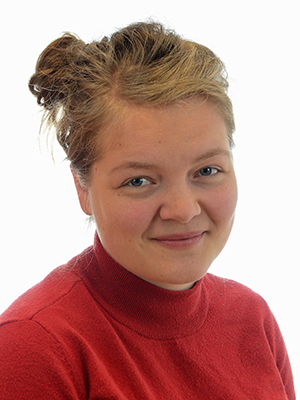
Doctoral candidate Christiane Færestrand Ellefsen at the Department of Pharmacy, Faculty of Mathematics and Natural Sciences, is defending the thesis "Structural and immunomodulatory properties of β-glucans from edible mushrooms" for the degree of Philosophiae Doctor.
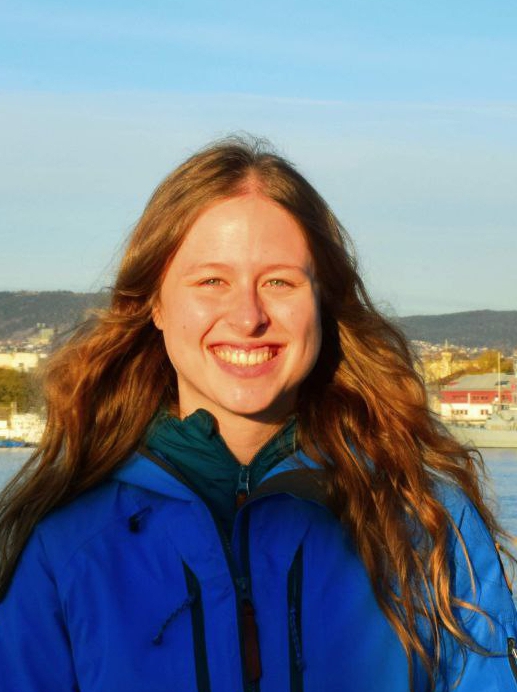
Florine Enengl will defend her thesis “Investigation of Ionospheric Plasma Structuring and Processes related to Auroral Particle Precipitation” for the degree of Philosophiae Doctor at the University of Oslo, Faculty of Mathematics and Natural Sciences.

Hylleraas seminar, hosted in Oslo

Your brain has its own waterscape: whether you are reading, thinking or sleeping, fluid flows through or around the brain tissue, clearing waste in the process. These biophysical processes are crucial for the well-being and function of the brain. In spite of their importance we understand them but little, and mathematical and computational modelling could play a crucial role in gaining new insight. In this talk, I will give an overview of mathematical, mechanical and numerical approaches to understand mechanisms underlying pulsatility, fluid flow and solute transport in the human brain. Topics include fluid-structure interactions, generalized poroelasticity, mixed finite element discretizations and preconditioning, uncertainty quantification, and optimal control.
Welcome to the GEOHYD Lunch Seminar Monday 10th of November @ 12:15 in Aud. 1, Geology building, or via video link using Zoom. The seminar is held by Trine Jahr Hegdahl (NVE).
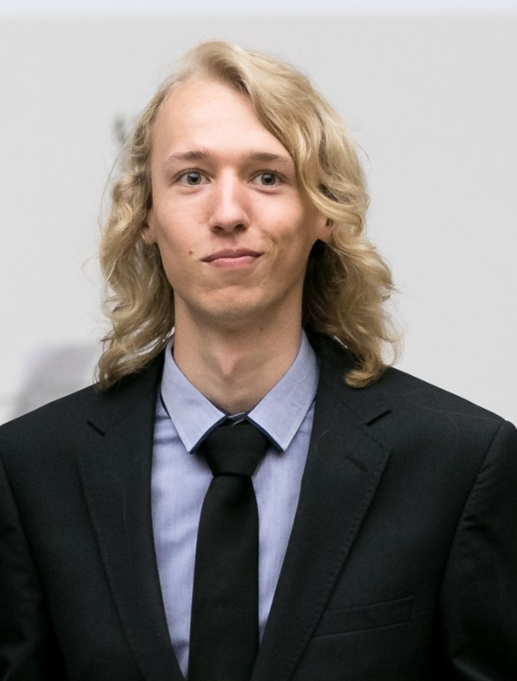
Pascal Sado will defend his thesis “Machine Learning in Auroral Image Research; Aurora Image Classification using Machine Learning Techniques and Substorm Forecasting” for the degree of Philosophiae Doctor at the University of Oslo, Faculty of Mathematics and Natural Sciences.

Welcome to the third UiO Growth House innovation hangout of 2023 – a meeting place for academia and industry. This hangout is a collaboration with Health2B and Norway Health Tech and focus on health technology.
Nest survival in the Black-headed gull
Title: Air Pollution and Climate Change in the Global South: from air sensors to supercomputers
Speaker: Daniel M. Westervelt, Columbia University
Welcome to our weekly lunch seminar held in the dScience lounge area!

As we bid farewell to 2023 and welcome the first hints of winter, we invite you to take part in "The Winds of STORM" workshop!
Amine Rusi El Hassani, University of Lausanne
Weekly Theory Seminar.

Gerd Kortemeyer and Guillame Schiltz from ETA Physics will hold a seminar about IA for education.
Gerd is Director of Educational Development and Technology at ETH Zurich, Switzerland. Dr. Guillaume Schiltz is Lecturer at the Department of Physics ETH Zurich, Switzerland.


Vidar Skogvoll:
The Learning Assistant (LA) program is KURT’s program for providing group teachers at the UiO MatNat Faculty with basic pedagogy and group management skills to lead effective seminars - implementing active learning, fostering discussion and encouraging attendance.
The LA-model was developed at the University of Colorado Boulder in 2002, has been subject to several research efforts demonstrating its impact and was implemented by Tor Ole Odden at UiO in 2018. In the fall of 2023, I took over the project and have completed my first iteration of the program with complete attendance from all 17 group teachers and received positive feedback.
In this talk, I will lay out the program as it was implemented this fall, share the feedback I have received, discuss reflections that I have made, and ask for your insight on areas of improvement.