Previous events - Page 95

Artificial intelligence and its rapid rate of development quickly changes both expectations and prerequisites for the development of research, business and society.

Title: Are Northern Hemisphere boreal forest fires more sensitive to future aerosol mitigation than to greenhouse gas driven warming?
Speaker: Robert J. Allen, University of California, Riverside

Welcome to our dScience lunch seminar in the Science Library, with Professor Anders Hansen from the University of Cambridge.

A two-day seminar for all PhD candidates who started their PhD at the MN faculty in autumn 2022 and 2023.
Dear all CEES members: We are pleased to invite you to the Annual CEES Student Conference. Everyone affiliated with CEES (students, staff and guests) should attend the conference.

Michelle Zandieh:
Over the past 10 years our team has developed the Inquiry-Oriented Linear Algebra (IOLA) curriculum, designed for a first course in linear algebra typically taken by students in the USA majoring in a wide variety of STEM fields. An offshoot of this team has worked with undergraduates to develop two digital games, Vector Unknown (VU) and Vector Unknown: Echelon Seas (VUES).
After a brief overview of the projects, this talk will look at examples of tasks and student thinking that allow us to reflect together about curriculum design choices. These choices range from (a) what experientially real setting to use for a task in IOLA, to (b) whether to use a paper and pencil task versus a digital game, to (c) the affordances and constraints of seemingly small changes made in game mechanics.

Doctoral candidate Thore Espedal Moe at the Institute of Theoretical Astrophysics, Faculty of Mathematics and Natural Sciences, is defending the thesis "Line formation in the magnetized solar chromosphere" for the degree of Philosophiae Doctor.

Cavitation is a ubiquitous and sometimes destructive, phenomenon. For instance, cavitation bubbles may interrupt water flow in plants or severely damage the surfaces of machines such as pumps and propellers. The so-called tribonucleation of vapor bubbles has been proposed to be responsible for the cracking sound produced by the manipulation of human synovial joints. To study cavitation up close we have developed an experimental setup where a sphere in water abruptly leaves a flat surface starting from a separation of only 10 nm.
Upon upward movement of the spherical surface, a cavitation bubble forms and develops branched fingers through the Saffmann-Taylor instability. Simultaneously, negative liquid pressures in the range of ∼10atm are observed. These large tension values occasionally lead to secondary nucleation events. The bubble sizes satisfy a predicted Familiy-Vicsek scaling law where the bubble area is proportional to the inverse bubble lifetime. The fact that creeping flow cavitation bubbles are more short lived the larger they are separate them from bubbles that are governed by inertial dynamics.

Doctoral candidate Gezime Seferi at the Department of Pharmacy, Faculty of Mathematics and Natural Sciences, is defending the thesis "Hippocampal lipid droplets and the gut microbiome: Effects of type 2 diabetes and exercise" for the degree of Philosophiae Doctor.
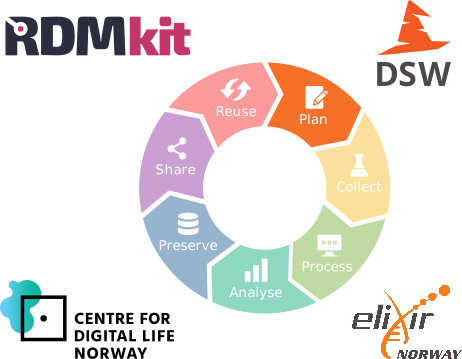
Generate a data management plan for a Life Science research project that will meet the requirements of Norwegian institutions

Doctoral candidate Stine Eidhammer Rognan at the Department of Pharmacy, Faculty of Mathematics and Natural Sciences, is defending the thesis "Clinical risk factors, and barriers in medication communication. A contribution to better patient care" for the degree of Philosophiae Doctor.

QOMBINE seminar by Satvik Singh (University of Cambridge): The PPT2 conjecture for diagonal unitary covariant map

Doctoral candidate Tamas Bisztray at the Department of Informatics, Faculty of Mathematics and Natural Sciences, is defending the thesis Investigating Privacy Aspects of Identity Management: From Data Protection Impact Assessment for Biometric Applications to Privacy-Centric Password Testing for the degree of Philosophiae Doctor.
Hylleraas seminar, hosted in Oslo
Richard Ho (Njord, UiO): "Minimal Model of Gastruloid Elongation"
Paula Reis (Njord, UiO): "A model for slow drainage with film-flow effects in porous media"
Syadhisy Dhanapal (Njord, UiO): "Under Stress"

PhD candidate Annette Taugbøl at the Department of Biosciences, Faculty of Mathematics and Natural Sciences, is defending the thesis "Salinity transitions, population differentiation and phenotypic plasticity in the threespine stickleback" for the degree of PhD.
Doctoral candidate Michele Giordano at the Department of Mathematics will be defending the thesis On stochastic control for Volterra type dynamics for the degree of Philosophiae Doctor.

PhD candidate Sverre Grødem at the Department of Biosciences, Faculty of Mathematics and Natural Sciences, is defending the thesis "Brain Plasticity, Extracellular Matrix Molecules, and Advancements in Calcium Imaging of Neural Activity" for the degree of PhD.
Welcome to the GEOHYD Lunch Seminar Friday 22th of September @ 12:15 in Aud 1, Geology building, or via video link using Zoom. The seminar is held by Kaytan Kelkar (University of Alaska Fairbanks).

Self-assembly is the spontaneous generation of order in systems driven by thermal agitation and interactions. At the molecular level, self-assembly plays an important role in the formation of giant com- plex macromolecules, being quite relevant for living systems. At the mesoscopic level, capillary driven self-assembly has been proposed for building structures in the gap between classical bottom-up and top-down fabrication methods, i.e. at the scales in between 10 micrometers and 1 millimeter. Although the method was proposed 20 years ago, only regular or simple structures were achieved so far. Using both experimental and statistical physics ideas, we demonstrate how to exploit subtle capillary interactions to create elaborate complex structures, as well as functional micromachines. On top of that, we show how such mescoscopic systems can be the analogues of many different physical systems such as folding molecules, molecular locks and keys, and crystal formation.
Experimental verification of histone gene proliferation in the Cuscuta genus
Welcome to an afternoon of Neuroscience Seminar with coffee, tea & buns. With Professor Emre Yaksi and Professor Tommaso Pizzorusso.

Title: Some surprising impacts of large-scale orography on global climate (online)
Speaker: David Battisti, University of Washington (online)
Identification of inhibitors of DNA-damage repair for cancer treatment: validation and investigation of candidate hits from flow cytometry based large-scale screens