Transition metal complexes (TMCs) are essential for a large range of different applications in renewable energies, energy storage, medicinal chemistry and more. Finding TMCs that have optimal properties for such applications is an expensive and time-consuming task as it traditionally requires experiments.
Computer-based methods can accelerate this process by screening a large number of TMCs for promising candidates beforehand. Particularly machine learning approaches that leverage existing data have recently drawn a lot of attention. However, most research in this field focuses on small organic molecules which are easier to handle due to their simpler chemistry.
This thesis presents four different and novel machine learning approaches, specifically designed for their application to TMCs. In particular they are:
- (1) a neural network leveraging quantum chemistry informed graph representations,
- (2) a genetic algorithm performing directional and multi-objective optimization,
- (3) a set of autocorrelation descriptors capturing bond-bond and atom-bond relationships, and
- (4) a generative neural network for the generation of novel ligands with specific properties.
In addition to these methods I also present two TMC datasets and discuss how they can be exploited for the computer-aided discovery of TMCs.
Place of defence: September, 27th 2024. Department of Chemistry, UiO
PhD-defence
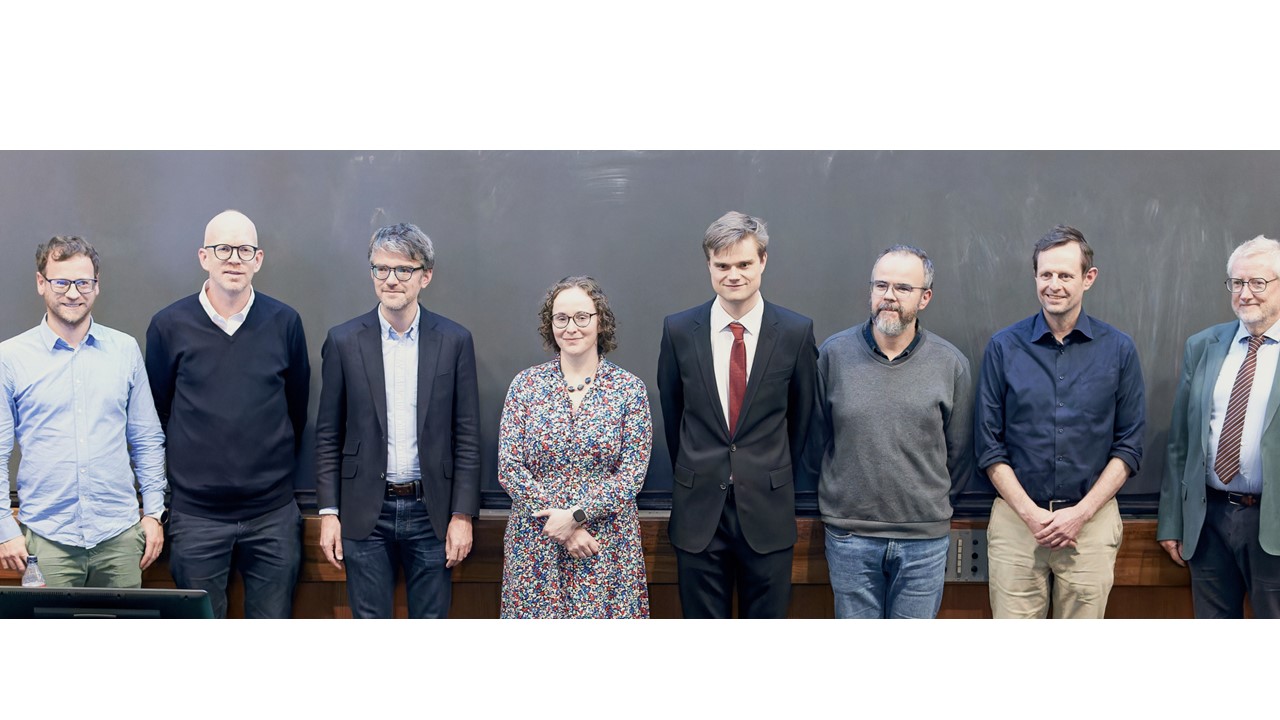
Members of the evaluation committee
Prof. Kim Jelfs, Imperial College London, UK
Prof. Kjell Jorner, ETH Zürich, Switzerland
Prof. Reidar Lund, UiO, Norway
Members of the supervisors committee
Senior Researcher David Balcells, UiO, Norway
Prof. Thomas Bondo Pedersen, UiO, Norway
Prof. Riccardo De Bin, UiO, Norway
Chair/leader of the defense
Prof. Truls Norby, UiO, Norway
Funding
Hannes had an MSCA position funded by the COMPSCI EU COFUND project hosted by the MN Faculty of the UiO.