Others - Page 7
By Matteo Fumagalli, Senior Lecturer, Queen Mary University of London, UK. Please sign up.

Open lectures on artificial intelligence and machine learning as tools in evolutionary biology. With Mackenzie Mathis and Matteo Fumagalli.
By Dr. Yan Wong from the Big Data Institute at the University of Oxford, UK

PhD candidate Tilde Katrina Slotte Hjermann at the Department of Biosciences, Faculty of Mathematics and Natural Sciences, is defending the thesis 'Habitat selection, migration timing, and grazing patterns of red deer in an agroecosystem' for the degree of PhD.
By Camilla Wikenros from the Swedish University of Agricultural Sciences, and Stein Joar Hegland from Western Norway University of Applied Sciences

PhD candidate Lars Lindsø at the Department of Biosciences, Faculty of Mathematics and Natural Sciences, is defending the thesis 'The role of small mammals in the enzootic cycle of Lyme disease in northern Europe' for the degree of PhD.

PhD candidate Ejigu Alemayehu Worku at the Department of Biosciences, Faculty of Mathematics and Natural Sciences, is defending his thesis 'The mountain nyala in changing landscapes: behavioral ecology, habitat suitability modeling, and land use land cover change' for the degree of PhD.
By Mick Westbury, the Globe Institute, University of Copenhagen
Diet variability in Norwegian killer whales (Orcinus orca): Evidence from quantitative fatty acid signature analysis (QFASA) and mercury levels
Effect of global changes on marine copepods: Influence of pyrene or salinity on thermal tipping points
Physiological and genotoxic effects of imidacloprid and temperature on the springtail Hypogastrura viatica

PhD candidate Sabrina Schultze at the Department of Biosciences, Faculty of Mathematics and Natural Sciences, is defending the thesis 'From the land to the sea: Dynamics and ecotoxicological implications of rising levels of terrestrially derived organic matter entering river and fjord systems' for the degree of PhD.
A scientific dive into meromictic lakes - Microbes and stratification as determinants of greenhouse gases
By Mirco Bundshu, Head of the iES Landau, from the Institute for Environmental Sciences, Germany
The paper we will discuss: “Regulatory evolution of innate immunity through co-option of endogenous retroviruses?” by Chuong et al. (2016)

The event is open to anyone interested in attending. Topics include: Scientific talks by EMBO community members, information on funding opportunities for life scientists in Norway, initiatives in scientific publishing and Open Science, and innovative publishing policies. Please register to attend.
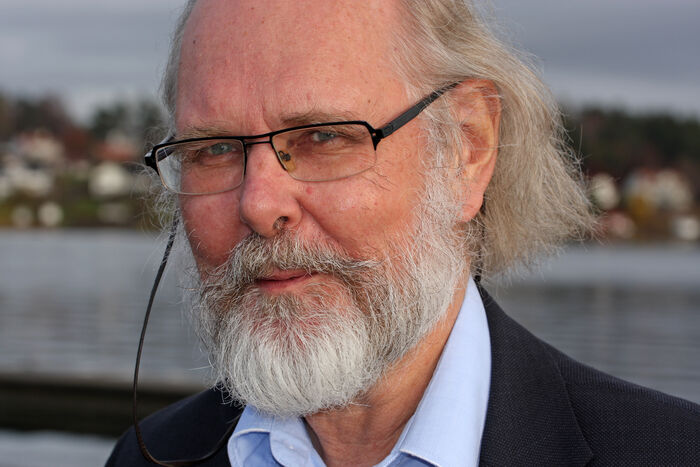
Nils Chr. Stenseth from CEES/IBV will give the talk: "Reconstructing the environmental, biological, and societal drivers of plague outbreaks in Eurasia between 1300 and 1900 CE (Synergy-Plague)"
In this talk, the ERC Synergy project on plague (Synergy-Plague) will be presented. Essentially, the interview presentation given before the ERC panel in Brussels on Sept 11, 2023 will be presented https://www.mn.uio.no/ibv/english/research/projects/synergy-plague/.
This will then be followed by a summary of how we got the this funding - the design of the project, the project development and the proposal writing, the preparation for the interview, etc.

At this seminar there will be four 20 minutes lectures by Isabel Barrio, Mathilde Defourneaux, Stefaniya Kamenova and James Speed. Organised by CEES, this seminar is open for all.

PhD candidate Siv Nam Khang Hoff at the Department of Biosciences, Faculty of Mathematics and Natural Sciences, is defending the thesis 'Elucidating genome-wide divergence and prevalence of chromosomal rearrangements in keystone Arctic teleosts' for the degree of PhD.
By Craig Primmer from the University of Helsinki, and Josefin Stiller from the University of Copenhagen
By Professor Adriana Sánchez from Universidad del Rosario in Colombia.
By Dorte Bekkevold, Senior Researcher at National Institute for Aquatic Resources, Technical University of Denmark
The REPEAT group (PIs: Kjetill S. Jakobsen and Melinka A. Butenko) are interested in the functional and evolutionary importance of short tandem repeats in genomes. Short tandem repeats are common, but hypermutable regions. This leads to a high number of short tandem repeat variants in a population. We have combined population genomics and experimental approaches to study the impact of short tandem repeat alleles in Arabidopsis, with emphasis on their role in gene regulation and how they impact protein function. Based on our findings from Arabidopsis, we conducted a study of repeats across 1,270 species, including animal, fungal, plant, and other eukaryotic genomes. In this seminar I will present the results from this (recently submitted) study.
NB: NEW DATE MAY 16.

This workshop will feature talks from esteemed scientists, covering topics such as zoonoses, spread of infectious diseases, animal movement and more. Registration to attend the event at the Academy is closed, but you can follow the event via streaming.