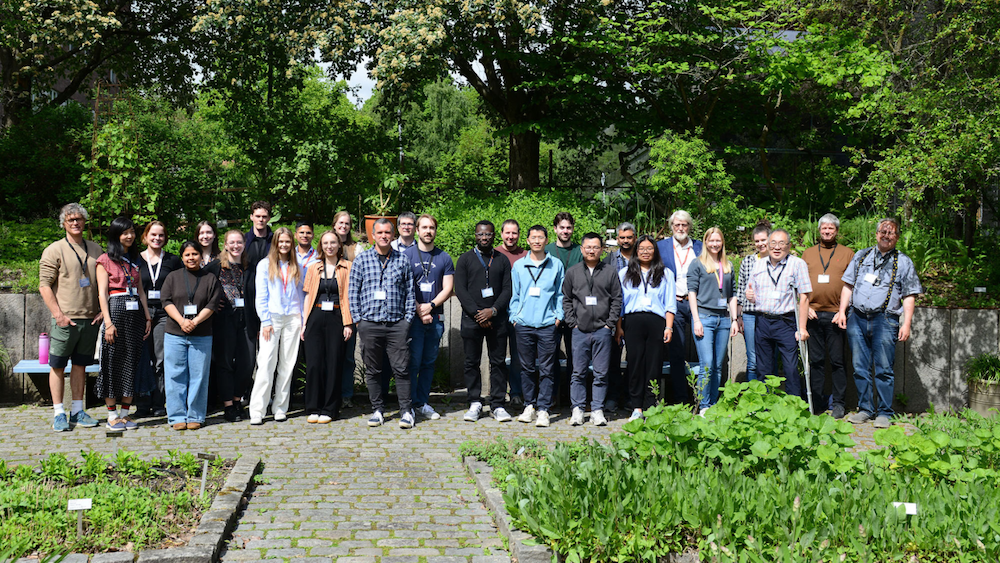
Continuing in a new building
Although Kristine Bonnevies Hus is now being thanked and retired as host, there are no plans to end NorMIC. On the contrary, the workshop series will continue in the new Life Science Building, where the organizers are looking forward to new opportunities in modern facilities. Still, they wanted to pause and mark the conclusion in a building that has been an ideal home for the course.
Kristine Bonnevies Hus is described as a warm, old building full of space, generosity, and a remarkable tolerance for the kind of young, bold experiments that have characterized NorMIC over the years.
Participants from across the Nordic Region
This year’s cohort clearly illustrated why the organizers continue their work. The majority of the students were still from the Oslo region, but this year two students travelled from Sweden and three from other Norwegian cities. Four of the participants had attended before, including one facility staff member who joined for the fourth time. The engagement and curiosity in the group are described as exceptionally high.
The organizers point out that we now live in an era when artificial intelligence can process microscopy images faster than any human expert. Precisely for that reason, they believe that courses like this are more important than ever: Students need to understand what is actually happening inside the “AI box”; how microscopes form images, and crucially, what can go wrong.
Fluorescence microscopy is inherently prone to artefacts and aberrations. The image formation process itself can, in a sense, be described as an aberration. Without a solid theoretical foundation, the organizers ask, how are researchers supposed to assess the quality of the results they obtain from AI tools? This is why NorMIC combines extensive theory lectures and optical lab exercises with the practical microscopy sessions that many other courses focus on exclusively.
A voluntary effort outside the system
NorMIC is deliberately kept open and independent, and is not integrated as a formal part of a PhD programme. This means that funding has to be secured anew for every single round. Over the years, the workshop series has been supported by, among others, Oddmund Bakke’s research funds, Digital Life Norway, BNMI.eu (NordForsk) and UiO: Life Science. Each time the course is planned again, the funding question is reopened.
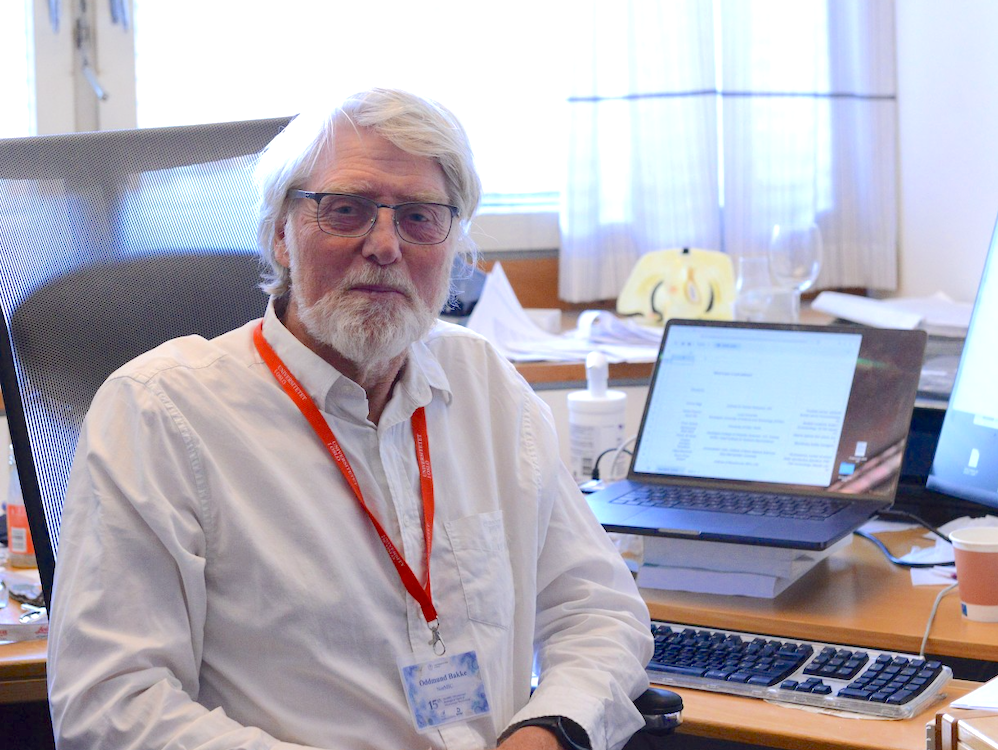
This entails a significant administrative burden for a small organizing team. It does not generate publications, formal credits, or clear entries in institutional reward systems. Nevertheless, NorMIC has now reached its 15th edition and can point to an alumni network of around 300 imaging and microscopy scientists across the Nordic region, in addition to many years of student feedback that the organizers describe as deeply motivating.
A Legacy from James Pawley
The inspiration behind NorMIC also has roots outside Norway. In 2007, Xian Hu, then a junior microscopy engineer in Singapore, received an unexpected email from microscopy pioneer James Pawley. Aware that funding was a barrier, Pawley offered a travel grant so the engineer could attend his course at the University of British Columbia in Vancouver. That gesture is described as career-changing.
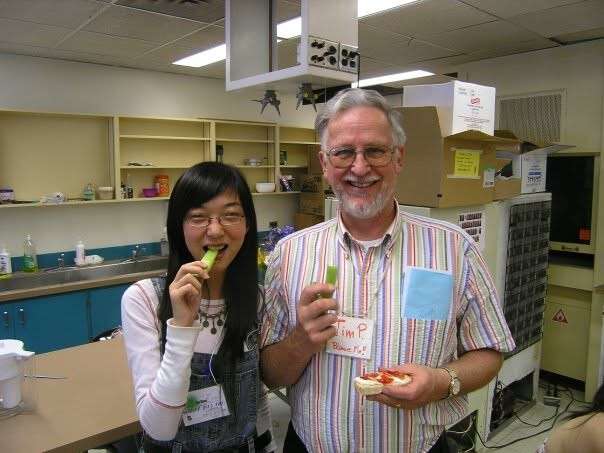
When NorMIC was later established at the University of Oslo, there was a hope of inviting Pawley back, not as an organizer, but to do what he loved most: teach. Pawley retired in 2013 and passed away in 2019, but his influence lives on in every lecture, every teaching setup, and every student who goes home seeing microscopy in a new way. NorMIC is now building its own traditions, its own scientific profile, and its own legacy.
Farewell to a building and eyes on the future
Kristine Bonnevies Hus will be missed for its slanting floors and its warm atmosphere. At the same time, the NorMIC team is looking forward to taking the step into the Life Science Building and further developing the workshop series in new surroundings.
With 15 editions behind it, a growing Nordic alumni network, and a clear scientific vision, NorMIC moves forward – from an old, beloved building to a new chapter in the service of life sciences.