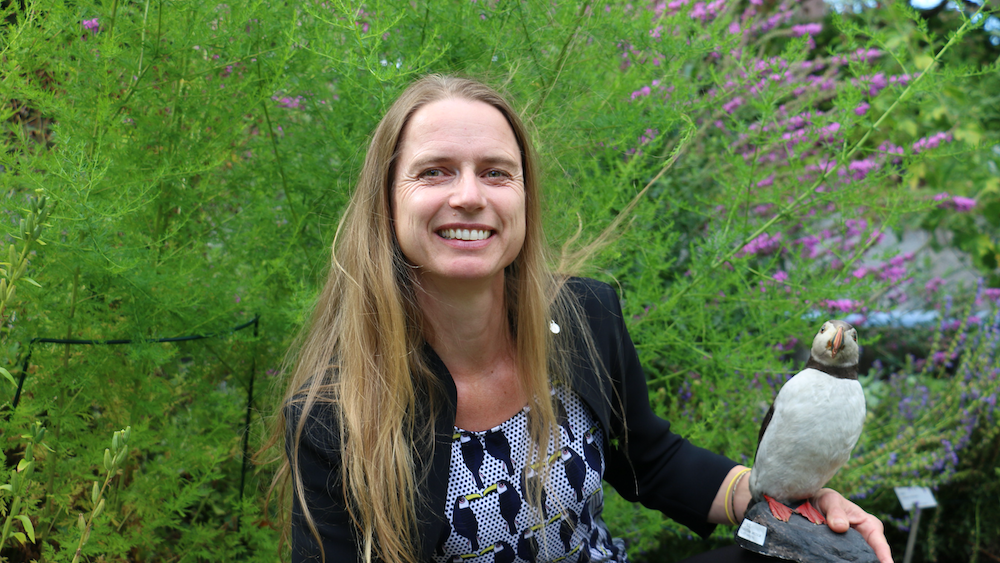
Professor Sanne Boessenkool from the Department of Biosciences at the University of Oslo is a partner in the ERC-funded project "Past Seabirds of Northern Europe – Archaeological Perspectives of Decline".
The project is led by Sam Walker from Bournemouth University and has received €1.5 million in funding from the European Research Council. Sam Walker is a zooarchaeologist and previously held a postdoctoral position at the Department of Biosciences at the University of Oslo.
The Past Seabirds project will investigate the relationship between humans and seabirds over the past 10,000 years in order to understand current seabird declines and improve conservation measures.
Ancient DNA and seabird tipping points

Sanne Boessenkool is responsible for analyses of ancient DNA from, among others, puffins and eider ducks. These analyses will be used to reconstruct historical changes in population structure and migration patterns in the North-East Atlantic.
The project aims to identify both ecological and cultural tipping points for seabirds – moments and situations where human activity, climate change or other factors have led to lasting changes in seabird populations. The goal is to develop evidence-based conservation practices that can help reverse today’s negative trends.
Boessenkool emphasizes the importance of the broad approach:
“The Past Seabirds project brings together many different kinds of data. This approach to study long term trends in seabirds is unique and will help us build a much clearer picture of how seabird populations have changed over thousands of years.”
Long timeframes for better conservation

Past Seabirds combines archaeology, zooarchaeology, ancient DNA, isotope analyses and ecological modelling to study one of the world’s most threatened groups of animals, with one in three seabird species at risk of extinction. By combining archaeological finds with modern laboratory techniques, the researchers will establish historical reference values for seabird population size, diet and habitat use.
This long-term perspective provides an important supplement to current conservation work, which often relies on relatively short-term ecological data. By looking back 10,000 years, the project can reveal both vulnerability and resilience in seabirds. It will also be possible to highlight human practices that may have contributed positively, such as traditional sustainable eiderdown harvesting.
European collaboration led from Bournemouth
The project is led by Dr Sam Walker at Bournemouth University, with partners at the University of Oslo, the University of Kiel, Cardiff University, UiT The Arctic University of Norway, the University Museum of Bergen, BirdLife International and the British Trust for Ornithology.
Read more about the Past Seabirds project on Bournemouth University’s website.