
Plant physiology is my special field with a focus on eco- and stress physiology. I have worked with the effects of air pollution on plants, in particular the effects of ground-level ozone. Crop plants and plants from natural vegetation were used in the studies of ozone effects conducted in the field and in the Phytotron at the Department of Biosciences under environmentally controlled conditions and facilities for creation of different climatic and stress scenario. The severity of the ozone injuries of the plants, are dependent on the ozone concentration in the air and the stomata opening which regulate the ozone uptake and the plants daily dose of ozone. The ozone induced injuries seemed to be more serious in northern part of Europe even though the ozone concentration in the air was lower. A long photoperiod in the summer time is characteristic for the northern part of Europe, which increase stomata opening time and the ozone uptake. In addition the long photoperiod seemed to enhance the plants ozone sensitivity and thereby increase the ozone induced injuries. This was a phytochrome-mediated response, with a short night or a long night regulating response pathways. Short night (long day) increased the ozone injuries.
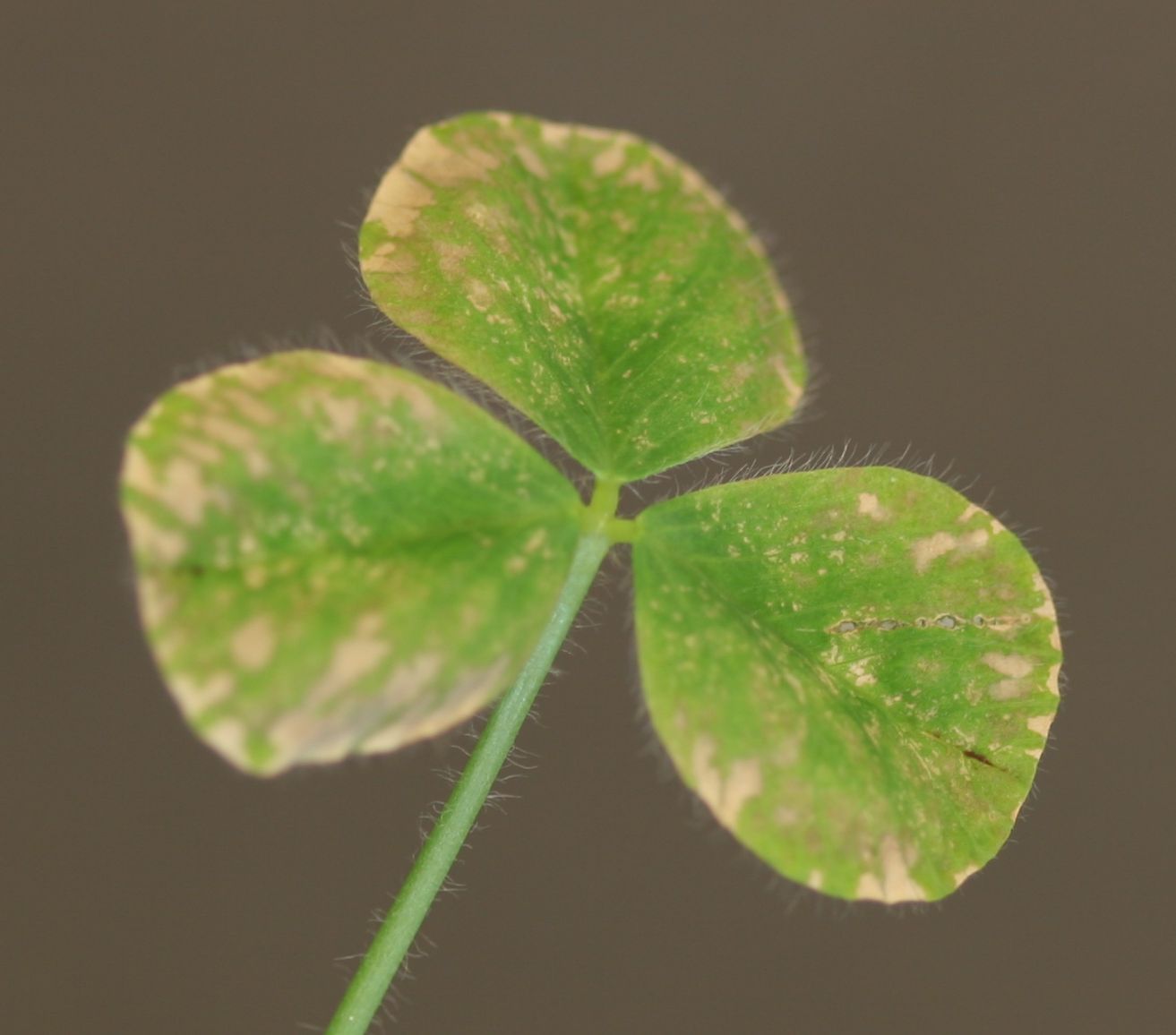 Subclover (Trifolium subterraneum) is used as a biological indicator as it displays visible damage to leaves at low levels of ozone.

Ozone damaged leaves analyzed in vivo with infrared picture Technology
Since 2012 the research projects have been concentrated on alternative and insecticide free protection of conifer seedlings against pine weevils (Hylobius abietis) feeding on the stem bark. At reforestation up to 80 to 90 % of the seedlings can be killed. Treatment of the seedlings with insecticide have been a solution of this problem, but the use of insecticides have a negative effect on the environment in the forest, on pollinating insects and the people handling seedling either in the nurseries or in the forest.
From 2012 to 2015 an alternative protection method was developed further at the EU-WeevilSTOP project (supported by the EC 7th framework program) which represented fifteen partners and seven different countries. This alternative method consisted of a wax cover on the spruce seedling stem from the root neck and half up the stem. The conifer seedlings should be protected for two years by means of the physical barrier the wax cover created. The biological effects of wax on the conifer seedlings were studied thoroughly and the experiments were conducted both in the field and in the Phytotron. A prototype of an automatic waxing machine was developed.
A new research project, ALVOGRAN, from 2015 to 2017 continued to test the wax protection properties and the biological effects of the wax, the spruce seedlings age and the root mass. The protection capability of wax was compared to insecticide (Merit Forest, Neonicotinoid) treatment method. After two years the wax protected had the highest number of living seedling and the lowest number of plants attacked pine weevil. The field area, a clear-cut coast forest had a heavy pine weevil problem.
The research project BiVaGran started in 2016 and will be finished in 2017. The wax is warm (80 o C) and fluid when conifer seedling stems are covered with wax. The seedlings are immediately cooled in cold water and heating effects are avoided. This heat stress will be tested, temperature gradients from the bark into the phloem and xylem measured and heat stress effects on different parts of the seedlings tested. This project will collaborate with the University of Swansea about mixing additives the wax formula to increase the range of uses.