Trial lecture: 'The emergence of imaging approaches in 3D genomics - applications and implications'
Time and place: 28 Feb. 2024, 10:15 AM, Nucleus, Bikuben, Kristine Bonnevies hus
The events will also be live streamed using Zoom. The host of the session will moderate the technicalities while the chair of the defence will moderate the events.
The events opens for participation just before they start, and closes for new participants approximately 15 minutes after it has begun.
Main research findings:
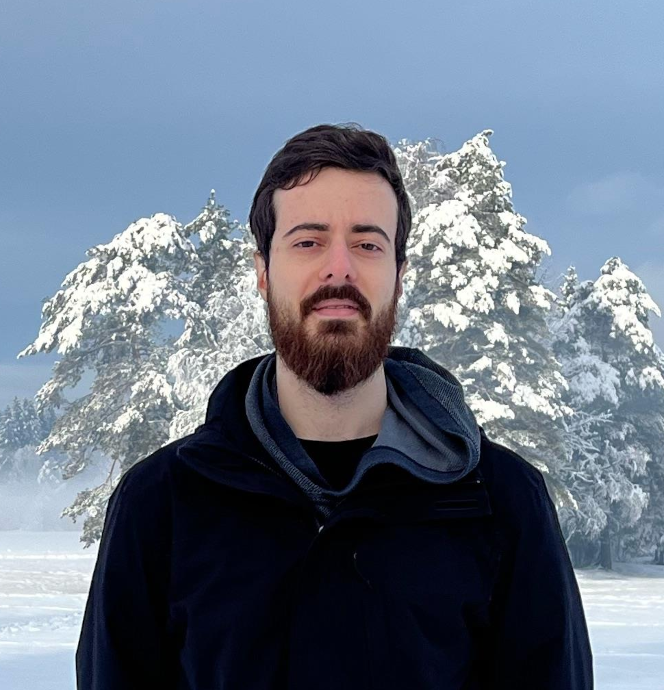
Characterizing the genomes of living organisms increasingly involves extensive use of computational tools for data processing and analysis. During my PhD, I have developed and utilized computational tools to improve our understanding of how genomes are organized in three dimensions (3D). During my PhD, I developed MoDLE, a rapid computational tool that simulates a process known as DNA loop extrusion, a crucial biochemical process playing a key role in organizing the genome, regulating gene expression, and repairing DNA. Further, I developed hictk, a toolkit to efficiently process 3D genome mapping data such as Hi-C, enabling researchers to operate on multiple file formats, something that was not previously possible. Finally, in the last part of my PhD, I studied how the 3D genome is disorganized in breast cancer cells. From our analyses, we uncovered that the 3D genome organization is compromised during breast cancer progression, revealing a multi-level genome disorganization that disrupts oncogene regulation, potentially driving breast cancer progression. Taken together, my work highlights the importance of high-quality and high-performance computational tools, as these are crucial to characterizing biological processes such as the progression of cancer.
Adjudication committee
Professor Dr. Argyris Papantonis, Georg-August-Universität, Göttingen
Dr. Nicolas Servant, Institut Curie, Paris
Professor Marianne Fyhn, Department of Biosciences, University of Oslo
Chair of defense
Professor Paul Grini, Department of Biosciences, University of Oslo
Supervisors
Professor Jonas Paulsen, Department of Biosciences, University of Oslo
Professor Torbjørn Rognes, Department of Informatics, University of Oslo