The defense will also be live streamed using Zoom. The host of the session will moderate the technicalities while the chair of the defense will moderate the disputation.
The event opens for participation just before it starts, and closes for new participants approximately 15 minutes after it has begun.
Trial lecture: 'On the interplay between movement and physiology in animals'
Time and place: June 2, 2025 10:15 AM, Nucleus, Bikuben, Kristine Bonnevies hus
Main research findings:

Animal movement is a pervasive phenomenon that shapes and connects ecosystems. In the ocean, the movements of apex and mesopredators – such as sharks – play a vital role in structuring lower trophic levels and maintaining vertical and horizontal connectivity.
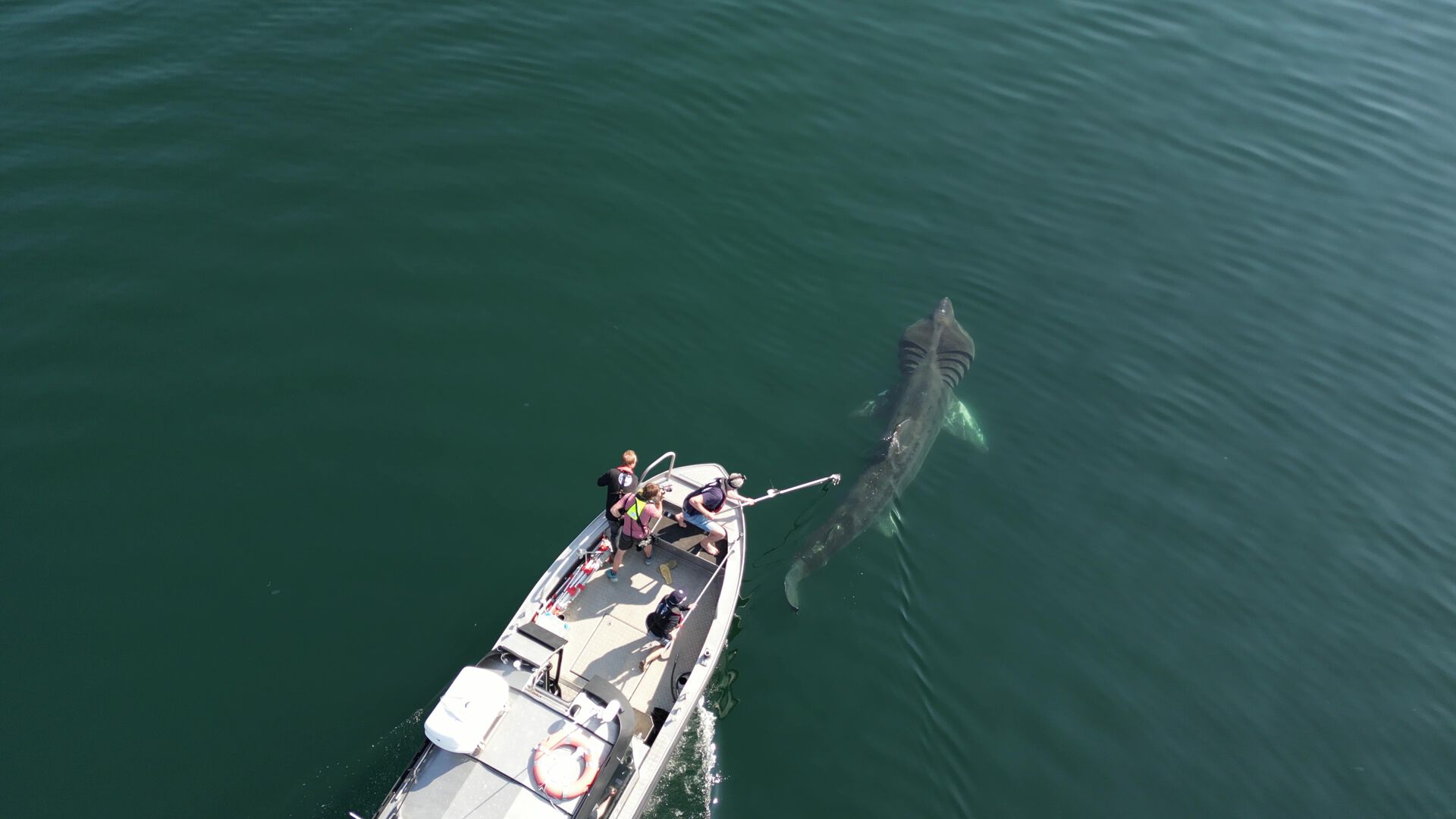
This dissertation investigated the movement ecology of two ecologically distinct shark species inhabiting boreal waters: the bentho-pelagic, mesopredatory spurdog (Squalus acanthias) and the pelagic, plankton-feeding basking shark (Cetorhinus maximus). Employing satellite telemetry and comparative morphology, it examined both vertical and horizontal movement patterns and habitat use across seasons and environmental gradients as well as the capacity to retain body heat in certain body regions.
Findings reveal that shark movements are highly context-dependent, with prey distribution emerging as a key driver. At the northern range edge, thermal preferences also appear influential. Ectothermic spurdog may seek warmer waters before parturition, while morphologically inferred regional endothermy in basking sharks, combined with their large body size, likely supports observed cold-water tolerance and long-distance migrations averaging 30° in latitude – exceeding those of individuals from the centre of distribution.
These insights advance understanding of year-round habitat use and movement dynamics in threatened shark species at high latitudes, providing a foundation for adaptive, evidence-based management in rapidly changing boreal ecosystems.
Adjudication committee
Assoc. Prof. Yannis Papastamatiou, Florida International University
Senior Researcher Eva Bonsak Thorstad, Norwegian Institute for Nature Research
Prof. Dag Hessen, Department of Biosciences, University of Oslo
Chair of defense
Prof. Alexander Eiler, Department of Biosciences, University of Oslo
Supervisors
Researcher Claudia Junge, Institute of Marine Research (Havforskningsinstituttet)
Assoc. Prof. Øystein Langangen, Department of Biosciences, University of Oslo
Researcher Mikko Vihtakari, Institute of Marine Research (Havforskningsinstituttet)
Principal researcher Nuno Queiroz, CIBIO, University of Porto