Global climate change and pollution are major threats to ecosystem integrity and biodiversity, and challenge a sustainable future. Climate change affects accumulation and effects of pollutants in organisms, so-called climate-induced toxicant sensitivity.
SoilStress
In SoilStress, we address mechanisms underlying cumulative effects, recovery, and ecophysiological tipping points from multiple stressor disturbances (climate change and pollution). We study complex questions of:
- Why key biological responses to multiple stressors (climatic stress and agricultural used pesticides) differ between populations, micro-climate and climatic regions;
- Why tolerance to pesticide exposure decreases with temperature stress; and
- If the tipping point to disturbance by temperature and pesticides, and recovery from disturbance removal, depends on the populations phenotypic plasticity and/or genetic adaptation.
Springtails as model system
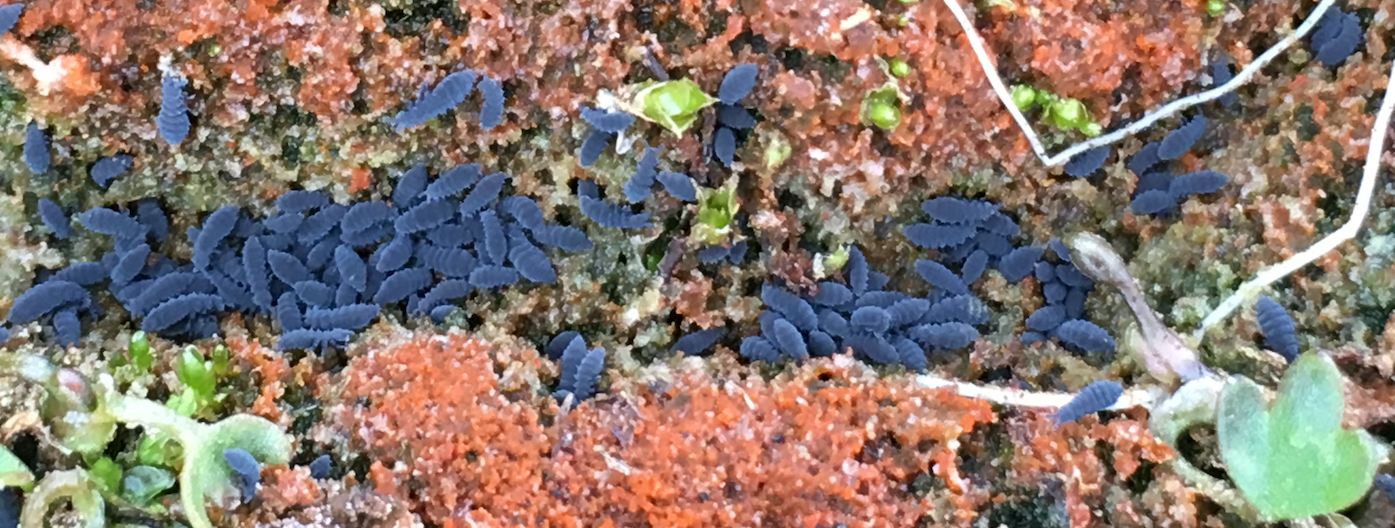
As our model system, we study springtails (Collembola), key terrestrial ectothermic invertebrates of the soil community.

Population dependent responses will be addressed in a field study, comparing acute responses within and between temperate and arctic populations. Underlying mechanisms of temperature dependent pesticide tolerance will be addressed by in depth laboratory experiments.
To reflect responses in integrated aspects of cellular and organismal physiology, we analyse links between stressor exposure and energy allocation by measuring metabolic rate, transcriptomics, metabolomics/lipid fingerprint and fecundity. Combined with our previous multiple stressor studies, the results will contribute to understanding diversity in biological responses to multiple stressors across ecosystems, which is urgently needed for sustainable pesticide management and food production.
International and interdisciplinary team
The excellent team is international and interdisciplinary, combining ecotoxicology, ecology, genetics, analytical chemistry, ecophysiology and population modelling, and includes Master students, PD, researchers, and professors.