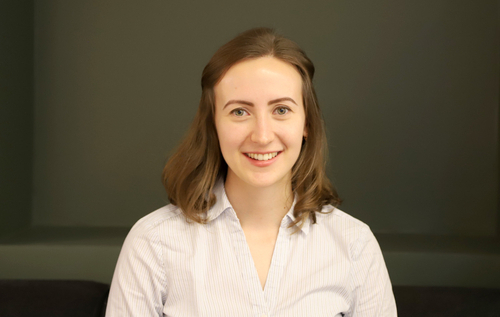
The PhD defence will be in Gamle festsal, Domus Academica. The chair of the defence will moderate the disputation.
Ex auditorio questions: the chair of the defence will invite the attending audience to ask ex auditorio questions.
Trial lecture
"Machine Learning for Code Generation"
Time and place: September 23, 2024 11:15 AM, Gamle festsal, Domus Academica
Main research findings
How many LLMs do we need to write code without errors?
In software engineering, finding and fixing errors in code, also called “bugs,” is often complicated and time-consuming. To ease “debugging” or removing those errors, We have explored different ways to use Large Language Models (LLMs). LLMs are usually built as neural networks with many layers. This thesis presents how cutting off (pruning) layers from LLMs can both succeed in error detection and ensure faster training of the models, thereby making algorithms more sustainable. Moving from bug detection to bug fixing, the work contains two solutions for automated debugging that do not require extra model training. In one solution, we mimic so-called “rubber duck debugging” widely (and often humorously) used by software engineers. Thereby, one LLM writes programs while another LLM revises the code and finds mistakes. In another solution, we try to lose coding errors on the way during a round-trip translation. We translate buggy code from the original programming language to another and back so that errors get eliminated due to regression toward the mean error-free code. In both approaches to automated debugging, we solve unique bugs that are not fixed by LLMs or other specialized algorithms when they are used in a regular way. Overall, this dissertation showcases how LLMs can be used creatively to aid in software engineering tasks and reflects on energy usage of LLMs for software engineering.
Adjudication committee:
- Professor Martin Montperrus, KTH Royal Institute of Technology, Sweden
- Assistant Professor Jie Zhang, King’s College London, UK
- Professor Pål Halvorsen, Simula Research Laboratory, Norway
Supervisors:
- Professor Leon Moonen, Simula Research Laboratory
- Professor Magne Jørgensen, Simula Research Laboratory
Chair of defence:
Professor Xing Cai, Department of Informatics, University of Oslo
Contact information at Department: Mozhdeh Sheibani