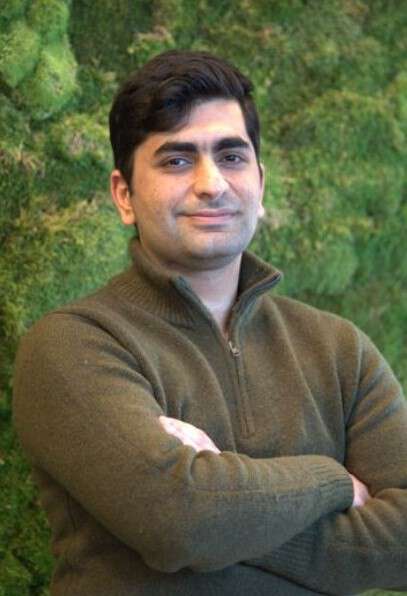
Trial lecture
Viable Business Models for Integrating Energy Communities into Grid Operations: Finding the Breakeven Point through Uncertainty Modelling, Optimization Methods, and Power Market Interactions
Time and place: April 23, 2026 11:15 AM. Kristen Nygaards sal (5370), Ole-Johan Dahls hus.
Main research findings
Think of it as Uber for electricity. Instead of hailing rides, neighbors trade solar energy through a smart grid that adapts in real-time. This research on digitalized energy systems brings that vision closer to reality.
Prosumers (people who both produce and consume electricity) increasingly want to trade energy locally. But traditional grids weren't built for this. They were designed for one-way power flow from centralized plants to passive consumers, not for peer-to-peer exchange. Coordinating millions of independent actors to trade energy safely is highly complex.
This dissertation develops practical solutions. It creates data-driven algorithms that enable autonomous energy trading in local markets. The research makes three key contributions: a framework defining energy autonomy across communication, control, and infrastructure; distributed learning algorithms for peer-to-peer trading ; and privacy-preserving methods that protect prosumer data during energy management.
The work lays foundations for decentralized energy systems where communities manage their own renewable resources. This represents a vital step toward climate-resilient grids that combine environmental sustainability with individual empowerment.
Adjudication committee
- Associate Professor Pedro Crespo del Granado, NTNU, Norway
- Assistant researcher Zenaida Mourão, INESCTEC, Portugal
- Associate Professor Omid Mirmotahari, University of Oslo
Supervisors
Associate Professor Matin Bagherpour, University of Oslo, Norway
Professor Frank Eliassen, University of Oslo, Norway
Chair of defence
- Professor Michael Welzl, Department of Informatics, University of Oslo, Norway
Contact information at Department: Mozhdeh Sheibani Harat