Single crystals are used as X-ray diffraction analysis to determine molecular 3-D structure, such as products related to potential drugs. Protein crystallography is the traditional technique for the structure elucidation of proteins and other macromolecules, and continues to be one of the most important techniques today. It is best used in combination with other structural biology techniques (NMR spectroscopy, cryo-EM, HDX-MS) and molecular modeling, together referred to as integrative structural biology.
Facilities at the Department of Chemistry
The X-ray diffraction laboratory at The Department of Chemistry is part of the Norwegian National Resource Centre for X-ray Diffraction and Scattering (RECX). The centre coordinates the leading X-ray laboratories at UiO and NTNU.
The Department of Chemistry, UiO, houses a state-of-the-art Raman spectrometer and is among the most advanced in Europe
The Department of Chemistry, UiO, houses a state-of-the-art Raman spectrometer and is among the most advanced in Europe.
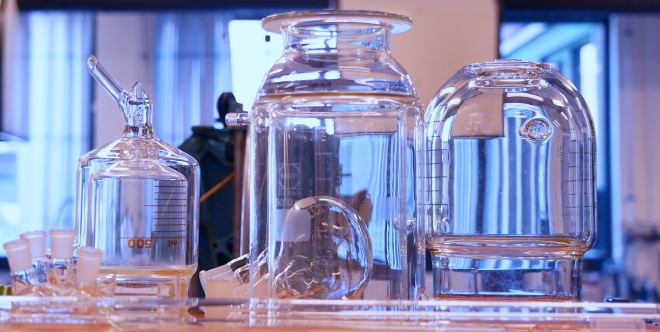
Production and repairs of glass equipment.
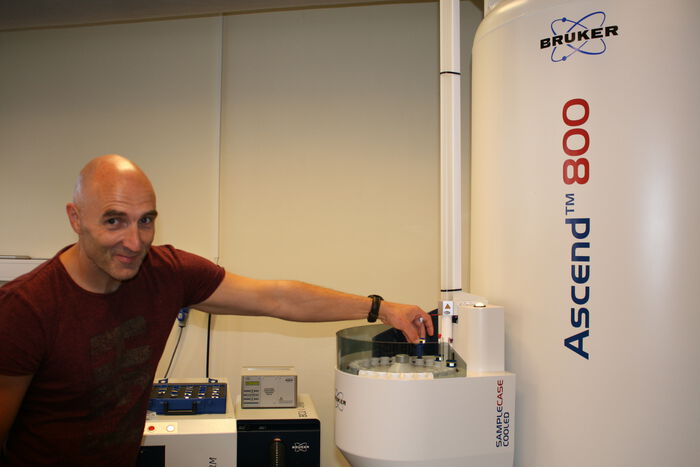
The Department of Chemistry maintains and operates an advanced state-of-the-art NMR laboratory with a fleet of 8 instruments in the range from 200 MHz to 800 MHz.
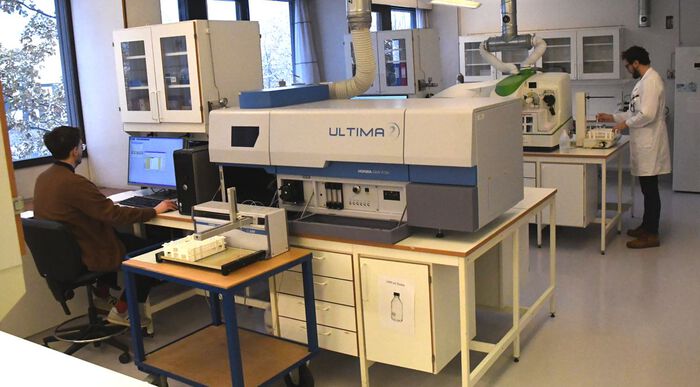
The Mass Spectrometry Laboratory offers a wide range of services.
Nuclear Chemistry at Blindern Campus rents out workspace in radiochemical laboratories and access to high-quality nuclear detectors. Included is radiation protection supervision and services.