VICCO VISTA Centre for CO2 Storage in Volcanic-Sedimentary Systems

Photo: Oslo Rift: Cores of basalt from the Oslo Rift with light patches of calcite—a mineral that contains bound CO2. These cores can teach us about how volcanic rocks can be used for permanent CO2 storage. Image: Installation, Svensen's exhibition, Asker 2024. Photo: GK Tjoflot/UiO.

Cores of basalt from the Oslo Rift with light patches of calcite—a mineral that contains bound CO2. These cores can teach us about how volcanic rocks can be used for permanent CO2 storage. Image: Installation, Svensen's exhibition, Asker 2024. Photo: GK Tjoflot/UiO.

Duration
01.01.2025–31.12.2029

CO2 storage involves capturing and sequestering carbon dioxide deep underground to mitigate climate change. With the VICCO Centre we aim to explore the potential for large-scale permanent CO2 storage in volcanic-sedimentary systems through carbonate mineral-forming reactions. Carbonatization may enhance the seal integrity of the reservoir and reduce reservoir leakage risks in mixed volcanic-sedimentary systems. 

Contact

  • Henrik H. Svensen
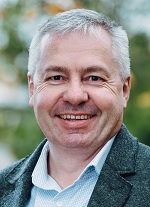
    Henrik H. Svensen Department of Geosciences, University of Oslo Professor and Centre Leader

Events and talks

No upcoming events

Large-scale CO2 storage in volcanic-sedimentary systems on the Norwegian continental shelf

The overarching goal of the VICCO Centre is to explore the potential for large-scale permanent CO2 storage in volcanic-sedimentary systems on the Norwegian continental shelf, specifically by investigating carbonate-forming reactions in submarine magmatic rocks. Such carbonatization may enhance seal integrity in related CO2 reservoirs and reduce reservoir leakage risks in mixed volcanic-sedimentary systems. Carbonation processes can ensure permanent storage of CO2 by reducing the risk of reservoir leakage in the volcanic-sedimentary systems beneath the seabed.

CO2 can be stored through Carbon Capture and Storage (CCS) or Carbon Dioxide Removal (CDR), with the success of both approaches critically depending on safe, long-term storage in geological reservoirs. VICCO will characterize, de-risk, and verify poorly studied CO2 reservoirs in the North Sea and along the Atlantic margin, applicable to both CCS and CDR.

Adopting a multi-disciplinary approach, VICCO will investigate complex volcanic-sedimentary systems with highly reactive mafic rocks, widespread offshore Norway, which have potential for permanent carbon mineralization of large quantities of CO2. 

The Vision and Objectives of VICCO
Logo for the VICCO Centre: VISTA Centre for CO2 Storage in Volcanic-Sedimentary Systems
www.mn.uio.no/vicco

Our Vision: Unlock new opportunities for gigaton CO2 storage on the Norwegian Continental Shelf by exploring novel mixed sedimentary-volcanic environments that facilitate rapid, low-risk permanent carbon storage through mineralization.

Primary Objective: Increase CO2 storage potential by advancing the understanding of complex mixed volcanic-sedimentary basins and high reactivity mineralization zones for permanent storage as carbonate minerals.

Through cross-disciplinary research between geologists and physicists, the Centre will provide a multi-scale characterization of the mineral carbonation processes that may occur in heterogeneous reservoirs.

Our approach ranges from the nano-scale porosity structure and reaction mechanisms, to mineralization in fractures and pores at the core scale, to the large scale storage potential and mineral trapping of CO2 in the basins offshore Norway.

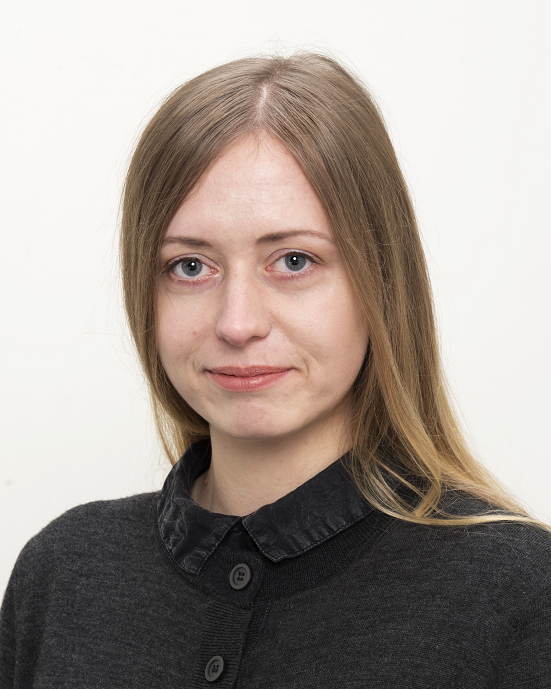
Participants

Funding

VICCO is funded as a VISTA centre through the The VISTA programme for interdisciplinary basic research by Equinor in collaboration with The Norwegian Academy of Science and Letters (DNVA). VICCO has been awarded 25 million kroner in a 2024 call for proposals on the theme of energy transition. The funding is for a five-year period, from 2025 to 2029, with additional funding from The Faculty of Mathematics and Natural Sciences, University of Oslo.

Collaborators

The Department of Geosciences, The Faculty of Mathematics and Natural Sciences, at University of Oslo is the host of the VICCO Centre. The lead is Professor of Geology Henrik H. Svensen, from the host-department. 

The research has a multidisciplinary approach and is a collaboration between researchers from these departments: 

In addition VICCO will work together with an international team of leading researchers within the research field of CO2 storage.


Scientific advisory board

VICCO has an advisory board that consists of Jana Olavsdottir, Sascha Bussat, and Helen King.

About us

VISTA Centre for CO2 Storage in Volcanic-Sedimentary Systems (VICCO)

Hosted by: The Department of Geosciences, The Faculty of Mathematics and Natural Sciences, at University of Oslo, Norway

ShortLink: www.mn.uio.no/vicco

Related research projects

Research infrastructure


Aknowledgement for support to:


Logos: Aknowledgement Vista, DNVA and Equinor

Norwegian version of this page
Published Nov. 21, 2024 1:32 PM - Last modified Nov. 11, 2025 1:57 PM