Delta på disputasen
PhD disputasen og prøveforelesningen vil foregå 100% fysisk. Rommet åpnes for deltakelse like før disputasen starter, og stenger for nye deltakere omtrent 15 minutter etter at disputasen har startet.
Delta på prøveforelesning - 29. november kl. 10:15 (Aud. 209, Svein Rosselands Hus)
"The Formation and Evolution of Galaxies in the Context of the Large-Scale Structure of the Universe"
Kreeringssammendrag
Strekt gjennom det kosmiske nettet, mellom de lyse galaksehopene og filamentene, finnes enorme områder nesten fullstendig uten materie: kosmiske tomrom. Selv om de er tomme, kan disse mørke områdene i rommet gi svar på den kompliserte fysikken bak mørk energi, og til og med gravitasjonens natur, hvis vi bare vet hvor vi skal lete.
Hovedfunn:
Though a young probe in a young field, cosmic voids are proving to be a promising way to study cosmology. Over the past one hundred years, cosmologists have been trying to explain the observed expansion of the Universe. Whether this expansion is driven by a new form of energy (called dark energy) or a modification to the laws of gravity is still an open question. By measuring the spatial relation of voids and the galaxies that surround them, we can explore both possibilities at the same time.
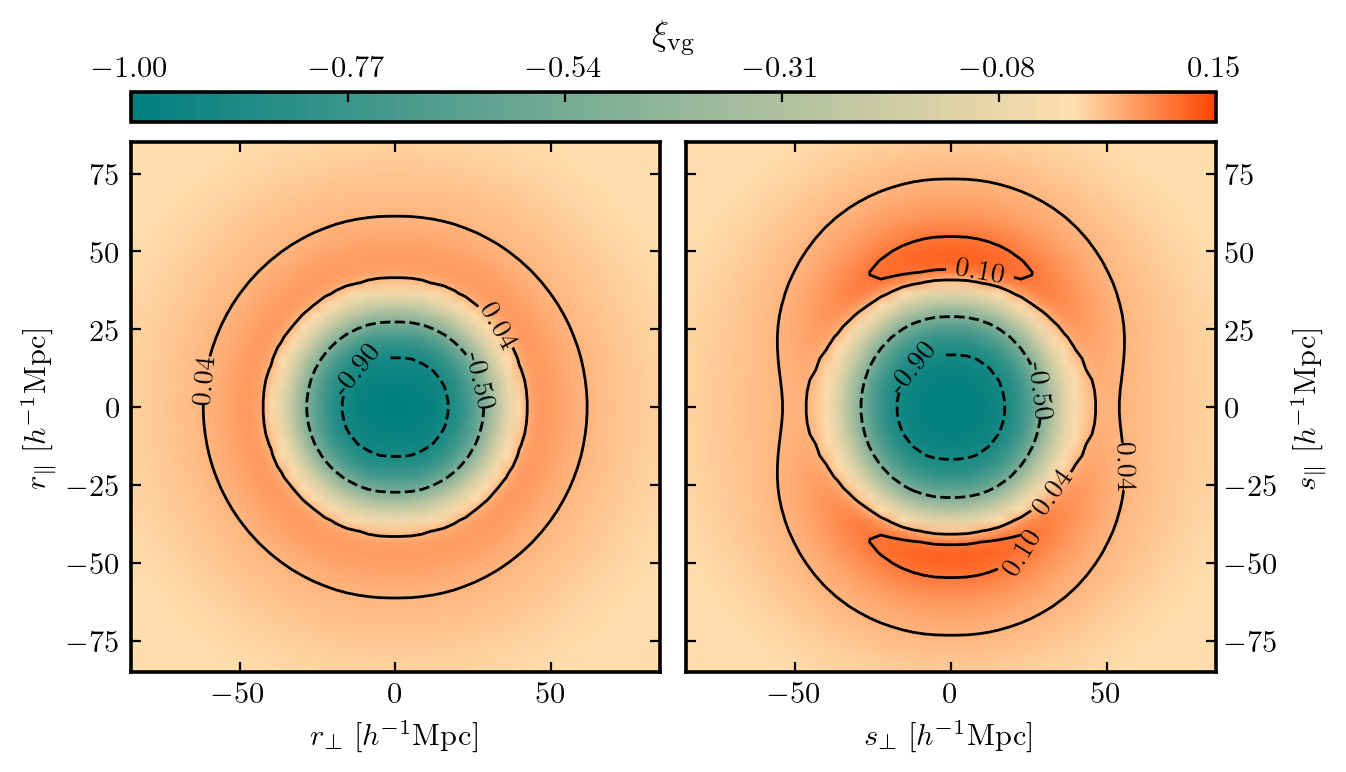
However, two observational effects complicate this measurement, creating geometrical and dynamical distortions in the observed cosmic web. Luckily, this is a feature, not a bug! Dynamical distortions, known as redshift-space distortions, arise due to the motion of galaxies under the effect of gravity and can help us study it. Geometrical distortions, on the other hand, arise from mistakes in our assumptions, and can relate the Universe as we see it to the way it really is. This effect, called the Alcock–Paczyński effect, can help us pin down the amount of dark energy in the Universe, as well as its evolution in time.