
Kosio Beshkov is a PhD Candidate at the Section for Physiology and Cell Biology (FYSCELL), Department of Biosciences, UiO. He is also part of the CompSci doctoral program. He will be defending his thesis for the degree of PhD, which was submitted for evaluation on the 7th of June of 2024.
From the CompSci team we wish you good luck and all the best in your future endeavors!
→ Read more about the disputation in the website of the Department of Biosciences
Programme
10:15 – Trial lecture: "Dimension reduction of higher dimensional data"
13:15 – Disputation: "Neural Representations and the Topology of Cognition"
This event is open for everyone. No registration needed.

PhD candidate
Research group | Section for Physiology and Cell Biology
Main supervisor | Gaute Einevoll
Co-supervisor | Fyhn & Malthe-Sørensen
Affiliation | Department of Biosciences, UiO
Contact | constb@ibv.uio.no
Adjudication committee
Prof. Kenneth Harris, University College London
Prof. Nils Baas, Norwegian University of Science and Technology (NTNU)
Prof. Eivind Valen, Department of Biosciences, University of Oslo.
Chair of defense
Assoc. Prof. Jonas Paulsen, Department of Biosciences, University of Oslo
Short summary
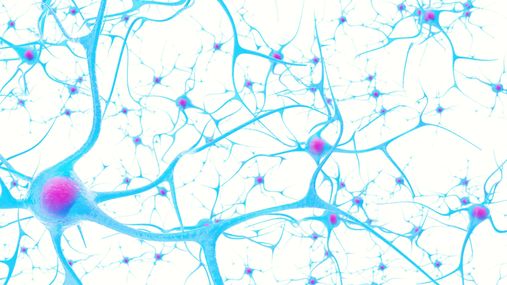
Neural Representations and the Topology of Cognition
Given the leaps in computational and experimental recording technology over the last two decades, we are now at a stage where we can extract data from hundreds to millions of neurons. This explosion in data availability has increased the demand for complementary data analysis and theory tools that can rise to the task of interpreting such immense amounts of information. In this work, we propose that one should look at the activity of large populations of neurons as one single object, with, at the very least, the mathematical structure of a topology. This reduces the complexity of studying the properties of thousands of cells to studying the properties of a single object called the neural representation map which generates neural spaces (often called neural manifolds).
In the first two papers we approach this question by applying persistent homology with an approximation of the geodesic metric to discover circular manifolds in response to rotating images. Following this, we develop a rank decomposition of ReLU neural networks that allows us to pinpoint regions in the input space that are glued together by a neural network, thereby changing the topology of the initial input space in a predictable manner. Finally, we use objects from differential geometry, such as the metric tensor, to describe the local properties of the manifold generated during navigation in a simplified grid cell model.
