Previous events - Page 17

A clear understanding of your competitive advantages and the needs of your end users is essential for turning a promising idea into a compelling market offering. Insight into customer priorities and unmet needs not only strengthens your strategic positioning but also enhances your credibility when engaging potential partners and investors.
Takashi Toma, Kanazawa University
Weekly Theory Seminar.

This spring researchers at the Department of Biosciences are offered in-house innovation guidance from the UiO Growth House.
Welcome to the main page for the 2026 Oslo Sparrow Meeting at the Department of Biosciences, University of Oslo, Norway.

Late Lunch Talk by Geir Ottersen (Institute of Marine Research and CEES)

Recent research has revealed a surprising phenomenon: the production of so-called “dark oxygen” and its possible connection with polymetallic nodules found on the abyssal plane.
As interest in mining polymetallic nodules grows, these findings raise new scientific and ethical questions about how (and whether) such activities should proceed.

Doctoral candidate Xinyi Wang at the Department of Informatics, Faculty of Mathematics and Natural Sciences, is defending the thesis When Quantum Computing Meets Software Testing: Novel Quantum Methods for Testing Real-World Software Systems for the degree of Philosophiae Doctor.

Title: Air quality forecasting with machine learning
Speaker: Erik Mousing, Norwegian Meteorological Institute
By Associate Professor Anja Kohfeldt, Department of Technology Systems (ITS), UiO

In this Open Science Lunch, we look into Diamond Open Access publishing – publishing with neither author nor reader payment – and the movement of journals «flipping» from Toll Access or Gold OA to Diamond. We will also hear about a programme for supporting Diamond OA journals.
We invite you to the April RoCS Solar/Stellar Lunch. You are invited to discuss your work with colleagues.
Welcome to this week's lunch seminar in the dScience lounge with Agnieszka Seremak. She will talk about how dehydration in sodium zeolite Y drives cation migration and unusual structural changes, revealed through combined experiments and simulations.
Identification of T cell cross-reactivity towards allogeneic HLA class I molecules
A numerical semigroup is said to be Weierstrass if it is the semigroup of pole orders of rational functions that are regular at all but one point of some compact Riemann surface or smooth algebraic curve. Hurwitz asked in 1892 whether all numerical semigroups can occur. Buchweitz in 1980 gave the first examples of Non-Weierstrass semigroups. In this paper we give a new method, using syzygies, to show that certain semigroups are not Weierstrass, including the first one of multiplicity 6 (the lowest possible) and genus 13 (the lowest known). We give many other examples to which the method applies.

Late Lunch Talk by Nicolò Tellini (CEES)

Title: Are perennial plants benefiting from warmer winters?
Speaker: Al Kovaleski, University of Wisconsin-Madison
Professor Cédric John is Head of Data Science and the Environment at the Digital Environments Research Institute (DERI) at Queen Mary University of London.

PhD candidate Kamilla Børve Nygård at the Department of Biosciences, Faculty of Mathematics and Natural Sciences, is defending the thesis 'Exploring the function and enzymology of protein methylation in skeletal muscle' for the degree of PhD.
Herman Martens Meyer is a PhD candidate in the Department of Mathematics at the University of Oslo. Prior to starting his PhD, he completed an integrated Master’s degree in Applied Physics and Mathematics at the Norwegian University of Science and Technology (NTNU). For his Master’s thesis, he worked on identifying subsurface turbulence using light reflected from a free surface. His research interests include wave turbulence, breaking waves, and free-surface turbulence.
Welcome to our GeoHyd Lunch Seminar on Friday 24th of April @ 12:15 in Aud. 1 in the Geology Building. The seminar is held by Ludovic Ravanel (University Savoie Mont-Blanc, France).
OBS! please note that the Geology Building now requires an access card, but that you can ring the bell to get in.
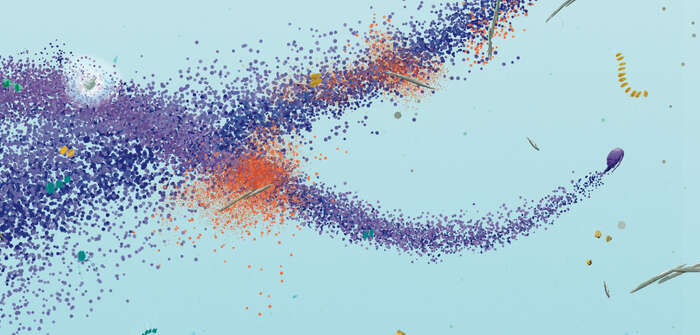
Erik Selander from Lund university will present his impressive work on chemical ecology in marine plankton.