Previous events - Page 57
In this final seminar, Stine Engen will present the draft of her PhD thesis titled “On green finance and the turning of climate change into climate risk”.

Programming with Python is essential in many fields, but navigating packages, environments, and Integrated Development Environments (IDEs) can be challenging. This workshop is designed for those starting with Python or struggling with these aspects. It simplifies the process, providing practical guidance and hands-on activities to help participants confidently manage their Python setup and workflow.

Henrik is a postdoctoral researcher at the Njord Centre for studies of the physics of the earth.
Jonas Boym Flaten and Oskar Mathias Leinonen, both of whom are working primarily with Morten Hjorth-Jensen.
Hylleraas seminar, hosted in Oslo

Doctoral candidate Åse Høisæter at the Department of Geosciences, Faculty of Mathematics and Natural Sciences, is defending the thesis Fate and transport of per- and polyfluorinated alkyl substances (PFAS) from the use of aqueous film forming firefighting foam (AFFF) in unsaturated soil for the degree of Philosophiae Doctor.

Doctoral candidate Ingrid Dæhlen at the Department of Mathematics will be defending the thesis The best of the bad: Precise and robust estimation and model selection for the degree of Philosophiae Doctor.

Welcome to our open seminar series ITS-Talks at the Department of Technology Systems (ITS). The first of 2025!
ITS-Talks is a series of short talks from both early career and established researchers.
Welcome to our GeoHyd Lunch Seminar on Friday 31th of January @ 12:15 in Aud. 2 in the Geology Building. The seminar is held by Hannah Besso (University of Washington-Seattle).

The first stage of sea ice formation is often grease ice, a mixture of sea water and frazil ice crystals. Over time grease ice congeals to a solid sea ice cover, often in the form of pancakes. Grease ice is usually not simulated in large-scale sea-ice ocean models, but impacts ocean heat loss and ice growth.
A set of laboratory experiments on frazil and grease ice in a turbulent flow is presented, showcasing the growth process and a frazil ice size spectrum. Existing 1D simulations illustrates how frazil ice crystals remain sub-surface and can aggregate with particles (sediments) in the water. A simple approach capturing basic grease ice properties for 3D climate models is presented and shows a 10-30% increase in mean winter Arctic Ocean heat loss compared to standard simulations. The grease ice layer is ‘hurdled’ towards existing floes and congeals as pancake ice. The onwards transition to a ‘normal’ congealed ice cover is assumed to take place over 24h when ∼50 % of the grease has formed solid ice, but new observations are needed to better resolve this transition. Grease ice also dampens waves and simulating this in wave models may be the focus of future research.

PhD candidate Ke Deng at the Department of Biosciences, Faculty of Mathematics and Natural Sciences, is defending the thesis 'Metabolic Regulation of Prostate Cancer by Endoplasmic Reticulum Stress Signaling' for the degree of PhD.
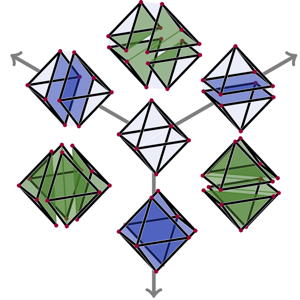
Positive geometry is a recent branch of mathematical physics which present exciting connections with real, complex and tropical algebraic geometry.
In this talk, we introduce the topic by developing the positive geometry of del Pezzo surfaces and their moduli spaces.
We will analyze their connected components, likelihood equations and scattering amplitudes.
The talk is based on joint work with Early, Geiger, Sturmfels and Yun.
Abstract: I will introduce a certain configuration space associated with a graph, and compute its cohomology ring. It turns out to be related to internal zonotopal algebras, which were introduced in the context of approximation theory and show up in many different contexts.
This is joint work with Colin Crowley, Galen Dorpalen-Barry, and Andre Henriques.

Positroids are a class of matroids that were introduced by Postnikov in 2006 that index a certain stratification of the totally non-negative Grassmannian. These matroids are famously in bijection with a “zoo” of combinatorial objects including Grassmann necklaces and plabic graphs. We introduce a new family of positroids called rook matroids that arise from restricted rook placements on a skew shaped board and discuss it in terms of this zoo. We highlight the transversal structure of rook matroids and the slightly mysterious relationship they share with lattice path matroids. This is joint work with Per Alexandersson and ongoing work with Irem Portakal and Akiyoshi Tsuchiya.
Investigation of function and regulation of spatially and temporally imprinted genes in the Arabidopsis thaliana endosperm

Gunnar Taraldsen is professor at Department of Mathematical Sciences, NTNU. His current research interest focusses on the foundational principles of statistical inference including quantum probability, artificial intelligence, and machine learning. The aim is to bridge foundations for statistical inferences, to facilitate objective and replicable scientific learning, and to develop analytic and computing methodologies for data analysis.
Earlier research includes quantum mechanics, mathematical physics, measure theory, probability, medical ultrasound, non-linear wave propagation, numerical acoustics, medical statistics, outdoors sound propagation, community noise annoyance, acoustic noise mapping, underwater localization, underwater wave propagation, and spherical microphone arrays.

Join us in this Open Science Lunch session to explore how to practice open science responsibly in everyday research and to learn about The ROSiE Guidelines on Responsible Open Science
We invite you to the January RoCS Solar/Stellar Lunch. You are invited to discuss your work with colleagues.
We invite you to the January RoCS Solar/Stellar Lunch. You are invited to discuss your work with colleagues.

Doctoral candidate Oriol Zamora Font at the Department of Mathematics will be defending the thesis Stochastic volatility modeling with self-exciting jumps: Applications to finance and life insurance for the degree of Philosophiae Doctor.
Jon Magne Leinaas, FI
Weekly Theory Seminar.
Jan Olav Eeg, FI
Weekly Theory Seminar.

In a circular economy, products and services are designed for longevity, reuse, and recycling. It contrasts with the traditional linear economy by promoting a closed-loop system where materials are kept in circulation, reducing environmental impact and depletion of raw materials.
The Section 4 seminar for Spring 2025 will be held on Tuesdays at 09.10 am in room 1020.