Events
If you have questions or suggestions related to the section seminars please contact the seminar committee.
Previous
_kopi.jpg?alt=listing)
PhD candidate Eivind Kverme Ronold at the Department of Biosciences, Faculty of Mathematics and Natural Sciences, is defending the thesis 'Concerning fungi: Community ecology and diversity in natural and managed boreal forests' for the degree of PhD
Discovering hidden myxteries in boreal forests: Long-term effects of forest management on Myxomycete diversity in dead wood and soil
Inhibiting Trimeric Autotransporter Adhesins from Clinically Relevant Pathogens

PhD candidate Ida Velle Myking at the Department of Biosciences, Faculty of Mathematics and Natural Sciences, is defending the thesis 'The genetic basis of hybridization barriers and parent-of-origin effects in the Arabidopsis endosperm' for the degree of PhD

PhD candidate Fabiana Patalano at the Department of Biosciences, Faculty of Mathematics and Natural Sciences, is defending the thesis 'Evolutionary conservation and gene regulatory implications of 3D genome compartmentalization' for the degree of PhD
The double-edged sword of whole-genome duplication: does polyploid diversity arise from maladapted DNA replication and repair?
Long-term effects of clear-cut forestry on fungal spruce litter decomposer communities in boreal forests
Genomic consequences of postglacial secondary contact between diverged lineages of Trichaptum abietinum in Europe
Genetic divergence and admixture of the wood-decay fungus Trichaptum abietinum in Norway: Implications of postglacial migration history
Effects of clear-cutting forestry on arbuscular mycorrhizal fungi in boreal forest soils
DNA Supercompaction: A Bacterial Defense Response to Antibiotic Damage
The YrInv and YrIlm inverse autotransporters as adhesins in Yersinia ruckeri pathogenesis.
Fast & furious: Accelerating the knowledge on nutrient-depletion induced root responses
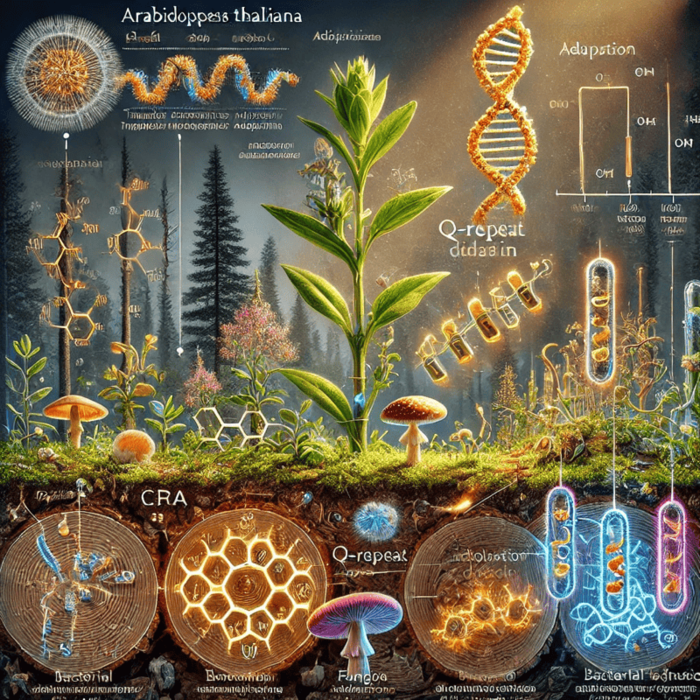
Five master's students will give presentations of their master's:
Maren Mansika: Investigating the Q-repeat in the transcription factor LRP1 in A. thaliana, and its effect on adaptation
Emma Marinelli Johansen: Inhibiting Collagen-Binding Trimeric Autotransporter Adhesins
Sven van der Heijden: The impact of forestry on wood decomposition and diversity of saproxylic fungi
Anneli Andersen and Michelle Vera Castellanos: Investigating the population structure of the fungus Trichaptum abietinum in Europe

The regulation of deterministic development
Lionel Christiaen, Director Michael Sars Centre, University of Bergen and Professor, New York University, USA
Investigation of function and regulation of spatially and temporally imprinted genes in the Arabidopsis thaliana endosperm
Mahwash Jamy will show how metabarcoding data is an invaluable resource for answering evolutionary questions. The title of the seminar is: "Metabarcoding data to infer patterns of eukaryotic evolution".
Forest management effects on the ericoid mycorrhizal fungal community in bilberry (Vaccinium myrtillus) roots

PhD candidate Anne Greulich at the Department of Biosciences, Faculty of Mathematics and Natural Sciences, is defending the thesis 'Arabidopsis thaliana short tandem repeat variability in adaptive processes and protein function' for the degree of PhD.

Filip Kolar
Charles University in Prague & The Czech Academy of Science
"Natural variation in the strength of interploidy barrier in Arabidopsis arenosa"
----
Daniela Jorgelina Sueldo
NTNU
"Accumulation and phytotoxic effects of emerging PFAS in Arabidopsis"
The bumpy ride of bacterial blebology from nuisance and basic science to excitement and innovation.
Decay of the wood-wide web?
Abstract: The ‘wood-wide web’ holds that all trees in a forest are physically connected belowground by fungi, and that these fungi serve as passive conduits for the beneficial flow of resources and signals among the networked trees. Through these fungal networks, ‘Mother trees’ recognize and warn related seedlings of danger. Though widely appealing and massively popular, I will explain why this story does not survive scientific scrutiny.
Food will be served from 12.00 while the talk starts 12.15.
Here is some relevant reading/background information:
https://www.nature.com/articles/s41559-023-01986-1
https://undark.org/2023/05/25/where-the-wood-wide-web-narrative-went-wrong/
Justine Karst, Associate Professor, University of Alberta, Canada

A spatial journey into the immune system of the fish branchial cavity
Abstract: The constant exposure of the fish branchial cavity to aquatic pathogens causes local mucosal immune responses to be extremely important for their survival. Whereas the organization of the fish mucosal immune system has been perceived as lacking complexity, the recent discoveries of new immune structures within the branchial cavity of the zebrafish show that the reality is more sophisticated than thoughts.

Kjetil Lysne Voje is Associate Professor at the Natural History Museum, UiO.
Nils Chr. Stenseth from CEES/IBV will give the talk: "Reconstructing the environmental, biological, and societal drivers of plague outbreaks in Eurasia between 1300 and 1900 CE (Synergy-Plague)"
In this talk, the ERC Synergy project on plague (Synergy-Plague) will be presented. Essentially, the interview presentation given before the ERC panel in Brussels on Sept 11, 2023 will be presented https://www.mn.uio.no/ibv/english/research/projects/synergy-plague/.
This will then be followed by a summary of how we got the this funding - the design of the project, the project development and the proposal writing, the preparation for the interview, etc.