
Welcome
All are welcome! No pre-registration required. The event will not be streamed or recorded.
The event is part of the conference Norway Life Science 2025 and is supported by UiO:Life Science.
Introduction
Astrobiology encompasses the study of the prerequisites for life, the origin and evolution of life, and the possibilities of life elsewhere in the universe. It thus integrates geological, geochemical, environmental, biochemical, ecological, evolutionary and biological processes. At this year's Darwin Day, internationally leading researchers Trond H. Torsvik (Centre for Planetary Habitability, University of Oslo), Sarah Johnson (Georgetown University, USA), Liv Hornekær (Department of Physics and Astronomy, Aarhus University, Denmark), and Tue Hassenkam (Globe Institute, University of Copenhagen, Denmark), will share their insights. Together, their research unravels the fascinating complexities of astrobiology and expands our understanding of life's potential in the universe.
Programme
10.15-10.30 Opening remarks
Per Morten Sandset, Vice-Rector for Research and Innovation, University of Oslo, Norway
10.30-11.10 Key conditions for the emergence and maintenance of life and the quest for Earth-like life in other star-planet systems
Trond H. Torsvik, University of Oslo, Norway
11.15-11.55 Looking for life as we don’t know it
Sarah Johnson, Georgetown University, U.S.A.
12.00-12.45 Break
12.45-12.50 Announcing the winner of the Darwin Prize
Nils Chr. Stenseth, University of Oslo, Norway. Read more about the prize.
12.50-13.30 Making the molecular building blocks of life in space
Liv Hornekær, Aarhus University, Denmark
13.35-14.15 Framing the origin of life
Tue Hassenkam, University of Copenhagen, Denmark
14.20-14.45 Panel discussion and Q&A
The four lecturers and Jane Luu from the University of Oslo. Chaired by Nils Chr. Stenseth
14.45-14.50 Closing remarks
Kjetill S. Jakobsen, CEES, Department of Biosciences, University of Oslo, Norway
Abstracts and biographies
Trond H. Torsvik
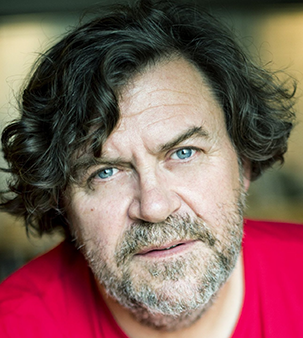
Professor and Director for Centre for Planetary Habitability (PHAB), University of Oslo, Norway
Lecture title
Key conditions for the emergence and maintenance of life and the quest for Earth-like life in other star-planet systems
Abstract
Planetary habitability encompasses the necessary conditions for the generation, survival, and continued evolution of life, but astronomically it has been simplified to the potential presence of liquid surface water. Water is life’s medium, probably delivered to the terrestrial planets during the earliest phases of planetary accretion, but the constellation of environmental conditions that allowed life to arise on Earth from inanimate matter via abiogenesis is still among the greatest unknowns in science. Life likely arise more than 4 billion years (Ga) ago when the Sun was much fainter, but a potentially CO2-dominated atmosphere saved us from runaway cooling and permanent icehouse conditions. Albeit their CO2-dominated atmosphere, Mars was once wetter and (arguably) warmer, but is now a permanent icehouse, whilst Venus has been a hothouse for an unknown time. These planetary siblings (currently) lack surface water, a long-lived magnetic field, and plate tectonics, factors considered as key elements for long-term habitability. Additionally, the complex multicellular life we know requires an oxygen-rich atmosphere not identified elsewhere in the Solar System. The breathable air we enjoy today was produced by cyanobacteria (the inventors of oxygenic photosynthesis), a critical milestone, the Great Oxygenation Event, was reached at ~2.4 Ga but it took almost two billion years of biotic modulation and abiotic interactions to increase O2 levels to modern values.
Earth’s habitability may have resulted from a chain of singular events, but a major challenge is that habitability factors vary because they are time-dependent due to changes in the Sun’s energy and our planet’s chemical, thermal, physical, and tectonic evolution. An in-depth knowledge of Earth-like habitability, and how our planet sustained conditions for life’s evolution over geological time scales, is therefore critical for identifying habitable planets (exoplanets) around other stars. A key observable for Earth-like habitability today is a highly oxygenated atmosphere, an ozone layer, and low levels of CO2. But the Earth’s atmosphere has changed dramatically over billions of years, and thus the age of a planetary system is critically important. Currently exoplanets are recognized in a wide range of planetary systems. The physical parameters of the central stars and planets are quite diverse, and of the nearly 7000 known planets, as few as 5% are potentially Earth-like in terms of mass and orbital distance. A real Earth-like planet is still to be found.
Biography
Trond H. Torsvik is a Professor of Geophysics at the University of Oslo and the Founding Director of two Norwegian Centers of Excellence, the Centre for Earth Evolution and Dynamics (CEED: 2013–2023) and the Centre for Planetary Habitability (PHAB: 2023→). He is a Member of the Norwegian Academy of Science and Letters and was awarded the Wollaston Medal in 2024 (Geological Society of London) and the Arthur Holmes Medal in 2016 (European Union of Geosciences), among various other awards and prizes. He has written about 250 publications in refereed journals and one book (Earth History and Palaeogeography: Cambridge University Press 2017).
Sarah Johnson

Professor of Planetary Science, Georgetown University
Lecture title
Looking for life as we don’t know it
Abstract
Time and again, the indescribable foreignness of other worlds in our solar system has far surpassed our expectations and left us reconsidering what we thought we knew of our universe. And yet, as we search for life, our detection methodologies and biological expectations often presume that the life we are seeking is similar to the life we know from Earth: we rely primarily on the identification of well-established and widely accepted features associated with terran life. So, how might we contend with the truly alien? How might we break free from our ideas about “life as we know it,” and search instead for “life as we don’t know it,” without presupposing any particular biochemistry or underlying molecular framework? This talk will examine the search for life from the dawn of the space age, address new approaches to life detection, and consider the relevance of these techniques for the exploration of places like Mars, the icy moons of Jupiter and Saturn, and exoplanets.
Biography
Professor Johnson's research is driven by the underlying goal of understanding the presence and preservation of biosignatures within planetary environments. Her lab is also involved in the implementation of planetary exploration, analyzing data from current spacecraft as well as devising new techniques for future missions. A former Rhodes Scholar and White House Fellow, she received her Ph.D. from MIT and has worked on NASA’s Spirit, Opportunity, and Curiosity Rovers. She is also a visiting scientist with the Planetary Environments Lab at NASA’s Goddard Space Flight Center. Her narrative nonfiction book, The Sirens of Mars, was a New York Times Editor’s Choice and selected as one of the New York Times 100 Notable Books of 2020.
Liv Hornekær
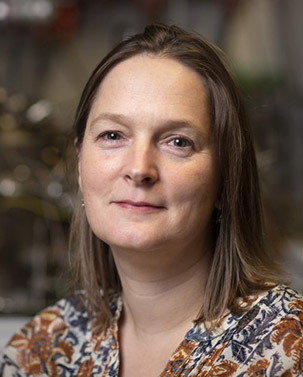
Professor of Materials Science and Director of Center for Interstellar Catalysis, Department of Physics and Astronomy, Aarhus University, Denmark
Lecture title
Making the molecular building blocks of life in space
Abstract
Interstellar space is home to a surprising molecular complexity. More than 300 molecules have been detected so far and each year new molecules are added to the list. This molecular complexity has developed in spite of the extremely low temperatures and pressures that characterize interstellar space and interstellar dust and molecular clouds – the birthplace of new stars and planets – in particular. Interstellar nanoscale dust grains are thought to act as catalysts for formation of the majority of the observed molecules. With James Webb Space Telescope it has now become possible to directly observe increasingly complex molecules frozen out in ice on the surface of such grains. Astronomical observations, however, are unable to determine the limitations of such interstellar chemical reactions. Hence, we turn to laboratory experiments to determine whether even the molecular building blocks of life – amino acids, DNA bases, sugars and fatty acids – can form via catalytic reactions in space, before the formation of stars and planetary systems.
Biography
Liv Hornekær is professor of materials science at Aarhus University and Director of Center for Interstellar Catalysis – InterCat, founded by the Danish National Research Foundation. Her research aims at discovering whether the molecular building of life – amino acids, DNA bases, sugars and fatty acids – can form via low temperature catalytic reactions in interstellar space even before the formation of stars and planetary systems. Liv Hornekær received her PhD from Aarhus University in 2002 and has been a full professor here since 2017. She has received the Danish EliteForsk prize, the German Friedrich Wilhelm Bessel research award, as well as ERC Starting, Consolidator and Synergy Grants from the European Research Council. She is a member of the the Royal Danish Academy of Sciences and Letters.
Tue Hassenkam

Head of section, Geobiology section, Globe Institute, University of Copenhagen, Copenhagen, Denmark
Lecture title
Framing the origin of life
Abstract
The origin of life is not a simple question. Despite more than 150 years of research since Darwin proposed that life may have started in a pond, we know next to nothing about it. We do not know where, how, or when it began. So, how do we approach this? We have chosen several lab-based methods to try to frame the origin. By analyzing the oldest remains of life trapped inside 3.7 billion-year-old meta-sediments, we have approached the origin as closely as possible via the geological record. By analyzing carbon dust from meteorites, we have tried to determine the set of molecules from which life began. Finally, by experimentally testing theories for how life could have begun, we have approached the origin from a bottom-up perspective. The results show that life thrived in a special environment 3.7 billion years ago and used iron for metabolism. The carbon in the meteorites contains elements (aside from carbon) vital for life. Our bottom-up approach suggests that Darwinian evolution was essential for the first steps of life.
Biography
Tue Hassenkam has a broad background in natural science with a focus on the nanometer scale. Originally he was trained as a solid-state physicist working on quantum effects in semiconductor devices, he then moved on to molecular electronics, bone quality, and surface physical chemistry. He began his current line of research almost 10 years ago by analyzing 3.7 billion-year-old remains of life in rocks from West Greenland. He then broadened the scope to include the question of the origin of life. His focus has been on the nanometer scale, using structural tools from nanoscience to analyze old rocks and meteorites, as well as products produced by origin-of-life experiments.