
Amandine Kaiser is a PhD Candidate at the Meteorology group, Department of Geosciences, UiO. She is also part of the CompSci doctoral program. She will be defending her thesis for the degree of PhD, which was submitted for evaluation on the 19th of December of 2024.
From the CompSci team we wish you good luck and all the best in your future endeavors!
→ Read more about the disputation in the website of the Department of Geosciences
Programme
Monday, 26 May, 15:15 – Trial lecture: "Atmospheric boundary layers in different climatic zones" – Aud 1, The Geology Building
Tuesday, 27 May, 13:15 – Disputation: "Exploring stable atmospheric boundary layer regimes: A stochastic perspective" – Aud 1, The Geology Building
This event is open for everyone. No registration needed.
The Disputation will be live streamed via Zoom.
The livestream will be activated 15 minutes before the Defense starts.

PhD candidate
Research group | Meteorology
Main supervisor | Nikki Vercauteren
Co-supervisor | Terje Koren Berntsen
Affiliation | Department of Geosciences, UiO
Contact | amandine.kaiser@geo.uio.no
Adjudication committee
Dr.Ing. Bas van de Wiel, Delft University of Technology
Professor Gunilla Svensson, Stockholm University
Professor Kirstin Krüger, Department of Geosciences, University of Oslo
Chair of defense
Professor Kirstin Krüger, Department of Geosciences, University of Oslo
Short summary
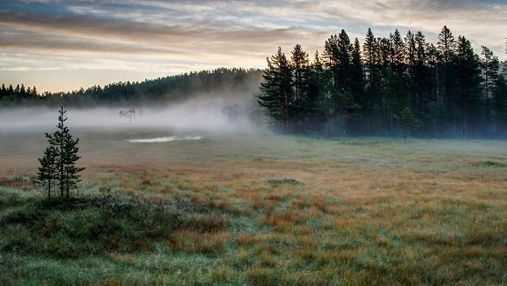
Exploring stable atmospheric boundary layer regimes: A stochastic perspective
Accurately modeling the stably stratified atmospheric boundary layer (SBL) is crucial for reliable weather forecasts and climate projections, particularly in polar regions. Despite its importance, current numerical weather prediction and climate models have issues with the representation of SBL regimes and transitions between them, leading to errors such as excessive mixing or runaway cooling in the stable regime.
This thesis and doctoral work by Amandine Kaiser address these challenges by investigating the factors driving SBL regime transitions and proposing ways to improve their representation in numerical models. Results show that small-scale transient phenomena play a key role in driving regime transitions and can be effectively incorporated through perturbed tendencies or stochastic parameterizations. Furthermore, an analysis of observational data reveals that the noise structure in the temperature inversion strength varies between SBL regimes, highlighting the need for regime-dependent stochastic approaches. In conclusion, this research provides new strategies for advancing SBL modeling.
