
Ana Anzulović is a PhD Candidate at the Centre for Planetary Habitability (PHAB), Department of Geosciences, UiO. She is also part of the CompSci doctoral program. She will be defending her thesis for the degree of PhD, which was submitted for evaluation on the 30th of May of 2025.
From the CompSci team we wish you good luck and all the best in your future endeavors!
→ Read more about the disputation in the website of the Department of Geosciences
Programme
10:15 – Trial lecture: "Mantle melting at subduction zones - an overview" – Aud 1, The Geology Building
13:15 – Disputation: "Volatile control on kimberlite melt structure, density, and viscosity: Atomistic study with implications for kimberlite volcanism" – Aud 1, The Geology Building
This event is open for everyone. No registration needed.
It might be possible to attend the trial lecture and dissertation digitally, in that case a link to Zoom will be posted in the website of the Department of Geosciences.

PhD candidate
Research group | Deep Earth (CEED)
Main supervisor | Razvan Caracas
Co-supervisor | Carmen Gaina
Affiliation | Department of Geosciences, UiO
Contact | anaanz@uio.no
Adjudication committee
Professor Mihai Ducea, Faculty of Geology and Geophysics, University of Bucharest
Professor Sandro John, Department of Earth and Environmental Sciences, Ludwig-Maximilians-University
Professor Valerie Maupin, Department of Geosciences, University of Oslo
Chair of defense
Professor Trond Helge Torsvik, Department of Geosciences, University of Oslo
Short summary
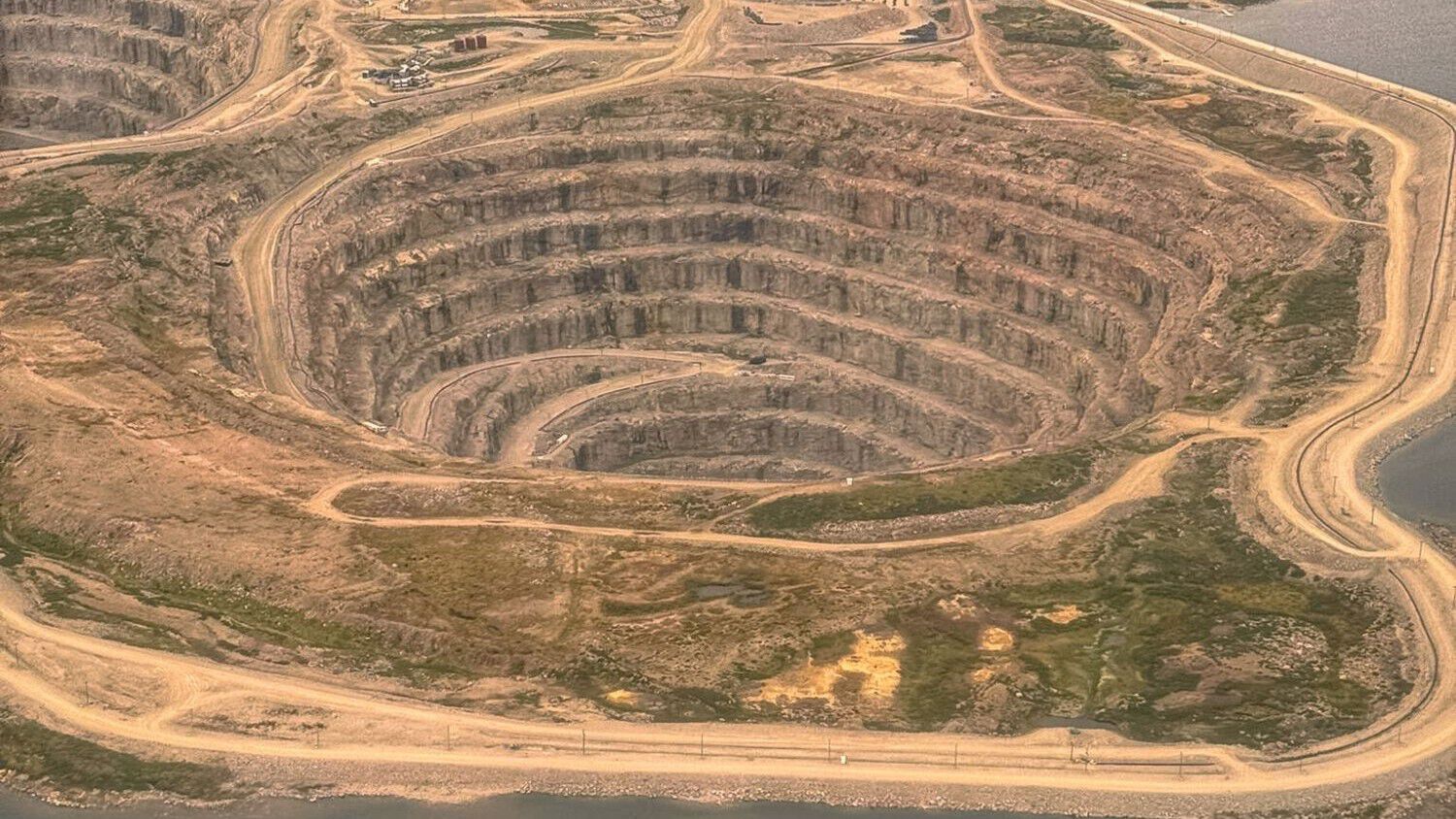
Volatile control on kimberlite melt structure, density, and viscosity: Atomistic study with implications for kimberlite volcanism
The way a magma erupts is largely controlled by its volatile content, primarily carbon dioxide (CO₂) and water. This is particularly true for volatile-rich kimberlite magmas, which originate deep in the upper mantle beneath thick, cool continental lithosphere. Kimberlites are known for their rapid ascent and ability to transport mantle fragments to the surface; these characteristics make them the natural transport mechanism and primary host rocks of diamonds. As kimberlite magmas no longer erupt, our understanding of their volcanism relies on studying the altered rocks explosively emplaced in carrot-shaped volcanic pipes.
To investigate the drivers of kimberlite volcanism, Ana Anzulović has developed an atomistic model of a kimberlite melt. The findings in the doctoral thesis work indicate that the deciding factor for a successful eruption is magma’s CO₂ content; at least 8.2 wt% is required for the melt to reach the surface.
Simulting melt chemistry shows that carbon plays a dual role. At high pressure, it polymerizes the melt structure, but at lower pressure, it exsolves from the melt, driving vaporization. Both carbon and water lower the melt's density and viscosity, but water has a particularly strong depolymerizing effect, making the melt highly mobile.
Photo: Aerial view of the Diavik Diamond Mine in the Northwest Territories, Canada. The open pits mark the surface expression of mined diamondiferous kimberlite pipes, which transported mantle fragments and diamonds from deep within the Earth’s lithosphere to the surface. See this image in a larger version. Credit: Rebecca Zech
