Previous events - Page 103
Right place, right time: Influences on breeding start in three Norwegian kittiwake (Rissa tridactyla) colonies

Artificial intelligence (AI) and deep learning approaches are often considered black boxes, i.e. as a type of algorithms that accomplish learning tasks but cannot explain how. However, as AI/deep learning is increasingly absorbed as adopted for accomplishing cognitive tasks for human beings, it is becoming important that the deep learning models are understandable by humans, such that artificial and human intelligence can co-exist and collaborate. In critical tasks such as deriving, from given data, a correct medical diagnosis and prognosis, collaboration between artificial and human intelligence are imperative so that the suggestions or decisions from artificial intelligence are both more accurate and more trustworthy.

Doctoral candidate Maaike Francine Maria Weerdesteijn at the Department of Geosciences, Faculty of Mathematics and Natural Sciences, is defending the thesis Solid earth deformation due to glacial mass changes above low-viscosity upper mantle: Model development, importance of contemporary ice melt, and an application to southeast Greenland for the degree of Philosophiae Doctor.
By Sara Goodacre from the University of Nottingham, UK

Doctoral candidate Linn Neerbye Berntsen at the Department of Chemistry, Faculty of Mathematics and Natural Sciences, is defending the thesis “Development of New Synthetic Methods for the Preparation of N-functionalized Hydantoins”, for the degree of Philosophiae Doctor.

Jie Hou will defend her thesis “Experimental Sensor Systems for Assessment of Tissue Viability — Monitoring the effects of ischemia-reperfusion injury” for the degree of Philosophiae Doctor at the University of Oslo, Faculty of Mathematics and Natural Sciences.
Welcome to our GEOHYD Lunch Seminar Friday 9th of June @ 12:15 in Aud. 2, Geology building, or via video link using Zoom. The seminar is held by Regine Hock (UIO) & David Rounce (CMU).
Biology of Coastal European Eel (Anguilla anguilla) in Norway: Growth Analysis and Temporal Variation in Abundance
Many have tried to adapt Clemens and Griffiths's approach to irrationality of cubic threefolds to higher dimensions, using different invariants in place of H^3(X,Z): the transcendental part of H^4, derived categories, quantum cohomology... I will report on my attempt to use higher algebraic K-theory, which turns out to be strictly weaker than what Voisin and Colliot-Thélène have already gotten from Bloch-Ogus theory, but (I think) in an interesting way. For a positive result, I can show that the higher K-theory of Kuznetsov's K3 category for a cubic or Gushel-Mukai 4-fold looks the same as that of an honest K3 surface.
Title: Environmental changes from glacier ice cores
Speaker: Margit Schwikowski, Paul Scherrer Institut
Title: Offshore wind: Is power production limited by the atmospheric energy input?
Speaker: Ole Anders Nøst, Oceanbox
This week we discuss Gudmunds et al on TREE.
https://www.sciencedirect.com/science/article/pii/S0169534722001689?via%3Dihub
[new] Time and place: Jun 8th, 2023 12 PM – 1 PM, Greenhouse, 3215
Welcome to our weekly lunch seminar held in the dScience lounge area! This event is open to PhD candidates and postdocs.
Constrained folding dynamics: a generalized model for labyrinth pattern development
Tomás Gonzalo, Karlsruhe Institute of Technology
Weekly Theory Seminar.
Translational regulation by a 4E-binding protein paradigm
This is a half-day online workshop on PDEs in physical systems. Abstracts and Zoom link can be found here!
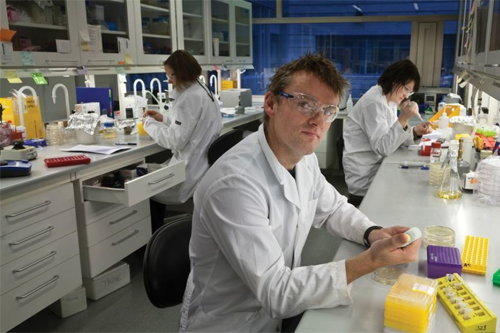
This course prepares PhD candidates and early career researchers within biotechnology, life science and neighbouring scientific fields to adopt Responsible Research and Innovation (RRI) in their research practice.
This talk will focus on recent work about the sequential detection of anomalies within partially observed functional data, motivated by a problem encountered by an industrial collaborator. Classical sequential changepoint detection approaches look for changes in the parameters, or structure, of a data sequence and are not equipped to handle the complex non-stationarity and dependency structure of functional data. Conversely, existing functional data approaches require the full observation of the curve before anomaly detection can take place. We propose a new method, FAST, that performs sequential detection of anomalies in partially observed functional data. This talk will introduce the approach, and some associated theoretical results, and highlight its application on telecommunications data.
This is joint work with Idris Eckley and Lawrence Bardwell.
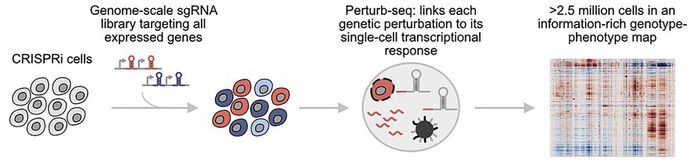
Welcome to seminar by Omer Faruk Kuzu (Researcher, Saatcioglu Group, BMB, IBV).
Shedding light on the extent and patterns of spurdog (Squalus acanthias) bycatch in the Norwegian coastal fisheries
Deployment of semi-unsupervised learning in the search for new physics at the LHC with the ATLAS detector

I will show you who are the members of the Physics Education research group of the University of Bologna. Moreover, I will tell you about the projects in which we are involved now and all the past significnt projects that have helped to strengthen the direction and current identity of the group. Also I will indicate what are the main publications that have been made in these years.
All this will be done through the eyes and the narrative of a PhD student part of UNIBO research group. I have not certainly the presumption to know exactly (after two years) how to orient myself in all the rich and multi-dimensional research activities of my group. But I will try to make you perceive the great commitment, thoughts and enthusiasm that I see every day in the challenging but wonderful research activity in Bologna.
Application of Supervised Machine Learning to the Search for New Physics in ATLAS data