Previous events - Page 84

PhD candidate Roberto Rossini at the Department of Biosciences, Faculty of Mathematics and Natural Sciences, is defending the thesis "Developing reproducible and efficient computational tools for modeling and analysis of dynamic multi-level 3D genome organization" for the degree of PhD.

Doctoral candidate Rafael Riudavets Puig at the Department of Informatics, Faculty of Mathematics and Natural Sciences, is defending the thesis Deciphering transcriptional regulation and its role in cancer for the degree of Philosophiae Doctor.

Doctoral candidate Bruno Guilherme Fischer Eggert at the department of chemistry, Faculty of Mathematics and Natural Sciences, is defending the thesis “Composition tuning microstructure and magnetic properties of High Entropy Alloys and MnNiSi-based compounds” for the degree of Philosophiae Doctor.

The Electrochemistry group at UiO – on behalf of the Group for Inorganic and Materials Chemistry of the Norwegian Chemical Society (NKS-FUM) – organises and hereby invites you to register for the annual meeting 2024!
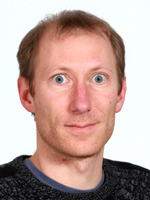
Joakim Bergli (Physics, UiO): Introduction to quantum error correction
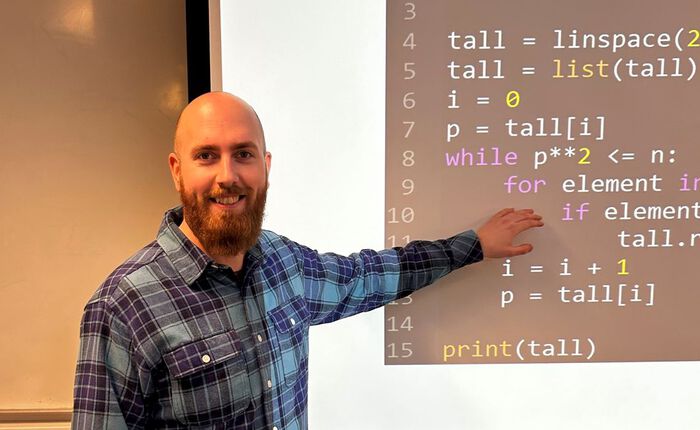
Henning Vinjusveen Myhrehagen:
As of 2023, Norway has implemented a new science curriculum which explicitly includes programming as a part of education in science and mathematics. However, the curriculum documents do not provide clear-cut guidelines on how and to what extent programming should be used for science learning, and it is also unclear how far teachers have come with their implementation of programming in education.
To understand the effects of the new curriculum, we have surveyed Norwegian upper secondary science teachers to find out what affordances they see with the use of programming, and what challenges they are experiencing.

Line Gaard Pedersen will defend her thesis “Nuclear structure along the Z = 28 and Z = 50 shells — Shell evolution and shape coexistence in 74,76,78Cu and 126Sn” for the degree of Philosophiae Doctor at the University of Oslo, Faculty of Mathematics and Natural Sciences.
Paper cuts are a minor nuisance, but they can lead to life-threatening microbial infections. The physical processes that determine whether paper cuts into the skin, however, remain poorly understood. To explore skin-paper interactions, we designed an experiment in which a piece of paper contacts an artificial finger made from ballistic gelatin. Our experiments suggest that the paper thickness is one of the most important parameters in determining cutting efficacy. A relatively thin sheet often buckles before cutting is initiated, whereas the predominant interaction with thick sheets is indentation. Our preliminary data indicate that a successful paper cut is physically impossible outside a relatively narrow range of thicknesses for a given angle. Finally, the optimal paper cut is explored, and the influence of skin properties and cutting angle is discussed.
A Pilot Feasibility Study of Opioid Withdrawal in Patients with Chronic Back Pain

The evolution of commensalism in Passer sparrows
Human activity has altered the evolutionary trajectories and ecological circumstances of nearly every species on Earth. What can this tell us about the processes of adaptation and speciation? Can we take advantage of the human impacts on species as means to study evolution and its intersection with ecology? This is the driving aim of my research group, where we use Passer sparrows as a model system. We are focusing on a number of topics including understanding the evolutionary causes and consequences of human-commensalism, repeated adaptation to environmental changes in introduced populations and convergent adaptation to human environments across all bird species. We do this using a multidisciplinary approach including genomics, phylogenetics and ecological analyses.
Welcome to our weekly lunch seminar held in the dScience lounge with Ana Ozaki.

Welcome to all students at the Department of Geosciences to the Geoscience Career Day on Thursday 22 February! The program for the day is now ready.
Halvor Melkild, FI
Weekly Theory Seminar.
C*-algebra seminar by Corey Jones (North Carolina State University)
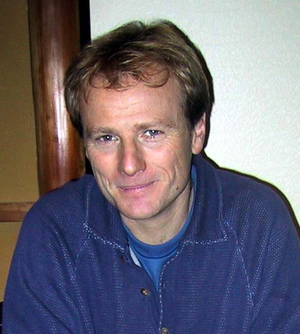
Morten Hjorth-Jensen (Physics, UiO): Parametric Matrix Models and Machine Learning

Jelena Popovic-Neuber is an Associate Professor in Battery Technology at the Department of Energy and Petroleum Engineering, Faculty of Science and Technology, University of Stavanger.

Doctoral candidate Espen Volnes at the Department of Informatics, Faculty of Mathematics and Natural Sciences, is defending the thesis Distributed Stream Processing: Performance Evaluation and Enhanced Operator Migration for the degree of Philosophiae Doctor.

Abbas Tariverdi will defend his thesis “Modeling and Control of a Continuum Manipulator for Clinical Automation” for the degree of Philosophiae Doctor at the University of Oslo, Faculty of Mathematics and Natural Sciences.

Doctoral candidate Svein Gunnar Kjøde at the Department of Informatics, Faculty of Mathematics and Natural Sciences, is defending the thesis Entanglement of Systemic Design and Sustainability Transitions for the degree of Philosophiae Doctor.

Title: Volcanoes, climate and society
Speaker: Ulf Büntgen, University of Cambridge
Welcome to our GEOHYD Lunch Seminar Friday 16th of February @ 12:15 in Aud. 1, Geology building or via videolink using Zoom. The seminar is held by Karianne S. Lilleøren (UiO).
Controlling the spontaneous ruptures of nanoscale liquid thin films is crucial to various applications such as solar cell manufacturing. Over the past few decades, theoretical work based on the long-wave theory of thin liquid films has successfully identified a critical film height, below which the surface nanowaves become linearly unstable, leading to spontaneous rupture. This dewetting in the ‘spinodal regime’ has been repeatedly confirmed in experiments using atomic force microscopy on polymer films. However, ruptures are also observed for thicker films (linearly stable) in a different manner. It is believed that the random (Brownian) movement of particles is the cause of dewetting in this ‘thermal regime’ but the theoretical framework predicting the rupture is missing. In this talk, we present a theory to account for the rupture of a two dimensional linearly stable thin film by utilizing fluctuating hydrodynamics and rare events theory. By modelling the film dynamics with the stochastic thin-film equation (STF) and solving it numerically, we observe rupture in the linearly stable thermal regime and record the average waiting time for rupture. We show that the STF can be rearranged into the form of a gradient flow, which allows us to apply Kramer’s law from the rare events theory to obtain a theoretical prediction of the average waiting time. Molecular dynamics (MD) simulations are also performed and we find good agreements between the numerics, the prediction, and the MD.
Abstract:
The Section 4 seminar for the Spring 2024 will be held Thursdays 14:15–15:00 in room 1020