
Disputas og prøveforelesning er i Auditorium 1 i Geologibygningen. I noen tilfeller vil prøveforelesning og disputas være mulig å delta på digitalt, i så fall blir det lagt ut en lenke til Zoom.
Prøveforelesning
Torsdag 14 november, 16:15-17:00, Aud 1, Geologibygningen:
Jupiter and Saturns structure, formation and role in the solar system
Kreeringssammendrag
Forskning på dannelse av planeter krever store datamodeller og simuleringer av ulike scenario. I dette doktorgradsarbeidet er det inkorporert komposisjonsmodellering i simuleringene av planetdannelse, og Petra Hatalova klarte å reprodusere hovedkarakterisikkene og arkitekturene til kjente eksoplanetsystemer, samt forutsi sammensetningen og de indre strukturene til de simulerte planetene. De fleste av planetene som ble dannet i simuleringene, ligner sammensetningsmessig på mer eller mindre massive versjoner av jorden eller Venus, men noen er ganske ukjente og er interessante for videre studier. Dette er kunnskap som er svært relevant for forståelse av planetdannelse og -evolusjon, og er i forkant av forskningen på dette området.
Hovedfunn
Populærvitenskapelig artikkel om Hatalovas avhandling:
Formation of rocky exoplanets around K-dwarf stars and their compositional diversity
Exoplanets orbit stars other than the Sun and come in a wide variety of sizes, masses, and orbital parameters. Some resemble the planets in our Solar System, while others are entirely different. By identifying planets that are similar to Earth, scientists can evaluate the likelihood of life as we know it existing beyond our system. However, determining whether a planet is Earth-like requires understanding its chemical composition, which is tied to its formation history. Since compositions are largely inaccessible to direct observations, modelling becomes essential.
By incorporating composition modelling into planet formation simulations, this doctoral work aimed to reproduce the main characteristics and architectures of known planetary systems and to predict the compositions and interior structures of the simulated planets. We specifically focused on planets orbiting K-dwarf stars, which are slightly smaller and cooler than the Sun, and are of particular interest in the search for extraterrestrial life.
Most of the planets formed in our simulations are compositionally similar to more or less massive versions of Earth or Venus, but some are quite exotic, offering prospects for further study. Modelling exoplanetary interiors holds great potential for expanding our knowledge of exoplanets and could ultimately lead to a better understanding of both our own planet and the other planets in the Solar System. This knowledge is highly relevant to our understanding of planet formation and evolution, placing it at the forefront of research in this area
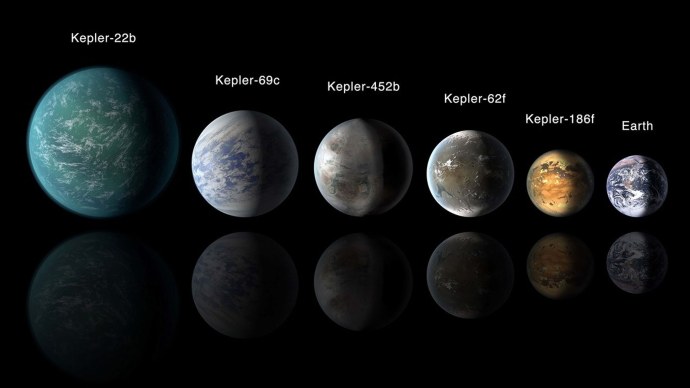
Foto og annen informasjon:
Pressefoto: Petra Hatalova, portrett; 1000px. Foto: Privat

Kort popsci artikkel relatert til doktorgradsarbeidet til Hatalova. Kvinnene viser vei: Reisen til exoplanetens indre, Geoforskning.no, 5. juni 2023