Disputasen er i Auditorium 1 i Geologibygningen, prøveforelesningen er i Auditorium 2 samme bygg. I noen tilfeller vil prøveforelesning og disputas være mulig å delta på digitalt, i så fall blir det lagt ut en lenke til Zoom.
Prøveforelesning
Tirsdag 25 november, 10:15-11:00, Aud 2, Geologibygningen:
Understanding Aerosol Interactions in the Earth System: Progress and Challenges in Model Simulations at different scale
Kreeringssammendrag
Vindavblåst sand virker avkjølende på klimaet ved å reflektere solinnstråling, og ved å modifisere skyenes egenskaper. I sin avhandling har Ove Haugvaldstad brukt atmosfære- og klimamodeller til å vurdere hvordan økte støvmengder har påvirket klimaet de siste 150 årene. Studien bekrefter at endringer i sandstøv kan ha viktige effekter på jordsystemet, men at dagens modeller har store usikkerheter i fremstillingen av sandstøvets fysiske egenskaper, noe som gir varierende estimater av klimaeffekten. Ved å utelate historiske økninger i sandstøv fra beregningene, skaper det større usikkerhet knyttet til om dagens klimamodeller tilskriver temperaturendringer de riktige årsakene.
Hovedfunn
Populærvitenskapelig artikkel om Haugvaldstads avhandling:
Drivers and impacts of windblown dust in a changing climate
Windblown mineral dust (sand) is a key component of the climate system, affecting the Earth’s energy balance, cloud properties, atmospheric chemistry, and biogeochemical cycles. It is important that climate models represent past changes in dust emissions consistent with reconstructions and accurately simulate the climatic effects of those changes. Reconstructions based on natural dust archives indicate large increases in global dust burden of about 55 ± 30% relative to the preindustrial era. However, current climate models do not reproduce these historical emission changes.
In his doctoral work, Ove Haugvaldstad addresses this discrepancy by (1) examining the role of natural variability in atmospheric circulation as a driver of the dust cycle (emission, transport, deposition) in East Asia; (2) quantifying the climate impact of historical dust emission changes using an ensemble of climate models forced with the reconstructed emissions; and (3) evaluating how models simulate dust’s direct and indirect climate effects.
The principal finding in the study is that prescribing the reconstructed increase in dust emissions produces surface cooling of a magnitude comparable to the cooling from anthropogenic air pollutant aerosols. This result implies that models may be compensating warming and cooling with incorrect attributions, raising the possibility that the climate system’s sensitivity to greenhouse gas forcing could be underestimated.
Foto og annen informasjon:
Pressefoto: Ove Haugvaldstad, portrett; 1500px. Foto: Privat

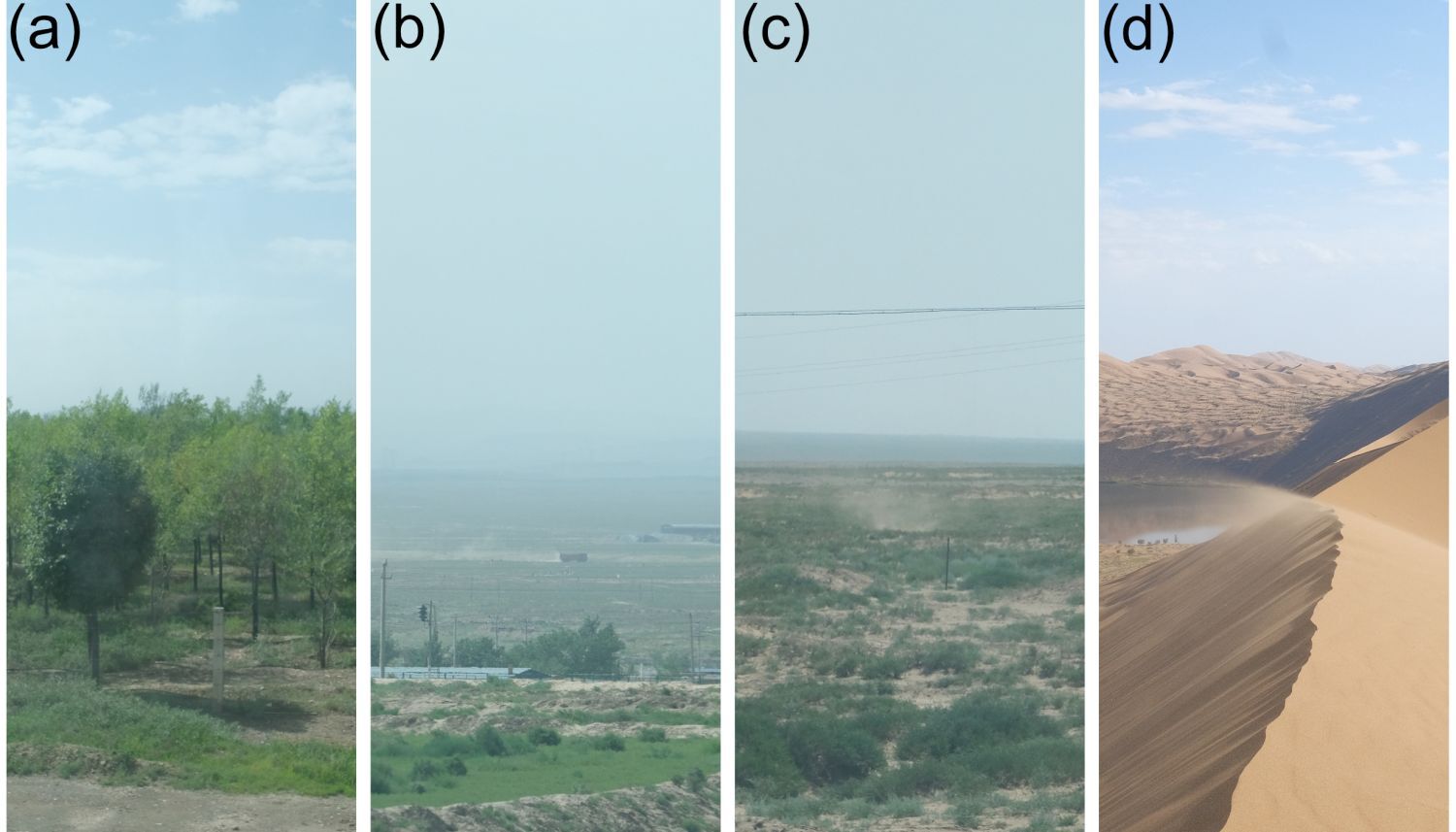
Annet bildemateriale: Figur med beskrivelse og kreditering som spesifisert i artikkelen over, størrelse 1500px.