Project
Regulation of epigenetic fate by SUMOylation
Although we use numerous model systems, yeast, human and mouse cells and mice, our aim remains unchanged: revealing new molecular mechanisms supporting adaptive regulation of chromatin, epigenetics and transcription in physiological and disease states. During the last five years, our efforts concentrated on a new player in the field of chromatin and transcriptional regulation: SUMOylation. This post-translational modification is essential during development, stress response, and maintenance of cellular identity. Furthermore, it supports cancer, therefore SUMOylation inhibition is a promising inroad into new treatments. Nevertheless, the molecular mechanisms regulated by SUMOylation at the chromatin are unclear and characterising them will be our objective in the following decades.
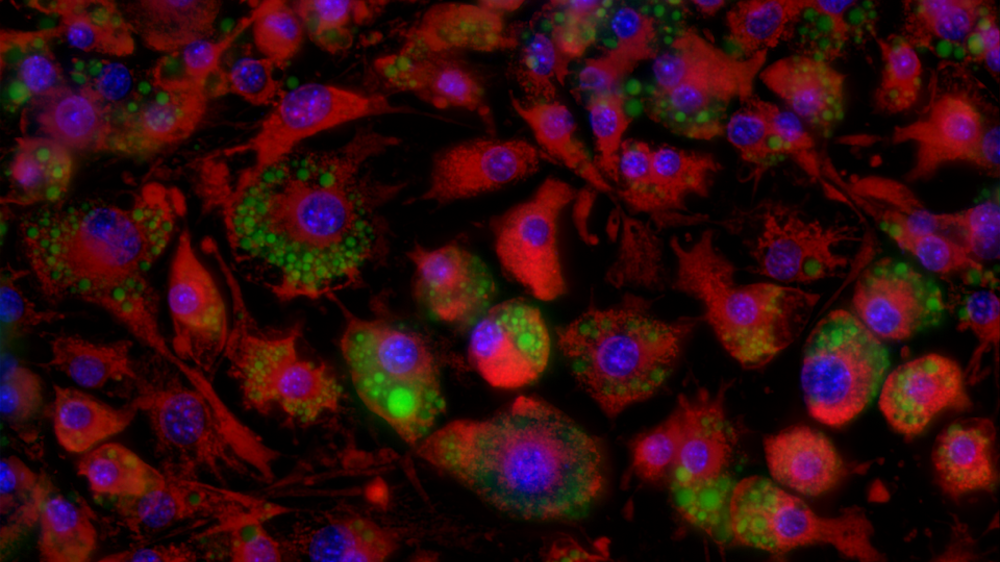
The recent discovery of an epigenetic obesogenic memory and epigenetic cancer fate emphasise the importance of understanding mechanisms that maintain epigenetic fate during cellular reprogramming and prevent diseases. To do so, we use state of the art high-throughput methods (ChIP-seq, ATAC-seq, CAGE, MS, Confocal microscopy, HiC, etc.), bioinformatics and classical biochemistry to identify the dynamics of chromatin structure and chromatin-bound factors’ sumoylation during adipocyte differentiation in human adipose stem cells and mouse models.
To do this, we collaborate with prominent scientists in the field of SUMOylation, epigenetics, metabolism and bioinformatics.
We welcome spontaneous applications from postdoctoral candidates:
Even when we do not have any positions open for application we can support candidates in their application for own funding to join the lab. E.g. Marie Skłodowska-Curie Individual Fellowships:
https://ec.europa.eu/research/mariecurieactions/actions/individual-fellowships_en
Selected publications:
Nothnagel PMC, Meslin P-A, Wik JA , Strøm YE, Bjørås M, Enserink JM, Skålhegg BS, Briand N, Mathelier A and Chymkowitch P (2026). Transient SUMOylation Inhibition In Human Pre-adipocytes Stably Imprints a Transcriptional Beiging Fate. Nucleic Acids Res. Mar 19;54(6):gkag232.
Bjune JI, Laber S, Lawrence-Archer L, Nothnagel PMC, Zhao X, Yamada S, Al-Sharabi N, Mustafa K, Njølstad PR, Claussnitzer M, Cox RD, Chymkowitch P, Mellgren G and Dankel SN (2025). IRX3 controls a SUMOylation-dependent differentiation switch in adipocyte precursor cells. Nature Communications Aug 6;16(1):7248
Dufour D, Zhao X, Chaleil F, Nothnagel PMC, Bjørås M, Lefrancois-Martinez A-M, Martinez A and Chymkowitch P (2025). Pharmacological Inhibition of SUMOylation with TAK-981 Mimics Genetic HypoSUMOylation in Murine Perigonadal White Adipose Tissue. Adipocyte Dec;14(1):2474107
Ramos-Alonso L, Holland P, Le Gras S, Zhao X, Jost B, Bjørås M, Barral Y, Enserink JM and Chymkowitch P (2023). Mitotic chromosome condensation resets chromatin to maintain transcriptional homeostasis. Proc Natl Acad Sci U S A Jan 24;120(4):e2210593120
Zhao X, Hendriks IA, Le Gras S, Ye T, Nguéa P A, Ramos-Alonso L, Flor Lien G, Klungland A, Jost B, Enserink JM, Nilsen ML and Chymkowitch P (2022). Waves of sumoylation support transcription dynamics during adipocyte differentiation. Nucleic Acids Res. Feb 22;50(3):1351-1369.
Garcia I, Munoz S, Ramos-Alonso L, Andersen AN, Zimmermann C, Erikson J, Bøe SO, Kaferle P, Papamichos-Chronakis M, Chymkowitch P, Enserink JM (2021). Kel1 is a phosphorylation-regulated noise suppressor of the pheromone signaling pathway. Cell Reports 37, 110186, December 28
Nguéa P A, Robertson J, Herrera MC, Chymkowitch P, Enserink JM (2019). De-sumoylation of RNAPIII Lies at the Core of the Sumo-Stress Response in yeast. J. Biol. Chem. Dec 06; 294: 18784
Kruitwagen T*, Chymkowitch P*, Denoth-Lippuner A, Enserink JM, Barral Y (2018). Centromeres license the mitotic condensation of yeast chromosome arms. Cell Oct 18;175(3):780-795.e15
Chymkowitch P, Nguéa P A, Aanes H, Robertson J, Klungland A, Enserink JM (2017). TORC1-dependent sumoylation of Rpc82 promotes RNA polymerase III assembly and activity. Proc Natl Acad Sci U S A Jan 31;114(5):1039-1044
Chymkowitch P, Nguéa P A, Aanes H, Koehler CJ, Thiede B, Lorenz S, Meza-Zepeda LA, Klungland A, Enserink JM (2015). Sumoylation of Rap1 Mediates the Recruitment of TFIID to Promote Transcription of Ribosomal Protein Genes. Genome Res. Jun;25(6):897-906
Chymkowitch P, Eldholm V, Lorenz S, Zimmermann C, Lindvall JM, Bjørås M, Meza-Zepeda LA, Enserink JM (2012). Cdc28 kinase activity regulates the basal transcription machinery at a subset of genes. Proc Natl Acad Sci U S A Jun 26;109(26):10450-5
Chymkowitch P, Le May N, Charneau P, Compe E, Egly JM (2011). The phosphorylation of the androgen receptor by TFIIH directs the ubiquitin/proteasome process. EMBO J. Feb 2;30(3):468-79
Ito S, Kuraoka I, Chymkowitch P, Compe E, Takedachi A, Ishigami C, Coin F, Egly JM, Tanaka K (2007). XPG stabilizes TFIIH, allowing transactivation of nuclear receptors: Implications for Cokayne syndrome in XP-G/CS patients. Mol. Cell Apr 27;26(2):231-43
Complete Publication list