
Modifications in histone tails is an epigenetic mechanism for changing the nature of chromatin, and ultimately gene expression. The Aalen lab has identified the CW domain as a novel reader recognizing such marks. CW domains are present in a number of plant and animal chromatin associated proteins in combination with various other reader and/or writer domains, a possible explanation of epigenetic inheritance. Of special interest in plants are the members of the family of Methyl-CpG-Binding domain (MBD) proteins that have a CW domain. The aim of my project is to elucidate the biological and biochemical function of CW-MBD proteins of Arabidopsis, investigating the potential function in light-regulated processes, dormancy and seed development.
Alumni


The aim of this Master thesis is to sort out the phylogenetic relationship of the IDL genes, and to identify the processes they are involved in by studying recently generated single, double and triple mutant lines. By comparison of expression patterns and mutant phenotype for IDL genes and HSL LRR-RLKs we hope to identify the receptors specific for the different IDL peptides.

Cellular development of Sphaeroforma arctica
I am using single-cell transcriptomics on the Choanozoan Sphaeroforma arctica to find differences in gene expression between three cell morphologies as it goes through it’s life cycle. By finding out which genes S.arctica expresses during it’s life cycle we want to gain insight into which genes that were important for the evolutionary transition from a unicellular to a multicellular lifestyle.
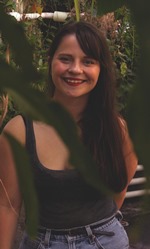
My MSc-project is a systematic and biogeographical study of a group of small, cupulate, black ascomycetes in the fungal genus Helvella. The species in this group are morphologically very similar and difficult to distinguish in the field, but molecularly they represent divergent evolutionary lineages. I will try to properly delimit the phylogenetic species within this species complex and to resolve the phylogenetic relationships between them, using different genetic markers. The work will be based on both herbarium collections and freshly collected specimens. Hopefully the work will result in a clear picture of the different species in this group, both regarding phylogeny, morphology and biogeography.

The goal of my master thesis is to identify potential adhesins of fish pathogen Yersinia ruckeri. The type Ve secretion proteins are here in focus. The adhesins would then be expressed in E.coli cells and used in adhesion assays to the fish cell lines. In this way also the receptors for adhesins could be determined. The findings would help to understand the role of invasin-like molecule in host infection.
My project is part of the DRIVE-project, which looks at effects of elevated temperatures and altered annual precipitation patterns on plant root microbiomes. My project aims to find out if there is a correlation between the composition of foliar endophytic fungi communities and these environmental variables, using the SEEDCLIM climate grid and HTS on host plants Bistorta vivipara and Campanula rotundifolia. Answering this question allows predictions on how foliar endophytic fungi communities can be affected by future climate change.

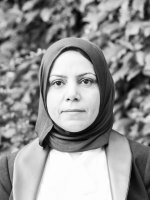

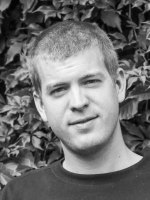

In my master project I will try to further investigate the mechanisms behind the floral organ abscission process in Arabidopsis by investigating downstream components of the IDA signaling pathway.

My master project is part of a bigger research project focusing on the transition from unicellular protists to multicellular animals. I work with gene expression data from the ctenophore Mnemiopsis leidiy, a member of one of the earliest diverging animal lineages, and in particular the spatiotemporal expression of long non-coding RNAs (lncRNAs). lncRNAs play important roles during the development of bilaterian animals, but more work is needed to understand the role of lncRNAs in the earlier branching non-bilaterian animal lineages.

My master project is a part of the ClimFun project, which investigates the effects of climate change on fungal ecology. In my project, I will find out if there is a correlation between the changing environment and host specification of wood-decay fungi in the UK. Using spatial statistical analysis of fungal datasets, I hope to describe the ecological trends occurring between 1970-2010. This will improve our understanding of climate change effects on fungi.

I work with differential expression of genes in the larval and adult stages of the Ctenophore Mnemiopsis leydyi along its oral-aboral axis. Recent whole genome sequencing of this basal metazoan phylum has placed the ctenophores at the very base of the animal tree of life, even preceding sponges as an early diverging animal group. These results are much debated and if true, will change our notion of the common ancestor of all animals.

Biosynthesis of nanoparticles (AU and Pd) via bacteria
The goals of this project are to find the genes governing the synthesis using recombinant DNA technologies, to optimize reaction protocols, to upscale production of particles, and to characterize them using electron microscopy (EM) and compare their catalytic properties to a known industrial catalysts.

My master project is part of the InHouse project on Serpula lacrymans. The main objective for this project is to obtain knowledge on how different variants of Serpula lacrymans reacts to changes in available nutrient resources. We want to find out if the in-house strains have more effective nutrient transport mechanisms than the wild types.

My Project is to investigate peptide induced cytosolic Ca2+ responses in Arabidopsis thaliana. I manly look at the small peptide ligand IDA regulating floral organ abscission and lateral root emergence.

"Mycorrhiza and root-associated fungi of the arctic plant Cassiope teragona"
In this project we will use Illumina high-throughoutput sequencing to characterize the fungal community in the roots of C.tetragona plants from the natural landscape in the high arctic of Svalbard and in the northern Scandinavian arctic.

The project is a part of a bigger study on how unicellular organisms evolved into multicellular animals. In my project, I study how the expression of long non-coding RNAs affect the development of the primary body axis in sponges, one of the earliest phylums to branch of the metazoan tree of life.

“Molecular studies on selected colicin types(MOLCOL)”
In this project, we study colicins, a class of bacterial proteins that are produced by some bacterial strains to kill other bacteria. Colicins are produced e.g. in the human gut, where different Enterobacteria compete for food. We study the toxic function of these proteins, using methods from molecular and structural biology.

My project is to develop a stable Escherichia coli strain expressing fluorescent biomarkers in its inner and outer membrane. This will be a helpful tool to detect contamination in the two membrane fractions after membrane separation.