Geomagnetic navigation, which utilizes the ubiquitous Earth’s magnetic field signals, a key geophysical field, offers a promising solution for mission guidance without reliance on GPS or pre-stored maps, particularly for long-range navigation in unexplored regions. However, current validation of these navigation systems remains largely in the simulation stage, lacking low-cost, high-fidelity physical testbeds capable of reproducing complex geomagnetic environments. This paper introduces a Hardware-in-the-loop simulation (Hils) testbed designed to fill this gap. A core challenge is the generation of high-fidelity, dynamic magnetic fields at low cost within a standard, unshielded laboratory. To solve this, we propose a novel convex combination coil control method, which integrates linear and nonlinear adaptive filters to provide real-time compensation for external environmental interference. This control method, combined with an optimized coil structure, enables the platform to rapidly and smoothly reproduce complex geophysical phenomena, such as regional nonlinear magnetic anomalies and geomagnetic storm interference, thus avoiding expensive, at-sea navigation experiments. We provide a detailed analysis of the platform’s generated field accuracy, uniformity, and stability. Crucially, to prove its practical utility for navigation validation, we demonstrate the platform’s application in a true Hils configuration, successfully hosting and evaluating the performance of classic geomagnetic navigation algorithms, including ICCP and MAGCOM. This confirms the testbed’s effectiveness in advancing the practical deployment of geomagnetic navigation systems.
Zhang, Min; Apperley, Mark & Zhang, Shiliang
(2026).
Demand-Side Flexibility for Community Benefits and Distribution Network Deferral: A Case Study of a New Zealand Island.
Energies.
19(19).
doi: 10.3390/en19194631.
Fulltekst i vitenarkivVis sammendrag
The decarbonisation of the energy system is accelerating the uptake of distributed and renewable energy resources. Nevertheless, this stresses already-constrained distribution networks, and it can lead to expensive grid infrastructure upgrades. Demand-side flexibility offers a non-network solution that can reduce power grid reinvestment and reinforcement. This paper investigates the potential of demand-side flexibility, where we explore community energy sharing and coordinated demand response through a data-driven case study for Waiheke Island, New Zealand. In particular, a demand response management framework is developed that coordinates household hot-water cylinders, EV charging, rooftop solar power, and home and community battery storage. The framework is first evaluated in a community-scale energy-sharing scenario that incorporates flexible load scheduling and market-level settlement. The analysis is then extended to the entire Waiheke Island under a realistic demand-response setting, supported by a digital representation of the island’s electricity network and energy system. The study integrates real household smart-meter data, feeder-level consumption data, and information obtained from multiple publicly available sources to assess the island-wide potential for demand-side flexibility. Detailed simulations show that rescheduling hot-water cylinder operation, EV charging, and household battery storage can substantially reduce the island’s evening peak demand, thereby delaying network reinforcement and generating significant economic benefits.
Ma, Xuehui; Zhang, Shiliang; Zhang, Xiaohui; Xin, Jing & Marina, Hector Garcia de
(2026).
Linear quadratic control for discrete-time systems with stochastic and bounded noises.
American Control Conference (ACC).
ISSN 0743-1619.s. 3230–3237.
doi: https:/ieeexplore.ieee.org/document/11616468.
Fulltekst i vitenarkivVis sammendrag
This paper focuses on the linear quadratic control (LQC) design of systems corrupted by both stochastic noise and bounded noise simultaneously. When only one type of these noises is considered, the LQC strategy leads to either a stochastic or a robust controller. However, there is no LQC strategy that can simultaneously handle stochastic and bounded noises efficiently. This limits the scope where existing LQC strategies can be applied. In this work, we look into the LQC problem for discrete-time systems that have both stochastic and bounded noises in their dynamics. We develop a state estimation method for such systems by efficiently combining a Kalman filter and an ellipsoid set-membership filter. The developed estimator can recover the estimation optimality when the system is subject to both kinds of noise, the stochastic and the bounded. Leveraging the developed state estimation, we derive a robust state-feedback control law for the LQC problem. The control law derivation takes into account both stochastic and bounded-state estimation errors, so as to avoid over-conservativeness while sustaining stability in the control. In this way, the developed LQC strategy extends the range of scenarios where LQC can be applied, especially those of real-world control systems with diverse sensing which are subject to different kinds of noise. We present numerical simulations, and the results demonstrate the enhanced control performance with the proposed strategy.
Zhang, Shiliang & Maharjan, Sabita
(2026).
Geosolar: An API for solar panel detection and geolocation from open GIS data and aerial imagery.
ResearchGate preprint.
doi: 10.13140/RG.2.2.35907.36643.
Fulltekst i vitenarkiv
Zhang, Shiliang & Maharjan, Sabita
(2026).
Urban Power Grid Topology and Hierarchy Identification from Open Data.
arXiv.org.
ISSN 2331-8422.
doi: 10.48550/arXiv.2606.21352.
Fulltekst i vitenarkiv
Wang, Jinbao; Liu, Jun; Ma, Xuehui; Zhang, Shiliang; Yang, Chenhui & An, Bairen
(2026).
Ultra-short-term solar power forecasting by deep learning and data reconstruction.
Solar Energy.
ISSN 0038-092X.
315.
doi: 10.1016/j.solener.2026.114749.
Fulltekst i vitenarkiv
Zhang, Shiliang; Maharjan, Sabita & Turgut, Damla
(2026).
AI and Open-data Driven Scalable Solar Power Profiling.
arXiv.org.
ISSN 2331-8422.
doi: 10.48550/ARXIV.2605.02738.
Fulltekst i vitenarkiv
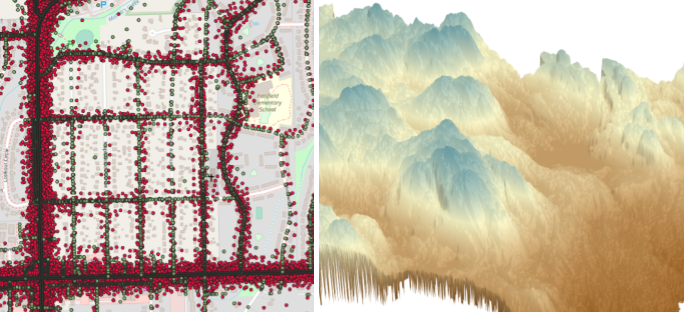
The efficient management and planning of urban energy systems require integrated three-dimensional (3D) models that accurately represent both consumption nodes and distribution networks. This paper introduces our developed approach and openly released software that automate the generation of digital 3D urban energy model from open data. We synthesize data from OpenTopography, OpenStreetMap, and Overture Maps in generating 3D models. The rendered model visualizes and contextualizes distribution power grids alongside the built environment and transportation networks. Our developed software, including an open python library and a free API, provides interactive figures for the 3D models. The rendered models are essential for analyzing infrastructure alignment and spatially linking energy demand nodes (buildings) with energy supply (utility grids). The developed API leverages standard Web Mercator coordinates (EPSG:3857) and JSON serialization to ensure interop-erability within smart city and energy simulation platforms. We also provide a graphic user interface (GUI) where end-users can access our API via a cloud-based server, regardless of their programming skills and what devices and platforms their are using. We anticipate that our approach and software can support field researchers, developers, end-users, and policy-makers in a varieties of applications like urban energy monitoring, demand-supply analysis, and energy digital twins.
Zhang, Shiliang & Maharjan, Sabita
(2026).
Security, privacy, and agentic AI in a regulatory view: From definitions and distinctions to provisions and reflections.
arXiv.org.
ISSN 2331-8422.
doi: 10.48550/ARXIV.2603.18914.
Fulltekst i vitenarkivVis sammendrag
The rapid proliferation of artificial intelligence (AI) technologies has led to a dynamic regulatory landscape, where legislative frameworks strive to keep pace with technical advancements. As AI paradigms shift towards greater autonomy, specifically in the form of agentic AI, it becomes increasingly challenging to precisely articulate regulatory stipulations. This challenge is even more acute in the domains of security and privacy, where the capabilities of autonomous agents often blur traditional legal and technical boundaries. This paper reviews the evolving European Union (EU) AI regulatory provisions via analyzing 24 relevant documents published between 2024 and 2025. From this review, we provide a clarification of critical definitions. We deconstruct the regulatory interpretations of security, privacy, and agentic AI, distinguishing them from closely related concepts to resolve ambiguity. We synthesize the reviewed documents to articulate the current state of regulatory provisions targeting different types of AI, particularly those related to security and privacy aspects. We analyze and reflect on the existing provisions in the regulatory dimension to better align security and privacy obligations with AI and agentic behaviors. These insights serve to inform policymakers, developers, and researchers on the compliance and AI governance in the society with increasing algorithmic agencies.
Wang, Jinbao; Zhang, Shiliang; Liu, Jun; Ma, Xuehui & Liu, Haolin
(2026).
Fine-tuning for data-enabled predictive control of noisy systems by reinforcement learning.
Evolving Systems.
ISSN 1868-6478.
17.
doi: 10.1007/s12530-026-09804-2.
Fulltekst i vitenarkivVis sammendrag
A novel reinforcement learning-based framework for Data-enabled predictive control (DeePC) hyperparameter tuning, designated SARSA-DeePC, is proposed in this work to achieve model-free operation, real-time adaptability, and computational tractability. DeePC relies on system input-output (I/O) measurements to characterize dynamics, where control performance critically depends on the regularization parameter lambda_g. Under noisy conditions, existing approaches often exhibit prohibitive computational burdens or excessive conservatism. In this framework, the hyperparameter tuning problem is formulated as a Markov Decision Process (MDP), establishing a quantitative mapping between I/O behavior and lambda_g. An optimal tuning policy is acquired through offline training, while continuous Q-table updates enable robust online adaptation to non-stationary noise. Theoretical guarantees for convergence and stability under stochastic exploration are derived. Experimental validation over 10 independent trials demonstrates that SARSA-DeePC significantly outperforms baseline methods. Quantitatively, the proposed approach achieves Mean Absolute Error (MAE) reductions of 72.5% (95% Confidence Interval (CI): [65.7%, 79.3%]) under baseline noise and 50.5% (95% CI: [38.8%, 62.3%]) following noise amplification. Compared to standard and competing adaptive DeePC methods, the MAE is reduced by up to 37.5% and 21.4% under varying noise intensities, respectively. With an average per-cycle computational time of 0.0292 seconds, the framework maintains balanced multi-metric performance and statistical robustness, validating its efficacy for real-time industrial applications.
Zhang, Shiliang; Maharjan, Sabita; STRUNZ, KAI & Bryne, Jan Christian
(2026).
Descriptor: Norwegian Electricity in Geographic Dataset (NoreGeo).
IEEE Data Descriptions (IEEE-DATA).
s. 1–12.
doi: 10.1109/ieeedata.2026.3658039.
Fulltekst i vitenarkivVis sammendrag
Geographic data is vital in understanding, analyzing, and contextualizing energy usage at the regional level within electricity systems. While geospatial visualizations of electricity infrastructure and distributions of production and consumption are available from governmental and third-party sources, these sources are often disparate, and compatible geographic datasets remain scarce. In this paper, we present a comprehensive geographic dataset representing the electricity system in Norway. We collect data from multiple authoritative sources, process it into widely accepted formats, and generate interactive maps based on this data. Our dataset includes information for each municipality in Norway for the year 2024, encompassing electricity infrastructure, consumption, renewable and conventional production, main power grid topology, relevant natural resources, and population demographics. This work results in a formatted geographic dataset that integrates diverse informational resources, along with openly released interactive maps. We anticipate that our dataset will alleviate software incompatibilities in data retrieval, and facilitate joint analyses on regional electricity system for energy researchers, stakeholders, and developers.
Mecanum wheeled mobile robots (MWMRs) are highly susceptible to actuator faults that degrade performance and risk mission failure. Current fault tolerant control (FTC) schemes for MWMRs target complete actuator failures like motor stall, ignoring partial faults e.g., in torque degradation. We propose an FTC strategy handling both fault types, where we adopt posterior probability to learn real-time fault parameters. We derive the FTC law by aggregating probability-weighed control laws corresponding to predefined faults. This ensures the robustness and safety of MWMR control despite varying levels of fault occurrence. Simulation results demonstrate the effectiveness of our FTC under diverse scenarios.
Zhang, Shiliang; Maharjan, Sabita; Bygrave, Lee Andrew & Yu, Shui
(2025).
Data Sharing, Privacy and Security Considerations in the Energy Sector: A Review from Technical Landscape to Regulatory Specifications.
arXiv.org.
ISSN 2331-8422.
doi: 10.48550/ARXIV.2503.03539.
Fulltekst i vitenarkivVis sammendrag
Decarbonization, decentralization and digitalization are the three key elements driving the twin energy transition. The energy system is evolving to a more data driven ecosystem, leading to the need of communication and storage of large amount of data of different resolution from the prosumers and other stakeholders in the energy ecosystem. While the energy system is certainly advancing, this paradigm shift is bringing in new privacy and security issues related to collection, processing and storage of data - not only from the technical dimension, but also from the regulatory perspective. Understanding data privacy and security in the evolving energy system, regarding regulatory compliance, is an immature field of research. Contextualized knowledge of how related issues are regulated is still in its infancy, and the practical and technical basis for the regulatory framework for data privacy and security is not clear. To fill this gap, this paper conducts a comprehensive review of the data-related issues for the energy system by integrating both technical and regulatory dimensions. We start by reviewing open-access data, data communication and data-processing techniques for the energy system, and use it as the basis to connect the analysis of data-related issues from the integrated perspective. We classify the issues into three categories: (i) data-sharing among energy end users and stakeholders (ii) privacy of end users, and (iii) cyber security, and then explore these issues from a regulatory perspective. We analyze the evolution of related regulations, and introduce the relevant regulatory initiatives for the categorized issues in terms of regulatory definitions, concepts, principles, rights and obligations in the context of energy systems. Finally, we provide reflections on the gaps that still exist, and guidelines for regulatory frameworks for a truly participatory energy system.
Våle, Oskar; Zhang, Shiliang; Maharjan, Sabita & Klæboe, Gro
(2025).
Exploring the Interpretability of Forecasting Models for Energy Balancing Market.
Artificial Intelligence Science and Engineering.
ISSN 2097-5104.
1(4),
s. 295–306.
doi: 10.23919/aise.2025.000020.
Fulltekst i vitenarkivVis sammendrag
The balancing market in the energy sector plays a critical role in physically and financially balancing the supply and demand. Modeling dynamics in the balancing market can provide valuable insights and prognosis for power grid stability and secure energy supply. While complex machine learning models can achieve high accuracy, their “black-box” nature severely limits the model interpretability. In this paper, we explore the trade-off between model accuracy and interpretability for the energy balancing market. Particularly, we take the example of forecasting manual frequency restoration reserve (mFRR) activation price in the balancing market using real market data from different energy price zones. We explore the interpretability of mFRR forecasting using two models: extreme gradient boosting (XGBoost) machine and explainable boosting machine (EBM). We also integrate the two models, and we benchmark all the models against a baseline naive model. Our results show that EBM provides forecasting accuracy comparable to XGBoost while yielding a considerable level of interpretability. Our analysis also underscores the challenge of accurately predicting the mFRR price for the instances when the activation price deviates significantly from the spot price. Importantly, EBM's interpretability features reveal insights into non-linear mFRR price drivers and regional market dynamics. Our study demonstrates that EBM is a viable and valuable interpretable alternative to complex black-box AI models in the forecast for the balancing market.
Ma, Xuehui; Zhang, Shiliang; Sun, Zhiyong; Zhang, Xiaohui & Maharjan, Sabita
(2025).
Adaptive Robust Control for Uncertain Systems with Ellipsoid-Set Learning.
IEEE Transactions on Automatic Control.
ISSN 0018-9286.s. 16–16.
doi: 10.1109/tac.2025.3649143.
Fulltekst i vitenarkiv
Yu, Yajie; Ma, Xuehui; Zhang, Shiliang; Wang, Zhuzhu; Shi, Xubing & Li, Yushuai
[Vis alle 7 forfattere av denne artikkelen](2025).
Adaptive Ensemble Control for Stochastic Systems With Mixed Asymmetric Laplace Noises.
IEEE Transactions on Systems, Man & Cybernetics. Systems.
ISSN 2168-2216.
56(1),
s. 307–320.
doi: 10.1109/tsmc.2025.3623515.
Fulltekst i vitenarkiv
Zhang, Shiliang; Fatih, Dyako; Abdulqadir, Fahmi; Schwarz, Tobias & Ma, Xuehui
(2025).
Extended Vehicle Energy Dataset (eVED): An Enhanced Large-Scale Dataset for Vehicle Energy Consumption Analysis.
IEEE Vehicular Technology Conference (VTC).
ISSN 1090-3038.
doi: 10.1109/vtc2025-spring65109.2025.11174415.
Fulltekst i vitenarkiv
Bai, Wenqi; Zhang, Shiliang; Zhang, Xiaohui; Ma, Xuehui; Yang, Songnan & Li, Yushuai
[Vis alle 7 forfattere av denne artikkelen](2025).
Exploring the Generalizability of Geomagnetic Navigation: A Deep Reinforcement Learning Approach with Policy Distillation.
IEEE Transactions on Instrumentation and Measurement.
ISSN 0018-9456.
doi: 10.1109/TIM.2025.3598399.
Fulltekst i vitenarkiv
Xu, Jiachen; Li, Yushuai; Zhang, Xiaoyu; Guan, Peiyuan; Zhang, Shiliang & Li, Tianyi
(2024).
Digital Twin for Smart Grid: A Survey.
International Conference on Cyber-Energy Systems and Intelligent Energy (ICCSIE).
doi: 10.1109/iccsie61360.2024.10698570.
Fulltekst i vitenarkiv
Ma, Xuehui; Zhang, Shiliang; Li, Yushuai; Qian, Fucai; Sun, Zhiyong & Huang, Tingwen
(2024).
Adaptive Robust Tracking Control With Active Learning for Linear Systems With Ellipsoidal Bounded Uncertainties.
IEEE Transactions on Automatic Control.
ISSN 0018-9286.
69(11),
s. 8096–8103.
doi: 10.1109/TAC.2024.3410912.
Fulltekst i vitenarkiv
Gong, Dawei; Song, Yaru; Zhu, Minglei; Teng, Yunlong; Jiang, Jinmao & Zhang, Shiliang
(2023).
Adaptive Variable-Damping Impedance Control for Unknown Interaction Environment.
Mathematics.
11(24).
doi: 10.3390/math11244961.
Fulltekst i vitenarkiv
Wei, Liu; Teng, Fei; Fang, Xiaotian; Liang, Yuan & Zhang, Shiliang
(2023).
An RNN-Based Performance Identification Model for Multi-Agent Containment Control Systems.
Mathematics.
11(12).
doi: 10.3390/math11122760.
Fulltekst i vitenarkivVis sammendrag
In the containment control problem of multi-agent systems (MASs), the convergence of followers is always a potential threat to the security of system operations. From the perspective of system topology, the inherently non-linear properties of the algebraic connectivity of the follower2follower (F2F) network, combined with the influence of the leader2follower (L2F) topology on the system, make it difficult to design the convergence positions of the followers through mere mathematical analysis. Therefore, in the background of temporary networking tasks for large-scale systems, to achieve the goal of forecasting the performance of the whole system when networking is only completed with local information, this paper investigates the application and effectiveness of recurrent neural networks (RNNs) in the containment control system performance identification, thus improving the efficiency of system networking while ensuring system security. Two types of identification models based on two types of neural networks (NNs), MLP and standard RNN are developed, according to the range of information required for performance identification. Evaluation of the models is carried out by means of the coefficient of determination (R2) as well as the root-mean-square error (RMSE). The results show that each model may produce a better forecasting accuracy than the other models in specific cases, with models based on the standard RNN possessing smaller errors. With the proposed method, model identification can be achieved, but in-depth development of the model in further studies is still necessary to the extent the accuracy of the model.
Ren, Rufei; Li, Yushuai; Sun, Qiuye; Zhang, Shiliang; Gao, David Wenzhong & Maharjan, Sabita
(2023).
Switched Surplus-Based Distributed Security Dispatch for Smart Grid With Persistent Packet Loss.
IEEE Internet of Things Journal.
ISSN 2327-4662.
11(4),
s. 6185–6198.
doi: 10.1109/JIOT.2023.3311758.
Fulltekst i vitenarkivVis sammendrag
Communication network failure, e.g., persistent packet loss, may considerably affect the safe and stable operation of smart grids. This may degrade the performance of various components and applications including energy management and economic dispatch. We propose a switched surplus-based distributed security dispatch approach to cope with the persistent packet loss under unreliable communication network environment. First, we jointly consider the packet loss sequence and the dynamic triggering sequence to define actual affected periods caused by the persistent packet loss. Then, we outline an incentive scheme, integrate primal-dual analysis and eigenvalue perturbation theory to design the switched surplus-based distributed security dispatch algorithm. Further, we design a dynamic triggering mechanism that enables the proposed algorithm to dynamically switch to different modes according to the change in network state. With those components, the proposed method offers strong robustness against persistent packet loss. In addition, we provide the convergence and optimality proofs of the algorithm. Finally, simulation results are provided to validate the proposed method, and to demonstrate its effectiveness.
Zhang, Shiliang; Hagermalm, Anton; Slavnic, Sanjin; Schiller, Elad & Almgren, Magnus
(2023).
Evaluation of Open-Source Tools for Differential Privacy.
Sensors.
23(14).
doi: 10.3390/s23146509.
Fulltekst i vitenarkivVis sammendrag
Differential privacy (DP) defines privacy protection by promising quantified indistinguishability between individuals who consent to share their privacy-sensitive information and those who do not. DP aims to deliver this promise by including well-crafted elements of random noise in the published data, and thus there is an inherent tradeoff between the degree of privacy protection and the ability to utilize the protected data. Currently, several open-source tools have been proposed for DP provision. To the best of our knowledge, there is no comprehensive study for comparing these open-source tools with respect to their ability to balance DP’s inherent tradeoff as well as the use of system resources. This work proposes an open-source evaluation framework for privacy protection solutions and offers evaluation for OpenDP Smartnoise, Google DP, PyTorch Opacus, Tensorflow Privacy, and Diffprivlib. In addition to studying their ability to balance the above tradeoff, we consider discrete and continuous attributes by quantifying their performance under different data sizes. Our results reveal several patterns that developers should have in mind when selecting tools under different application needs and criteria. This evaluation survey can be the basis for an improved selection of open-source DP tools and quicker adaptation of DP.
Ma, Xuehui; Zhang, Shiliang; Li, Yushuai; Qian, Fucai & Huang, Tingwen
(2023).
Adaptive robust tracking control with active learning for linear systems with ellipsoidal bounded uncertainties.
arXiv.org.
ISSN 2331-8422.
doi: 10.48550/arXiv.2308.03727.
Fulltekst i vitenarkiv
Ma, Xuehui; Zhang, Shiliang; Qian, Fucai; Wang, Jinbao & Li, Yushuai
(2022).
Active learning for anti-disturbance dual control of unknown nonlinear systems.
arXiv.org.
ISSN 2331-8422.
doi: 10.48550/arXiv.2212.08934.
Fulltekst i vitenarkiv
Zhang, Shiliang
(2021).
An Energy Consumption Model for Electrical Vehicle Networks via Extended Federated-learning.
IEEE Intelligent Vehicles Symposium (IV).
ISSN 1931-0587.
doi: 10.1109/iv48863.2021.9575223.
Fulltekst i vitenarkiv
Ma, Xuehui; Qian, Fucai & Zhang, Shiliang
(2020).
Dual control for stochastic systems with multiple uncertainties.
Chinese Control Conference (CCC).
ISSN 1934-1768.
doi: 10.23919/ccc50068.2020.9189668.
Fulltekst i vitenarkiv
Ma, Xiaoyan; Zhang, Yanbin; Cao, Hui; Zhang, Shiliang & Zhou, Yan
(2018).
Nonlinear Regression with High-Dimensional Space Mapping for Blood Component Spectral Quantitative Analysis.
Journal of Spectroscopy.
ISSN 2314-4920.
2018,
s. 8–8.
doi: 10.1155/2018/2689750.
Fulltekst i vitenarkivVis sammendrag
Accurate and fast determination of blood component concentration is very essential for the efficient diagnosis of patients. This paper proposes a nonlinear regression method with high-dimensional space mapping for blood component spectral quantitative analysis. Kernels are introduced to map the input data into high-dimensional space for nonlinear regression. As the most famous kernel, Gaussian kernel is usually adopted by researchers. More kernels need to be studied for each kernel describes its own high-dimensional feature space mapping which affects regression performance. In this paper, eight kernels are used to discuss the influence of different space mapping to the blood component spectral quantitative analysis. Each kernel and corresponding parameters are assessed to build the optimal regression model. The proposed method is conducted on a real blood spectral data obtained from the uric acid determination. Results verify that the prediction errors of proposed models are more precise than the ones obtained by linear models. Support vector regression (SVR) provides better performance than partial least square (PLS) when combined with kernels. The local kernels are recommended according to the blood spectral data features. SVR with inverse multiquadric kernel has the best predictive performance that can be used for blood component spectral quantitative analysis.
Zhang, Shiliang; Cao, Hui; Yang, Shuo; Zhang, Yanbin & Hei, Xiali
(2018).
Sequential Outlier Criterion for Sparsification of Online Adaptive Filtering.
IEEE Transactions on Neural Networks and Learning Systems.
ISSN 2162-237X.
29(11),
s. 5291–5291.
doi: 10.1109/tnnls.2018.2795719.
Fulltekst i vitenarkiv
Zhang, Shiliang; Cao, Hui; Ye, Zonglin; Zhang, Yanbin & Hei, Xiali
(2018).
An outlier detection scheme for dynamical sequential datasets.
Communications in Statistics - Simulation and Computation.
ISSN 0361-0918.
48(5),
s. 1502–1502.
doi: 10.1080/03610918.2017.1414249.
Fulltekst i vitenarkiv
The structure of the optimization procedure may affect the control quality of nonlinear model predictive control (MPC). In this paper, a data‐driven optimization framework for nonlinear MPC is proposed, where the linguistic model is employed as the prediction model. The linguistic model consists of a series of fuzzy rules, whose antecedents are the membership functions of the input variables and the consequents are the predicted output represented by linear combinations of the input variables. The linear properties of the consequents lead to a quadratic optimization framework without online linearisation, which has analytical solution in the calculation of control sequence. Both the parameters in the antecedents and the consequents are calculated by a hybrid‐learning algorithm based on plant data, and the data‐driven determination of the parameters leads to an optimization framework with optimized controller parameters, which could provide higher control accuracy. Experiments are conducted in the process control of biochemical continuous sterilization, and the performance of the proposed method is compared with those of the methods of MPC based on linear model, the nonlinear MPC with neural network approximator, and MPC nonlinear with successive linearisations. The experimental results verify that the proposed framework could achieve higher control accuracy.
Yuan, Yiwei; Zhang, Yanbin; Cao, Hui; Si, Gangquan; Zhang, Shiliang & Xie, Qian
(2016).
Nonlinear prediction model for ventilation of ball mill pulverizing system.
Chinese Control Conference (CCC).
ISSN 1934-1768.
doi: 10.1109/chicc.2016.7553664.
Fulltekst i vitenarkiv
Zhang, Shiliang; Cao, Hui; Zhang, Yanbin & Xiong, ZongZhen
(2016).
Energy-efficient dynamic matrix control for biochemical continuous sterilization.
Chinese Control and Decision Conference (CCDC).
doi: 10.1109/ccdc.2016.7531058.
Fulltekst i vitenarkiv
Zhang, Shiliang; Cao, Hui; Zhang, Yanbin; Yuan, Yiwei & Ma, Xiaoyan
(2016).
A nonlinear model predictive controller based on the linguistic model for biochemical continuous sterilization.
Chinese Control Conference (CCC).
ISSN 1934-1768.
doi: 10.1109/chicc.2016.7554029.
Fulltekst i vitenarkiv
Zhang, Shiliang; Maharjan, Sabita & Bajwa, Hafsa
(2024).
A Systematic Literature Review on the Socio-Psychological Aspects for User Involvement and Implementation Barriers for Transactive Energy Systems.
Universitetet i Oslo.
Fulltekst i vitenarkiv
Maharjan, Sabita; Zhang, Shiliang & Sandvold, June Andrea Vedvik
(2024).
A systematic review of privacy in smart grid and transactive energy systems.
Universitetet i Oslo.
Fulltekst i vitenarkiv