High-energy neutrons for analytical purposes
Currently, this mainly involves developing and using high-energy neutrons for analytical purposes to determine low and very low concentrations of specific elements in various compounds. Our focus is primarily on extracting "critical" metals from minerals and waste streams ("urban mining"). By critical metals, we refer to metals that are in high demand by society but where the supply is or might become problematic. This issue can stem from the fact that they are supplied by countries we do not trust or simply because the availability of the metal is lower than the demand. Europe is concerned about the supply of a long list of metals and other elements that are critically important for key technologies, such as metals for making high-strength permanent magnets for electrical motors and generators (which are crucial for the efficient generation of sustainable energy and usage of energy) and components for electronic circuits. By using radiochemical methods in addition to more "normal" chemical analytical techniques to investigate the extraction, purification, and reuse of such critical metals, we have an added advantage. Our goal is to maximize this advantage to contribute to solving important and critical issues regarding the development of a more sustainable and circular economy in the use of critical metals.
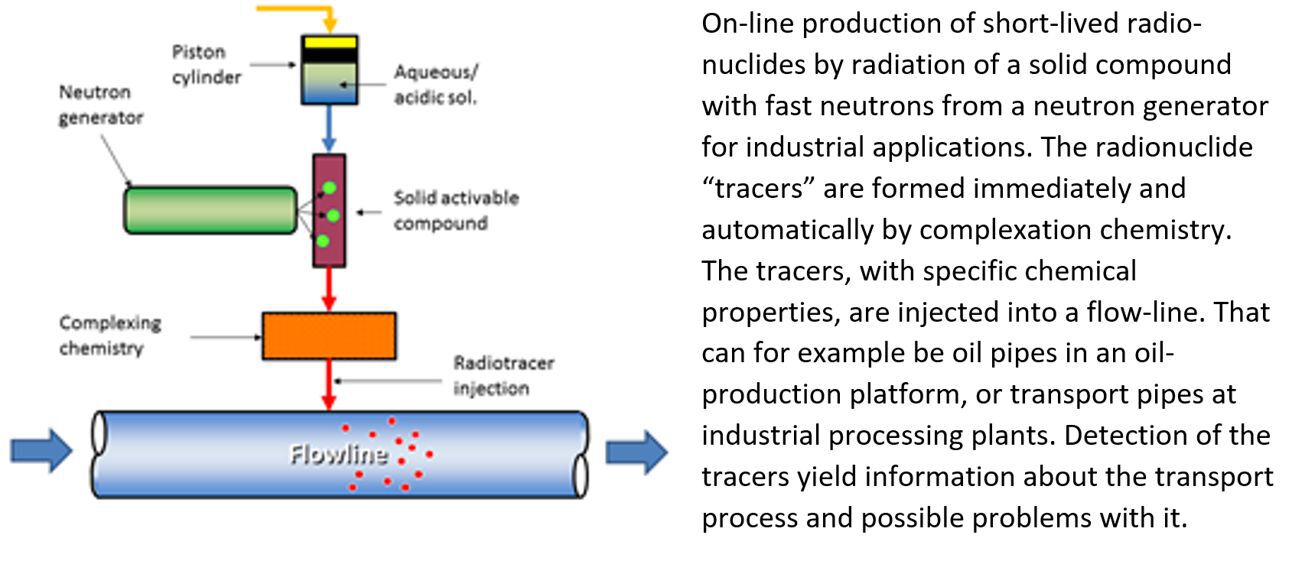
Neutrons can be used for analytical purposes either by producing radionuclides, which can subsequently be used in "tracer experiments," where the radionuclides are mixed with the normally stable isotopes of the element of interest. Then, the path of the element can be followed in chemical reactions or industrial process streams by measuring where the radioactivity is. Due to the very penetrating radioactivity emitted by most radionuclides it is much easier to determine the amount of a given element than in most other analytical techniques. However, with neutrons it is also possible to transform none-radioactive elements in a sample into radionuclides to determine the amount of the element by measuring the amount of the created radionuclides. This is called Neutron Activation Analysis (NAA). Normally this is done with low-energy neutrons ("thermal neutrons"), but from our brand new neutron generator we get high-energy neutrons. Using high-energy neutrons for NAA is less explored and there is a long range of relevant and interesting applications for high-energy NAA. You can join us to in doing this research! Our neutron generator is operated in close collaboration with the Institute for Energy Technology (IFE) at Kjeller and normally you will get a co-supervisor who works at IFE.

Projects within many field of radiochemistry..
In addition to neutron-related research projects, we offer a wide range of other projects within many fields of radiochemistry, depending on the availability of supervisors, equipment, and facilities (and funding). We have close collaborations with many external institutions and companies that offer master's projects linked to their activities, such as radiopharmaceutical chemistry and nuclear medicine, decommissioning of nuclear facilities, radiation protection and safety around nuclear material, and using virtual reality and remote-controlled systems for teaching the nuclear sciences.
Fundamental Problems in Nuclear and Radiochemistry
In addition to the NAA-related master's projects described above, we also have various master's projects that study more fundamental problems within nuclear and radiochemistry. Some examples include the investigation of the so-called super-heavy elements (Z > 103), the development of new or improved detection techniques, and various aspects of thorium chemistry.
Modern Digital Tools for Teaching Radiochemistry
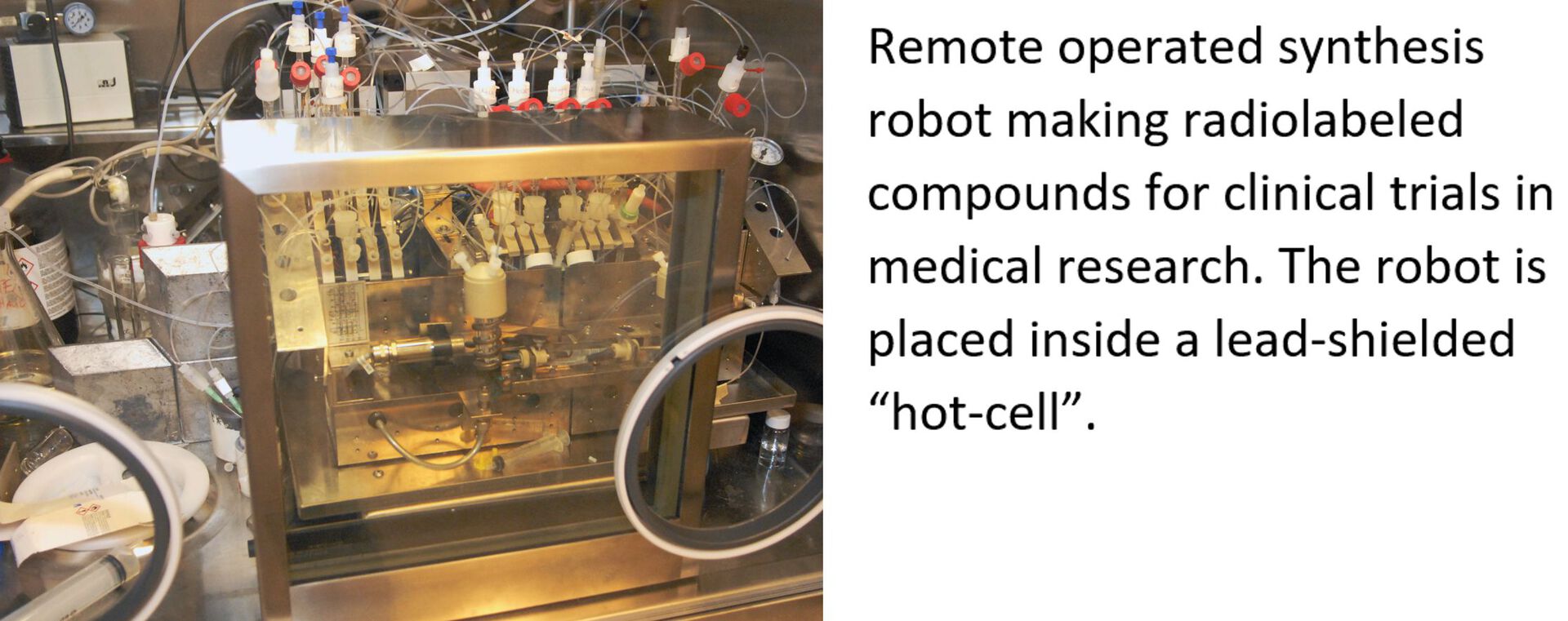
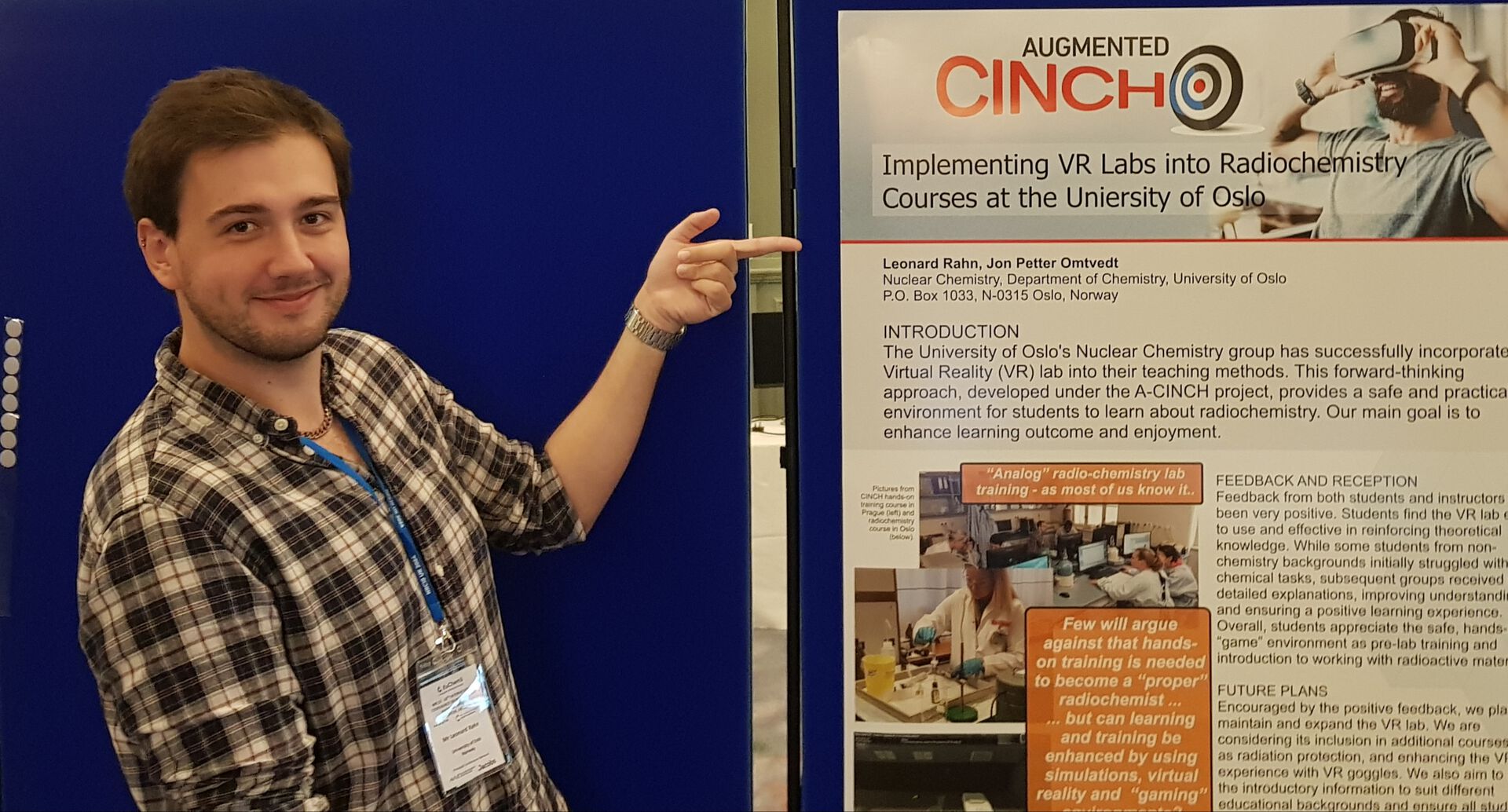
We are developing modern tools for teaching radiochemistry using digital tools such as virtual‑reality, game‑like laboratories; remotely controlled radiochemistry experiments; simulations and robotics. We offer projects related to this work for students interested in both radiochemistry and programming..
The available tasks change constantly, so please contact Jon Petter Omtvedt (head of Nuclear Chemistry at the Department of Chemistry, e-mail j.p.omtvedt@kjemi.uio.no) to discuss your interests and the projects available. If you are interested in a specific topic within nuclear and radiochemistry, we can often accommodate it!
Norwegian Nuclear Research Centre (NNRC)
Nuclear Chemistry at the Department of Chemistry is part of the new Nuclear Technology Center, established in 2023 to strengthen the nuclear sciences and knowledge in Norway. As a master's student in the Nuclear Chemistry group, you will also be part of the center and interact with scientists and students there. Nuclear Chemistry has extensive radiochemical laboratories and radiation detection facilities. As a student with us, you will gain broad knowledge about radiochemistry and nuclear technology. The Section for Nuclear Chemistry welcome BSc students both from the Nuclear Technology study program run by the NNRC and from the ordinary Chemistry and Biochemistry study program.

Link to: Study guide for MSc-project in chemistry with specialization in radiochemistry