Project Overview
The proposed projects tackle both of the above challenges by i) the design and synthesis of precise catalytically active sites on metal-organic frameworks (MOFs) [1], including through the upcycling of plastic waste [2], and ii) their application for the abatement of environmentally problematic molecules, particularly for the climate forcing agents CO2 and CH4 [3].
Master’s Students’ Task
Please note that there are possibilities for several MSc projects within this area
1. Synthesis
Known and new metal-organic frameworks will be synthesised and decorated with the catalytically active sites with atomic precision. The MOF syntheses will be carried out through wet chemical methods, using metal salts and organic molecules, which may be both commercially available, custom-made, or derived in-situ from plastic waste. The grafting of catalytic sites will be carried out post-synthetically using both metalorganic and complex chemical strategies.
2. Characterisation
The structural integrity, chemical nature, thermal stability, and porosity of the materials will be evaluated using standard X-ray diffraction, optical and NMR spectroscopic, thermal gravimetric, and gas adsorption techniques. The chemical identity and local structure of the catalytic sites require a more advanced characterisation, which shall be carried out at large-scale facilities e.g. in France, the UK, in Sweden. There is a real possibility for the students to participate in such beamtimes.
3. Testing
Various catalyst tests (mostly in the gas phase but liquid phase is also possible) will be carried out at the Section of Catalysis and Organic Chemistry, as a part of other ongoing projects.
References
[1] Aunan et al. J. Catal., 2024, 438, 115722 [2] Ribadeneyra et al., Chem. Commun., 2022, 58, 1330-1333 [3] Tezel et al., Mater. Adv., 2023, 4, 5479-5495
Project supervisors:
Rafael Cortez S. Pupo, PhD candidate CuBE project, r.c.s.pupo@kjemi.uio.no Sahra A. Ahmed, PhD candidate, single-atom catalysis, s.a.ahmed@kjemi.uio.no Petra Ágota Szilágyi, Professor, p.a.szilagyi@kjemi.uio.no
Bonus
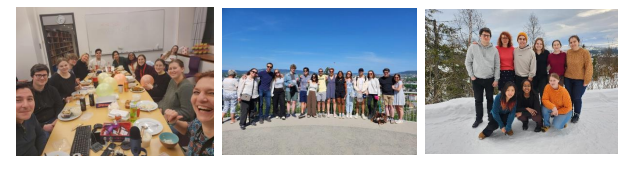
You will be part of a scientifically excellent, dynamic, and inclusive research group with lots of activities.