A new Perspective by centre co-leader Alexander Eiler is now published in the ASM journal mSystems. The article identifies key methodological limitations in using metagenomic time series to track evolution in the wild, which can often generate misleading signatures of microbial adaptation.
News
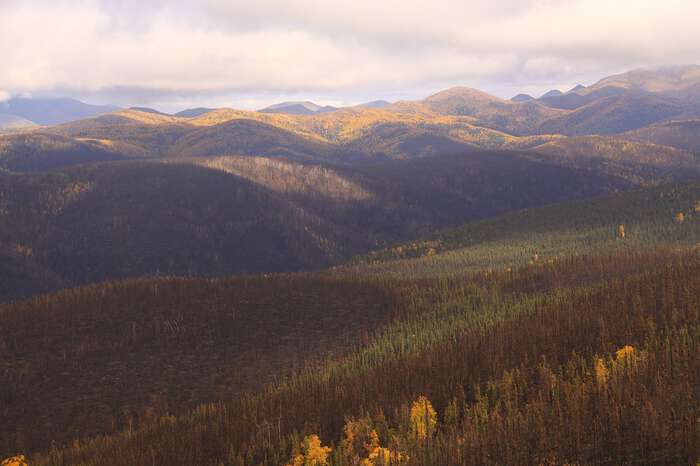
Boreal forests play a significant role in regulating the climate. Their canopies shield the frozen ground from deeper thawing, helping keep the carbon stored in permafrost locked away.
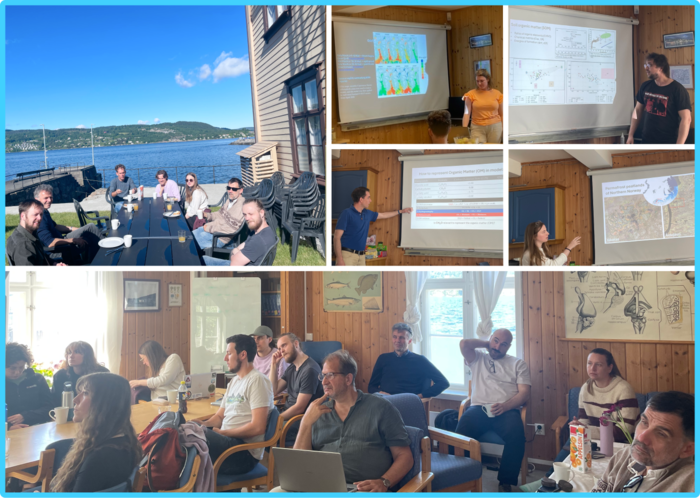
Members of the CBA from UiO, NMBU and NGI gathered for two days to share recent research findings, discuss potential collaborations and the future direction of the CBA.

Researchers and students from CBA joined forces for a day of fieldwork in the Oslofjord aboard research vessel Trygve Braarud. The samples collected will help answer key research questions while providing valuable hands-on experience for master's students.


PhD candidate Jacqueline Kay Knutson (University of Oslo and NIVA) has received this year’s student award in the Fægriprisen for an article about the irreversible landscape changes when permafrost disappears.

Members of the CBA from UiO, NIVA, Cicero and NMBU gathered for two days to share research and discuss potential collaborations.

CBA's Dag Hessen was a major contributor to the recently published Global Tippings Point 2025 Report.

The SAME18 conference (Sept. 28th - Oct. 3rd, 2025) centered on Aquatic Microbiomes on a Changing Planet.

The research is a pioneering effort to employ drones for methane (CH4) emission quantification from ruminants in sub-Saharan Africa. It is one of the first field studies to measure methane emissions from camels, a largely understudied source.

Doctoral Research Fellow Eira Catharine Lødrup Carlsen—part of the Biogov project at the Centre for Biogeochemistry in the Anthropocene (CBA) and a member of the CBA leadership group—has been selected to collaborate on one of only two projects awarded in the fifth call of the REAL Art initiative at the University of Oslo.

The scientific conference on Carbon Capture, Transport and Storage (CCS) took place in Trondheim, June 16-19, 2025.

The CBA and BioGov joint annual meeting took place in Drøbak, at Tollboden, 11-12 June.

The Centre for Global Sustainability (Senter for global bærekraft) connects researchers across fields to help build a sustainable and just future.

Can permafrost and environmental sciences be showcased in a gallery? Do artists and the art scene contribute to scientists and scientific understanding, and vice versa? The answer is yes. The exhibition "A Feeling of Longing That Freezes and Thaws" was a successful collaboration held at Atelier Nord, Oslo.

The Science Library at the University of Oslo (UiO) has now made a significant new acquisition in 2025 of the textbook "Treatise on Geochemistry" as an e-book series. This ensures that staff and students at the Dept. of Geosciences and others have access to an 8-volume digital edition of an important textbook in geosciences and geochemistry.


International research team, including CBA co-leader Sebastian Westermann, finds no evidence of a global climate tipping point in connection with permafrost; rather, permafrost soils are thawing in step with global warming.
Permafrost soils store large amounts of organic carbon and are often portrayed as a critical tipping element in the Earth system that will suddenly collapse on a global scale once global warming reaches a certain level. However, this image of a ticking time bomb that remains largely inactive until it explodes at a certain level of warming is controversial among researchers. According to the current state of scientific knowledge and data, this picture is not correct, as an international team with significant contributions from the University of Oslo has now shown in a recently published study. According to the study, there is not a single global tipping point, but numerous local and regional ones that “tip” at different times, so that the effects accumulate and the permafrost thaws in step with climate change. This makes it all the more important to act decisively today if we want to preserve as much permafrost as possible. The study has just been published in the journal Nature Climate Change.

CBA members Frans-Jan Parmentier and Sebastian Westermann collaborated on a review paper which was highlighted by Eos, the science news magazine published by the American Geophysical Union (AGU). The paper reviews permafrost's role in the carbon cycle and climate change.
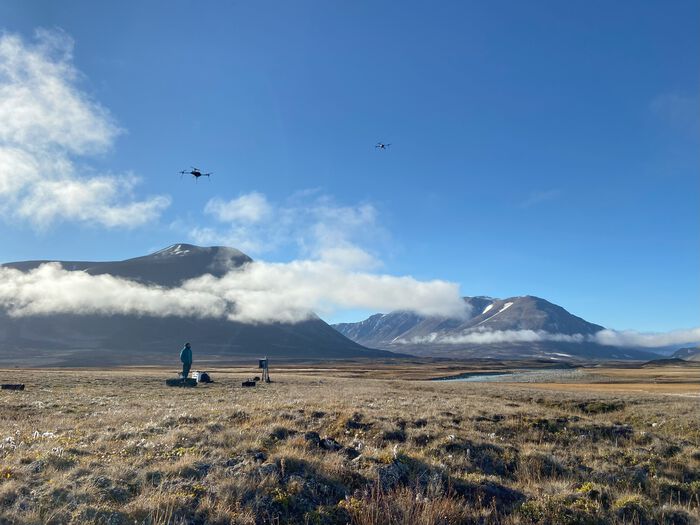
How do you map something that is both invisible and odorless? Researchers at the University of Oslo have trained drones to find the best places to measure greenhouse gases on their own.

CBA professor Helge Hellevang and colleagues proposed a new explanation for the creation of craters in Siberia. Their conceptual model links thinning permafrost and other local conditions with the formation of gas emission craters in the Yamal and Gydan peninsulas. Their work is now highlighted on Titan (in Norwegian).

CBA researcher Norbert Pirk was awarded the prestigious Starting Grant of the European Research Council (ERC).
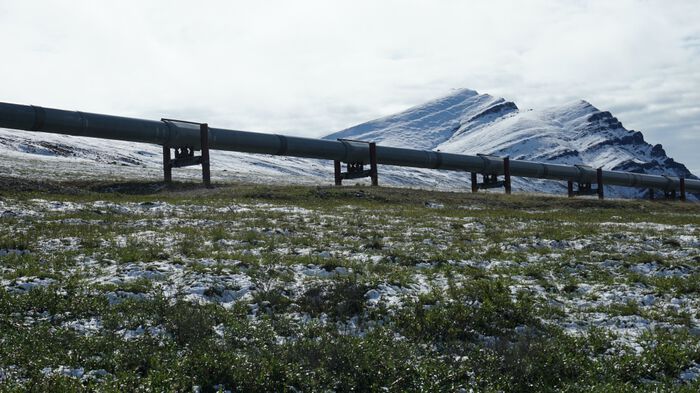
CBA associate professor Sebastian Westermann and colleagues published a new study in Nature Communications on the risk of environmental pollution following permafrost thawing with climate change around industrial and contaminated sites. Their study is now highlighted on Titan (in Norwegian).
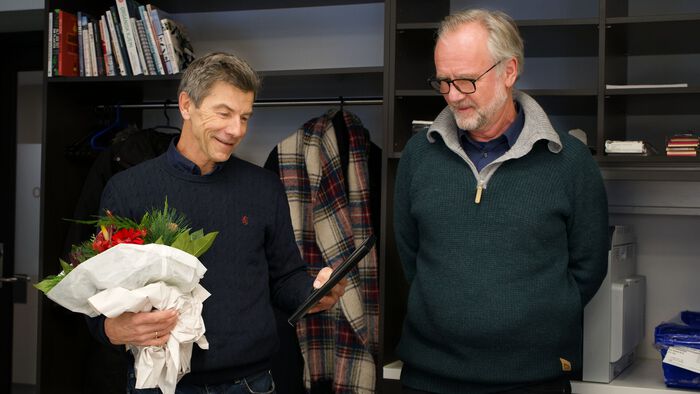
CBA-leader Dag Hessen receives the 2022 Titan Prize due to his long-term commitment for science communication.