Tidlegare arrangement - Side 120

Doctoral candidate Qinghua Liu at the Department of Mathematics, Faculty of Mathematics and Natural Sciences, is defending the thesis Bayesian Preference Learning with the Mallows Model for the degree of Philosophiae Doctor.

Sondre Vik Furuseth, Rosseland Centre for Solar Physics, UiO.

We want to get better acquainted to you! We invite you, therefore, to meeting where you can meet the management and the administration of the Department and, first and foremost, each other!
Tittel:
Frie deformasjonsbølger i blodårer
"Preparation and characterization of silica-based porous layer open tubular columns"
Every second Tuesday, CBA staff gather for lunch and a talk. On October 26th, it will be given by Ilaria Baneschi.
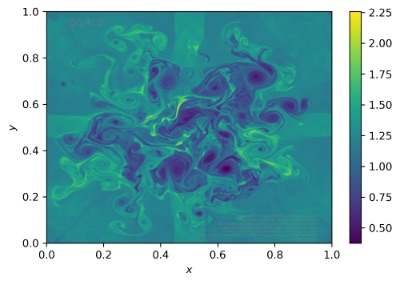
The PDE seminars for the Autumn of 2021 will be held every Tuesday from 10:15–12:00

Professor Dan Crisan, Imperial College London, author of several books on filtering is now holding an intensive course.

Martijn van den Ende (Université Côte d'Azur): Earthquakes, fibre-optic cables, and a zebra: intelligent solutions for tomorrow's seismology
Abstract: Mixed-dimensional partial differential equations (PDEs) are equations coupling unknown fields defined over domains of differing topological dimensions. Such mixed-dimensional PDEs naturally arise in a wide range of fields including geology, biomedicine, and fracture mechanics. We introduce an automated framework dedicated to mixed-dimensional problems as part of the FEniCS library. This talk gives an overview of the abstractions and algorithms involved. The introduced tools will be illustrated by concrete examples of applications in biomedicine (see below for more detailed context).
This talk is part of the Mechanics Lunch Seminar series. Bring-your-own-lunch and lots of questions.

Oscar Agertz, Department of Astronomy and Theoretical Physics at Lund University, Sweden.
Tittel:
Discrete choice methods in market research for seafood.
A statistical analysis
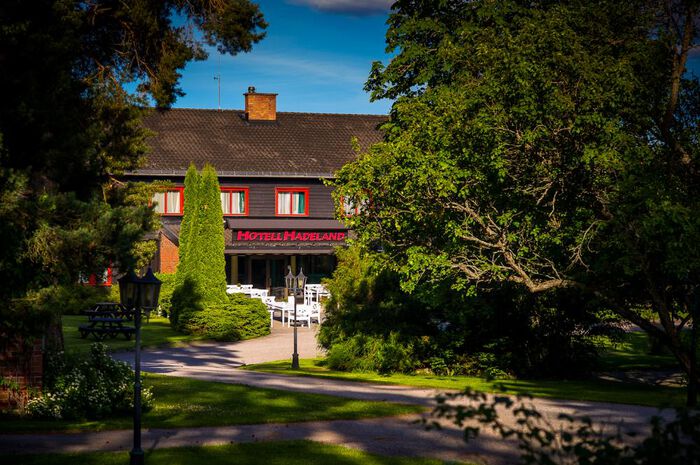
Hylleraas School 2021 will be held at Hotel Hadeland 17 - 22 Oct
Senior Engineer Sigrid Rønneberg, Justervesenet (The Norwegian Metrology Service)
Tittel:
Neural Networks for Pricing Caps on LIBOR Rates
Tittel:
Symmetries of the Klein Quartic Curve
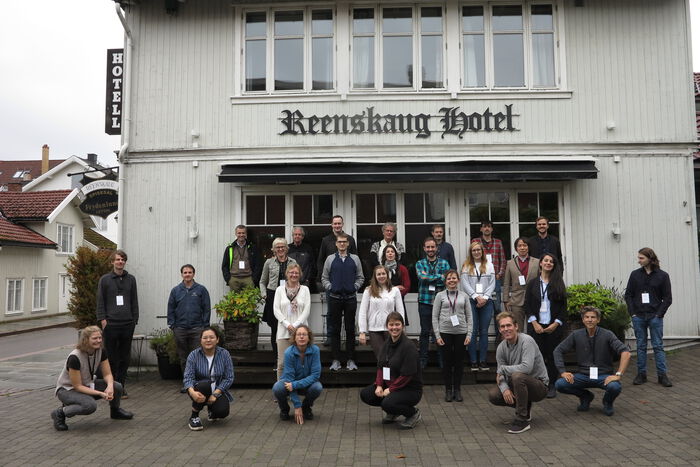
October 20-21, CBA members will gather at Hotel Reenskaug in Drøbak to present their work and make new plans for the future.
The talk is elementary and discusses empirical modelling of single variables with insurance losses as example. There are in such cases little or no theory to go on, and the amount of data is many situation quite scarce. Why do we so often limit ourselves to fit two-parameter families? It will be suggested that it may be a good idea to work with more flexible models with three or four parameters and that this may provide a nice framework for automating the entire procedure for the computer to work alone. Sure, with little data the parameters may be unstably estimated, but that may not apply equally to the distributions they define. Many-parameter families suitable for insurance losses will be reviewed with some simple asymptotics in an example allowing this and with Monte Carlo to throw light on the issue in other cases.
In this talk I will discuss the variational form of Bayes theorem by Zellner (1988). This result is the rationale behind the variational (approximate) inference scheme, although it is not always that clear in modern presentations. I will discuss two applications of this results. First, I will show how to do a low-rank mean correction within the INLA framework (with amazing results), which is essential for the next generation of the R-INLA software currently in development. In the second one, I will introduce the Bayesian learning rule, which unify many machine-learning algorithms from fields such as optimization, deep learning, and graphical models. This includes classical algorithms such as ridge regression, Newton's method, and Kalman filter, as well as modern deep-learning algorithms such as stochastic-gradient descent, RMSprop, and Dropout.
The first part of the talk is based on our recent research at KAUST, while the second part is based upon \texttt{arxiv.org/abs/2107.04562} with Dr. Mohammad Emtiyaz Khan, RIKEN Center for AI Project, Tokyo.
Tittel: Filtration Shifting Maps and Differentials
Abstract: The concept of symmetry breaking is well-known in physics, for instance in condensed matter, where it results from interactions in a many-body system — e.g., phase transition in a spin system. Yet, as physicists, we tend not to think of the patterned structures seen in living, many-body systems in terms of broken symmetries. Whether it is the spacing of knuckles on our hand, the collective alignment of hairs on an insect wing, or more globally the transformation of a homogeneous, isotropic embryo into a developed organism, symmetry breaking abounds in biology. What new insights can a physicist bring to understand the origin of these complex phenomena? (Click title to read full abstract below...)
How did two physicists end up working at Norway’s largest bank? Milan completed his PhD in experimental physics at the University of Western Australia in 2007, while Vilde did her master degree in computational physics at the University of Oslo in 2018.
Hylleraas seminar, hosted in Oslo
Abstract: Elimination of substances from the brain is believed to occur by a combination of convection and diffusion. In previous work, transport along perivascular spaces around blood vessels have been explicitly meshed and modeled, and also 1D-3D models have been used to model the interaction between blood and brain tissue. A problem with both these approaches is that it requires spatial information of all blood vessels within the brain and in addition may result in a computationally expensive system to solve. In this talk, I will introduce a homogenized model of transport in the brain, also taking into account transfer between different compartments (like blood and brain tissue) within the brain. Fluid flow in and between compartments are modeled with the mulitple-porosity elasticity theory (MPET), while transport within and between compartments are modeled with convection-diffusion equations. I will further show preliminary results from our model and compare with experimental data obtained in a glioma (brain tumor) patient, where transport between blood and brain is typically altered.
This talk is part of the Mechanics Lunch Seminar series. Bring-your-own-lunch and lots of questions.

Federico Urban, Institute of Physics, Czech Academy of Sciences.