Events - Page 2
Fiday this week, Tamás Havas & Olai Mostad, PhD students at Simula UiB, will tell us about quantum communication and error correction.
Thursday this week, Anna Birk Hellens from the Johannes Gutenberg Universität Mainz, will give a talk on altermagnets, a subject they have helped pioneer.
Circuit Modelling of Submerged Arc Furnaces and Their Power Supply Systems

Konstantin Holzhausen will defend his thesis "Learning Robust Representations in Neural Network Models" for the degree of Philosophiae Doctor at the University of Oslo, Faculty of Mathematics and Natural Sciences.
Elin Melby and Ellen Kleveland from Veksthuset and Inven2 will give a presentation on how to move from ideas and research to reality.
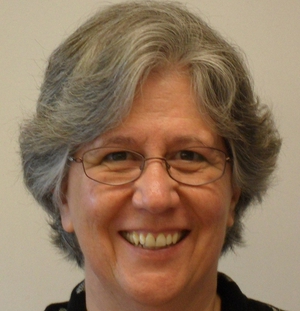
Corinne Manogue - Oregon State University:
In this interactive workshop, we will share some classroom activities that were developed in the Paradigms in Physics Program at Oregon State University for use in an upper-level, undergraduate physics course on quantum mechanics at the level of McIntyre: Quantum Mechanics.
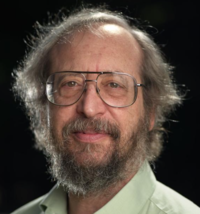
Mathematics and physics are two disciplines separated by a common language. Since the 1990s, we have been developing curricular materials that attempt to bridge this gap, as part of the Paradigms in Physics and Vector Calculus Bridge projects, leading also to the development of an online textbook.
Most of our work focuses on the transition from multivariable calculus to upper-division physics courses such as electromagnetism.
This week, Wojciech Jankowski from the University of Cambridge will tell us about his work on topological and geometrical effects in quantum matter.
This week, Francesco Pietro Massel from USN will tell us about the use of using mechanical oscillators coupled to qubits for quantum technology:
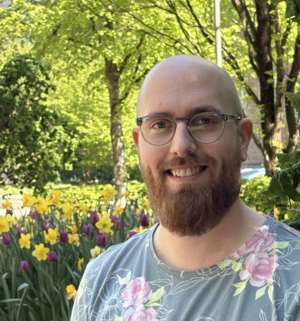
In this ODD seminar, Henning Myhrehagen will present findings from his interview study to open a wider discussion on the integration of programming in science education.
This week, Maxim Kartamyshev from Norges Bank Investment Management ("Oljefondet") will tell us about the use of Quantum Technology in Finance:
Innovative Heart Modeling with PINNs
This week, Kristian Wold will tell us about quantum chaos. Kristian is a PhD candidate at OsloMet:
This week, Shaukat Ali will tell us about quantum extreme learning machines. Shaukat is a Chief Research Scientist at Simula, where he works on various aspects of quantum software engineering:
This week, Alexander Müller-Hermes will tell us about quantum information theory. Alexander is an associate professor at UiO, and is also part of the QOMBINE project:
Neural Encoding in the Medial Entorhinal Cortex of Mice: Exploring Spatial and Non-Spatial Encoding through Computational Methods
This week, Franz Georg Fuchs, senior research scientist at Sintef and leader of the Gemini Center on Quantum Technology will tell us about his recent research.
This week's seminar will be a journal club given by Morten Hjorth-Jensen and yours truly, discussing the paper which came up last week:
Experimental critical quantum metrology with the Heisenberg scaling

Conjecturing and generalizing are two central practices in mathematics, and mathematical thinking and activity often involve examining patterns across cases to articulate conjectures or generalizations.
This week's speaker is Morten Hjorth-Jensen. Morten is a physics professor at UiO, and has worked on a wide range of topics within quantum science and technology.
This week, Sølve Selstø will tell us about his new book. Sølve is a physics professor at Oslo Metropolitan University (OsloMet) and one of the founders of the OsloMet Quantum Hub.
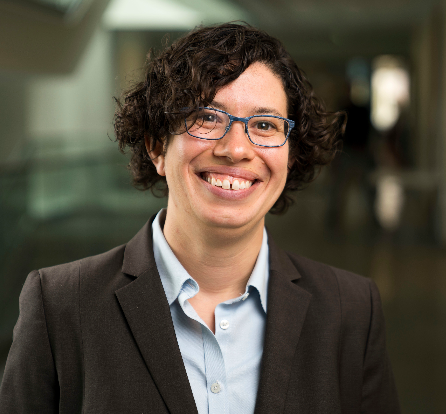
Lauren Barth-Cohen will hold a seminar about students sense making about conceptual and procedural inconsistencies in an introduction physics lab.
This week, Viktor Svensson will tell us about tensor network
This week, Kishore Thapliyal will tell us more about sensing, by giving a journal club on the paper:
Gunnar Felix Lange will give a journal club about the paper: Free-Fermionic Topological Quantum Sensors
Jonas Boym Flaten and Oskar Mathias Leinonen, both of whom are working primarily with Morten Hjorth-Jensen.
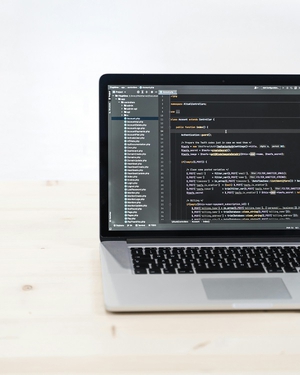
In this workshop, attendees will learn how to apply this method to their own data. This includes a crash course on the method, and some work on interpretation of results. Everything will be run on Google Colab, and no previous skills are required. Bring a friend and coworker!

Welcome to our annual Christmas seminar!
We have the honor of having Martin Høy and Martin Borge Heir, who are both data scientists from DNV.

Tor Ole Odden will hold a seminar about how Artificial Intelligence and human cognition are related.
We have the honor of having Luca Onnis from the department of Department of Linguistics and Scandinavian Studies and the Center for Multilingualism in Society across the Lifespan .
The talk by Luca covers a very exciting multidisciplinary topic and the title is
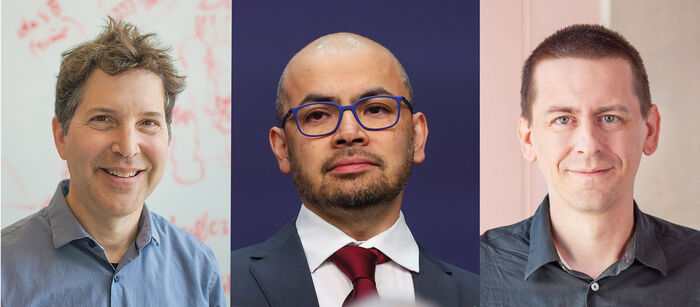
Andreas Haraldsrud is going to talk about how we can use computers to widen our understanding of proteins. Note: this seminar will be held in Norwegian.
Professor Gaute Einevoll has over many years developed a very successful and popular research and educational program on Computational Neuroscience.
Nicholas Karlsen, a former CS master student, now works with the Norwegian Tax administration developing and working on AI and machine learning algorithms.

The ability to code is important for developing logical reasoning and literacy skills. To foster interest in coding among youth, considerable efforts have been invested in creating engaging tools and activities, with Scratch emerging as a prominent initiative.
This visual coding platform is designed to enhance creativity and motivate students to engage with computing. However, meaningfully integrating Scratch into educational contexts poses challenges. This presentation explores seven design principles for coding, drawing on Resnick's concept of tinkering, self-determination theory, and the documented need for guided instruction. A case study in mathematics reveals how students' interest in both coding and math waned due to the neglect of key design principles.
The focus then shifts to laboratory work in science education. By referring to these principles, it is proposed that virtual lab exercises can become more inquiry-based by allowing students to design their own virtual prototypes in Scratch, calibrating them through practical laboratory experiences. This combination holds the potential to create meaningful and engaging learning experiences in both coding and science education.
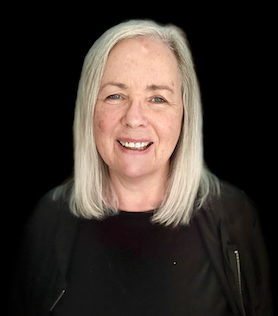
There is a large body of work from the learning sciences providing us with insights into how people learn; and from Discipline Based Education Research (DBER) we know what discipline-specific difficulties students face. However, it is quite surprising that relatively little of this understanding has made its way into the design of science and engineering curricula offered at most colleges and universities.
This presentation will focus on the need for evidence-based curriculum transformations, the research findings that can guide them, and how we might assess the results of these transformations.
An approach to systemic reform that focuses on helping students use their knowledge in scientifically meaningful ways, will be discussed. Examples of such curriculum reform efforts “Chemistry, Life, the Universe and Everything” (CLUE) and a subsequent organic chemistry version (OCLUE), will be presented, along with the evidence to support how these transformations impact student learning and course culture.
Implications for systemic reform will also be discussed.
Restricted Boltzmann Machine and Ground State Energy for Selected Hamiltonians
New CS Physics student are invited to a presentation on possible master thesis projects within quantum computing/technology.
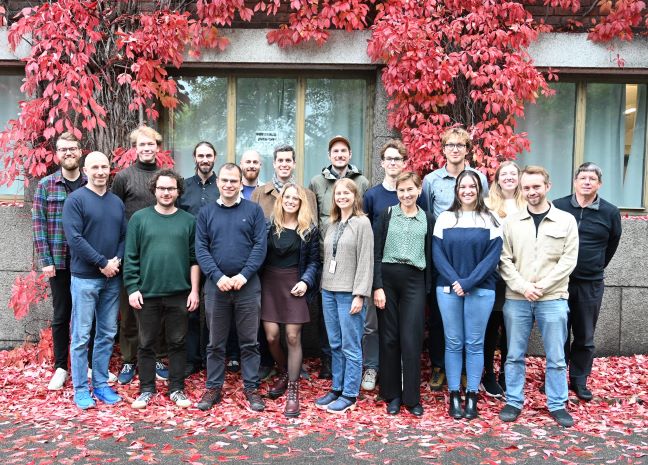
Welcome to our Generative AI and NLP in Physics Education Research workshop. This workshop is only open for invited participants.
Marie Lindland from the SINTEF Digital’s research department in Optimising.
Marie, together with August Femtehjell (CS master student and former internship summer 2023) and Helga Holmestad will share with us:

Computational literacy provides a metaphor and framework for how learners’ understanding, practice, and social relationships in computing can be organized.
In science disciplines that use computing, computational literacy posits cognitive, material, and social pillars of knowledge, practice, and belief. In a new national computing education project, we are working to define these pillars and their related knowledge, practices, and beliefs across undergraduate physics.
As we have started that work, we've found the need to examine physics computational literacy (PCL) more critically. Here, we discuss issues related to the context in which a student’s PCL might develop and the relationship between that development and external forces (in the US, power and privilege), as well as pedagogical considerations.
The role of programming in mathematics education and research has been debated since Babbage and Lovelace described their Analytical Engine in the early 19th century. This debate has re-surfaced multiple times since: e.g., during the post-Sputnik era in the 1950s and 1960s, when personal computers and calculators became widely available in the 1980s, when the internet became widely available in the late 1990s, when high performance computing became widely available in smart phones and tablets in the 2010s, and most recently with the ongoing revolution in generative AI (this Spring, two consecutive issues of the Bulletin of the AMS was devoted to the topic).
Gabriel Balaban from Kristiania University will talk about machine learning applied to the simulation of differential equations.
Deep Learning Methods for Quantum Many-body Systems, A study on Neural Quantum States
Cecilie Mauritzen is a senior scientist from the Norwegian Meteorological Institute. She is a coordinator of the EU research project WorldTrans - Transparent Assessments for Real People. She will talk about the modelling of climate change.

Welcome to our NeuroAI workshop, set against the beautiful backdrop of Norway's coastline, aboard the Hurtigruten cruise ship from Tromsø to Trondheim. This event combines the tranquil beauty of a Norwegian cruise with the exciting prospects of neuroscience and artificial intelligence.
This event is only open for invited participants.
Pathological Electrical Wave Simulation in the Heart Using Physics Informed Neural Networks
Artificial intelligence is a field which in recent years has had an exponential growth, both in the academic theatre and in the presence of our everyday life.
An example of a Large Language Models (LLMs) is Open AI’s Chat GPT, which almost everyone in society has heard of or encountered in some form or another. As of today, it is suspected that these models can have a huge number of applications, and one which we have looked at during this summer-project is how they can be applied to the field of teaching.
In this presentation we will explain what we did during the project, our results and insights gained from researching how to utilize LLMs in the pedagogical scene, and some examples of how to integrate LLMs into exercises.
Enabling Cluster Tracking for Community Detection in Temporal Networks
Quadratic Coupled Cluster Theory