Tidlegare arrangement - Side 107
We invite you (once again) to a two-day seminar celebrating Professor Ørnulf Borgans many and substantial contributions to statistics in general and life event history analysis in particular.
Astrophysical Archaeology: Reviving COBE–DIRBE for Next-Generation Global Analysis
Tittel: Freake krefter på sylinder bak en grunne
Tittel: Normal Pressure with Abnormal Geometry - A Biomechanical Model of Normal Pressure Hydrocephalus During Infusion Tests
Research Seminar Series features, Lucy Suchman, Professor Emerita, Lancaster University, UK
Anders Malthe-Sørenssen and Tor Ole Odden, University of Oslo
Computation is a cornerstone of modern scientific research, and consequently many universities are actively working to incorporate computational methods into their science courses.
At the University of Oslo, this work has been going since the early 2000s and currently all bachelor programs in mathematics and natural science integrate computing from day one.
For example, in the physics bachelor program, students learn computation in through coordinated mathematics, physics and, computer science courses, and computation is then threaded through most subsequent physics courses.
In this talk, we address the Norwegian educational context, challenges and experiences from establishing such a program, examples of how the program is implemented, and how we work to integrate computing in programs across contexts and across educational levels.
We will also discuss what we are learning through our research activities on how students build computational literacy, and how computation can support student conceptual understanding and epistemic agency.
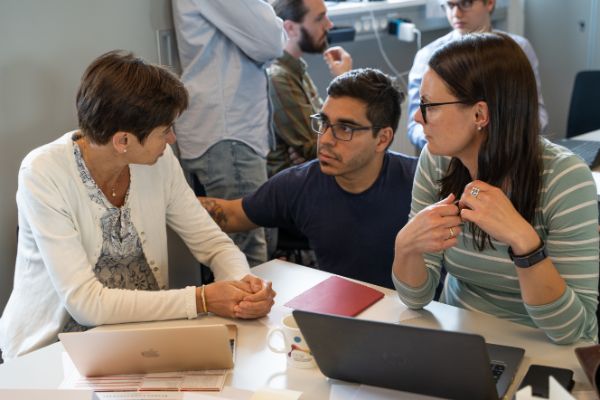
We would like to invite members of the physics education research groups of Michigan State University, University of Colorado-Boulder, and Oregon State University, as well as our Scandinavian PER colleagues, to a summer institute held in Oslo, Norway, and hosted by the Center for Computing in Science Education at the University of Oslo.
Tittel: Numerical Investigation ofTurbulent Flow in HelicallyCoiled Pipes
Hylleraas seminar, hosted in Oslo
Brain source analysis is an important tool in brain research. It is used for example during operation planning for epilepsy patients. Given EEG (electroencephalography) and MEG (magnetoencephalography) measurements the goal is to reconstruct the brain activity, i.e. the electric potential in the brain. This poses an inverse problem. It was observed in experiments, that the accuracy of the inverse problem strongly depends on the quality of the forward simulation, in particular the head model. We discuss how modern numerical methods like discontinuous Galerkin (dG) methods and cut-cell techniques can increase the robustness of the forward problem and simplify the overall workflow. Hardware-oriented design of numerical methods allows for improved speed of the inverse simulation by making use of modern hardware resources. In order to compute the forward problem efficiently, we propose an algebraic multigrid solver for cut-cell dG methods. We introduce the challenges of EEG/MEG inverse modeling and discuss how different parts of the problem can be improved using modern numerical methods.
Hybrid format via Zoom possible on demand (contact timokoch at uio.no)
The talk will start at ca. 13:00 right after the talk by Andrea Bressan.
Tittel: Improving latent binary Bayesian neural networks using the local reparametrization trick and normalizing flows
Tittel:
Risk in stochastic control and reinforcement learning
Abstract: Many constructions have been proposed to attain adaptivity within the IGA framework (HB-, T-, LR-splines among others).
The idea of all approaches is to break the tensor product structure of the space in order to allow a spatially varying resolution.
Here we present an approach for adaptivity in IGA aimed at solving PDEs with preconditioned Krylov methods.
All the main ingredients of this work are already known, but their combination looks promising for the
development of isogeometric solvers with a good balance of flexibility and computational efficiency.
Hybrid format via Zoom possible on demand (contact timokoch at uio.no)

Cristian Vignali, Physics and Astronomy Department, Bologna University (Italy)
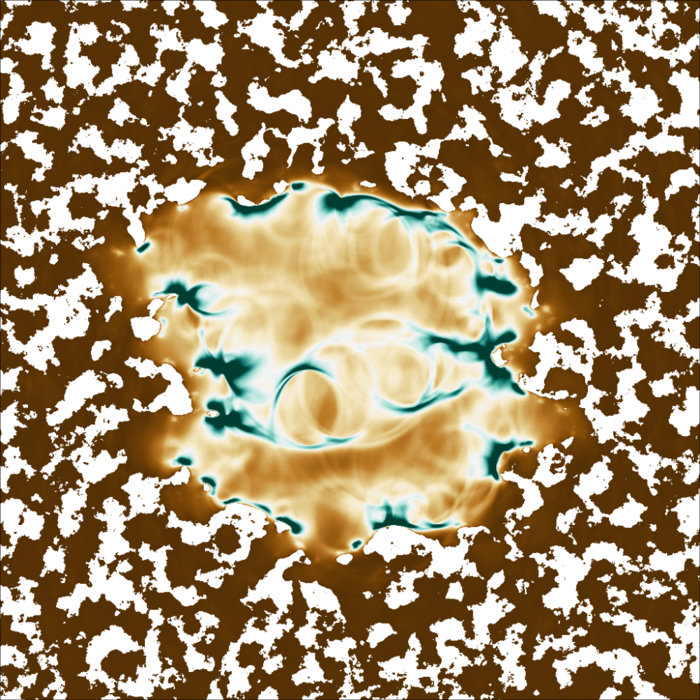
The Friction Workshop will be held at the Njord Centre, UiO, on the 10th of June 2022.

Få med deg lynformidling med korte foredrag om alt fra merkelige dyr til algoritmenes makt på Kulturhuset i Oslo!

Welcome to the second Life Science Growth House innovation hangout – a new meeting place for academia and industry. This hangout is a collaboration with the Association of the Pharmaceutical Industry in Norway (LMI). Topic: Tomorrow’s medicine – advanced therapies, cell therapy, precision medicine and nuclear medicine.
Doctoral candidate Andreas Nakkerud at the Department of Mathematics will be defending the thesis Integer Programming Approaches for Real-Time Traffic Management for the degree of Philosophiae Doctor.
C*-algebra seminar talk by Guillaume Aubrun (Université Claude Bernard Lyon 1)
Tittel: Constant diagonal sums of doubly stochastic matrices
The multi-phase baryon cycle in a local infrared-luminous galaxy merger
"Gjenvinning av verdifulle grunnstoffer fra saltutvasket flyveaske"
"High precision metabolomics"
Tittel: Den historiske fremveksten av lineær algebra