Tidlegare arrangement - Side 113
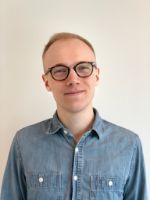
Simen Hellesund will defend his thesis “Searching for New Physics in Resonant and Non-Resonant Dilepton Final States With the ATLAS Detector at the LHC” for the degree of Philosophiae Doctor at the University of Oslo, Faculty of Mathematics and Natural Sciences.

Doctoral candidate Gard Olav Helle at the Department of Mathematics, Faculty of Mathematics and Natural Sciences, is defending the thesis Instanton Floer Homology and Binary Polyhedral Spaces for the degree of Philosophiae Doctor.
Njord Seminar with Karianne Bergen (Brown University): "Big data for small earthquakes: data mining, deep learning and explainable AI"
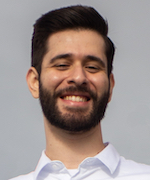
Hylleraas seminar, hosted in Oslo

Johannes Røsok Eskilt, phd fellow at Institute of Theoretical Astrophysics, UiO.

The Life Science Growth House innovation director Hilde Nebb will give a pitch about the Growth House and the team will be present. Come by and meet us!

Welcome to a presentation of the results of the Gender Gap in Science Project by professor Colette Guillopé. After the presentation there will be a Q&A-session.
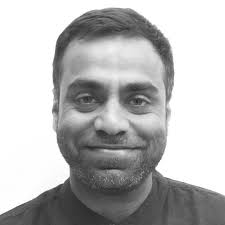
Research Seminar Series presents Ranjit Singh, Researcher at Data & Society Research Institute.
An obvious purpose of computer code is that it gives some desired results when executed on a computer. This is often the overarching focus in programming education, especially outside informatics programs. However, it is in most cases also desirable that code is easily readable and modifiable to humans - this e.g. makes it easier to eradicate bugs or to modify/extend code for new purposes. Many programmers in industry and science are thus arguing for improved programming practices, where the focus is not just on solving one given problem at a time, but on writing code that can be reused and extended to increase productivity in the long run. What is often not explicitly factored into such argumentation, however, is that both learning and applying good programming practices requires effort. This raises two core questions: what level of code quality is typically most pragmatic to aim for in science settings, and how valuable is it to spend course time on learning to improve code quality?
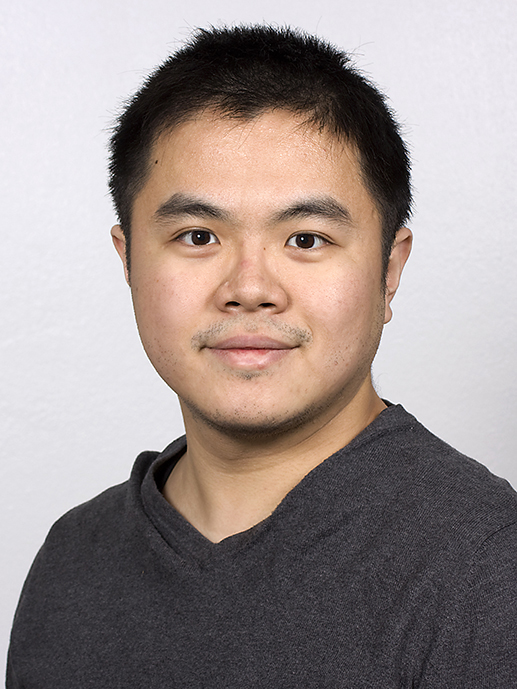
Doctoral candidate Hwei-Ming Chung at the Department of informatics, Faculty of Mathematics and Natural Sciences, is defending the thesis Computation and Learning Intelligence for Automated Scheduling and Inspection in Smart Grids for the degree of Philosophiae Doctor.
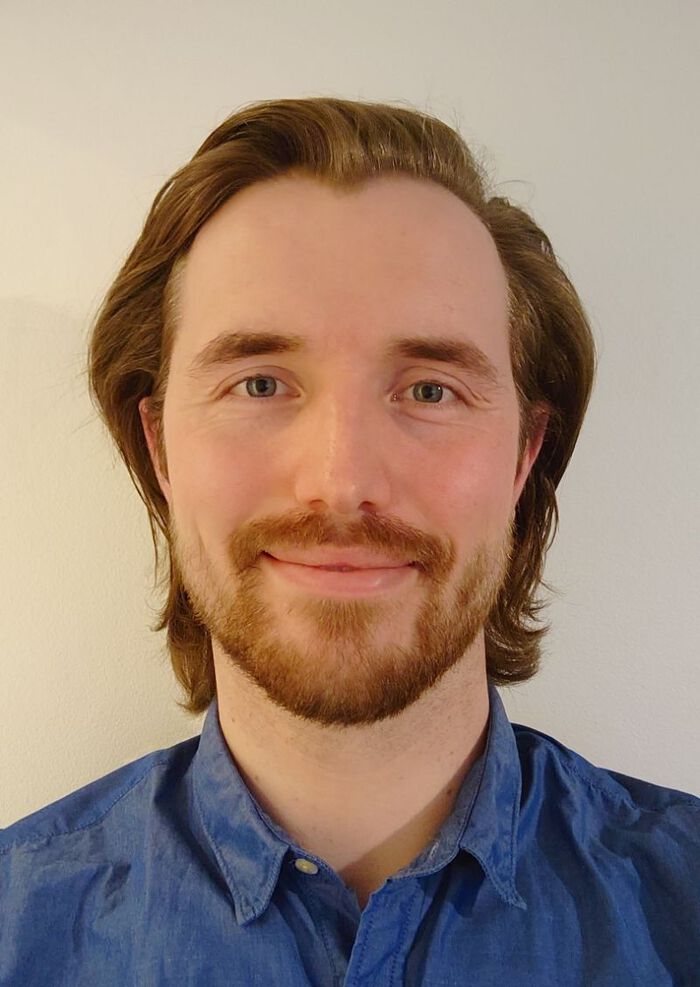
Ph.d.-kandidat Kristian Joten Andersen ved Institutt for teoretisk astrofysikk, Det matematisk-naturvitenskapelige fakultet, vil forsvare avhandlingen "Improved Planck processing through integrated component separation" for graden Philosophiae Doctor.
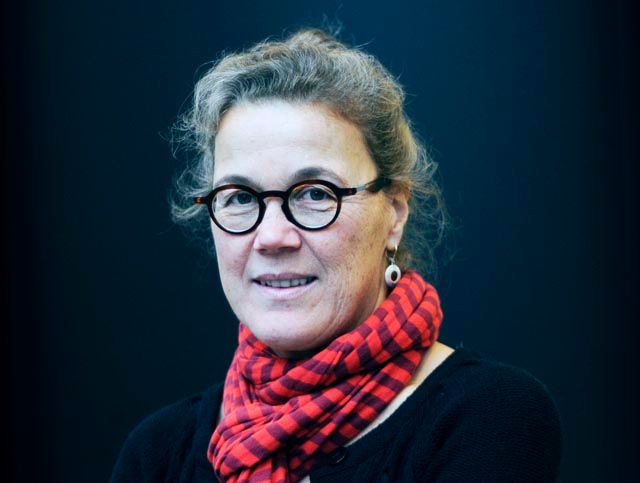
Research Seminar Series features, Maja van der Velden, Professor & leader of Regenerative Technologies research group at IFI, UiO
Njord Seminar with talks by
John Aiken (University of Oslo): "Acoustic detection of degassing events associated with peridotite alteration"
and
Paiman Shafabakhsh (University of Oslo): "Neutron imaging of reactive-mixing in porous rocks"

Johan Blakkisrud will defend his thesis "Dosimetry in patients treated with [177Lu]Lu-lilotomab satetraxetan" for the degree of Philosophiae Doctor at the University of Oslo, Faculty of Mathematics and Natural Sciences.
Abstract: This talk is about the non-integer (fractional) derivative, its mathematical formulation by Abel in 1823, and present-day applications in modeling power-law behavior. These applications are in acoustics of complex media like tissue and sediments as well as in rheology, turbulence, and dielectrics. It will build on my book “Waves with Power-Law Attenuation”, Springer, 2019.
The talk will be streamed online. Please contact "timokoch at uio.no" for the Zoom link. This talk is part of the Mechanics Lunch Seminar series. Bring-your-own-lunch and lots of questions.

Duncan Watts, postdoctoral fellow at Institute of Theoretical Astrophysics, UiO.


From the end of February, the new innovation unit at the University of Oslo – the Life Science Growth House – will be an open door for researchers and students who need help to mature ideas at an early stage; leaders and administrative employees who support the innovative researchers; and existing and new external collaborators. At this launch seminar we gather the whole innovation ecosystem in life sciences in Oslo.
Fra slutten av februar vil UiOs nye innovasjonsenhet – Veksthuset for livsvitenskap – være en åpen dør for forskere og studenter som trenger hjelp til å modne sine ideer i tidlig fase; ledere og administrativt ansatte som støtter innovative forskere; og eksisterende og nye eksterne samarbeidspartnere. Vi samler hele Oslos innovasjonsøkosystem for livsvitenskap til lanseringsseminar.

Plants have been used for thousands of years in the treatment of human diseases. With over 390,000 known plant species, how do we identify which plants are potential sources for novel pharmaceuticals?
Planter har i tusener av år blitt brukt i behandling av sykdommer. Vi kjenner over 390 000 plantearter, men hvordan kan vi identifisere de plantene som kan brukes som medisin?

In the autumn of 2021, the method for organ donation called cDCD (controlled donation after circulatory death) was approved in Norway after a long and thorough process. In this process, critical questions were asked although the method is already established in many other countries. In order to maintain good trust in the health care system, we want to address this questions surrounding organ donation after cardiac arrest, and provide some insights into how cDCD is performed in practice: How is the dying patient and relatives taken into account? What exactly is cDCD?
Høsten 2021 ble metoden for organdonasjon kalt cDCD (kontrollert donasjon etter sirkulatorisk død) godkjent i Norge etter en lang og grundig prosess. I denne prosessen ble det stilt kritiske spørsmål. Metoden brukes allerede i mange andre land. For å opprettholde den gode tilliten til helsevesenet i spørsmålene rundt organdonasjon, ønsker vi å gi et innblikk i hvordan cDCD praktisk vil utføres: Hvordan tas det hensyn til den døende pasienten og pårørende? Hva er egentlig cDCD?

This event will give a general overview of radiation therapy with focus on proton therapy and its benefits for cancer patients compared to standard treatment with high-energy X-rays. You will also have a great opportunity to get knowledge on effects of radiation therapy from clinicians, with emphasis on side effects. Finally, a survivor of head and neck cancer will share his experience.