Tidlegare arrangement - Side 17

How to secure funding?

Aliaksandr Hubin is an Associate Professor in Statistics at the Norwegian University of Life Sciences and University of Oslo. He holds a PhD in Statistics from the University of Oslo (2018) and specializes in Bayesian inference, machine learning, and statistical modeling. His research focuses on scalable and interpretable methods in Bayesian regression context, with particular expertise in latent binary Bayesian neural networks, Bayesian generalized nonlinear models.
Har du spørsmål om å søke master? Søknadsfristen 15. april nærmer seg med stormskritt. Kom og still spørsmålene du måtte ha om søknadsprosessen.

Doctoral candidate Mohamed Eid Ahmed Safy at the Department of Chemistry, Faculty of Mathematics and Natural Sciences, is defending the thesis "Computationally guided CO2 to methanol catalysis: From a mechanistic investigation to a descriptor-based screening" for the degree of Philosophiae Doctor.
It is time for our monthly mingle meeting. Students and employees at the institute will meet up for informal chat.
Forskere som arbeider med kjønn, seksualitet og kriminalitet står ofte i felt preget av konflikt og sårbarhet. Seminaret belyser etiske dilemmaer knyttet til hva som kan, bør og ikke bør synliggjøres.
Let X be a variety, and (F_n) a sequence of coherent sheaves on the n-th symmetric products Sym^n X. Following Okounkov, we consider the notion of (F_n) being factorisable. Roughly speaking, this means that over points of Sym^(m+n) X corresponding to the union of disjoint configurations in Sym^m X and Sym^n X, the sheaf F_{m+n} is the tensor product of F_m and F_n. Completing a partial argument by Okounkov, we show that if (F_n) is factorisable, then the generating function of Euler characteristics of F_n is the plethystic exponential of a generating function of Euler characteristics of sheaves on X. I'll explain why this is true and why it's useful.

Dear last semester master student KJEMI/MENA/Lektor

AI for sustainability and sustainable AI. On this occasion, we focus on sustainable AI with expert in economics, climate and energy research. The event is in the scopes of the Norwegian AI-Centre SURE-AI and intersects the interests of the Research Thematic Group Unruly Sustainability.

The use of Machine Learning (ML) models in research is not a novel concept, especially in quantitative spaces. Yet, many questions arise from qualitative researchers in connection with the trustworthiness of the results due to the "black box" nature of the models and the overall decision-making process. Of the different types of qualitative data, text is most associated with the application of ML methods, specifically from the domain of Natural Language Processing (NLP).

While publications are often visible in databases, other activities and open science outputs can remain difficult to discover. In this session, we will discuss opportunities for researchers to improve their visibility online through researcher profile services and social media.

Are you a researcher at UiO who develops medical device? At this event we introduce you to Medical Device Guidance a new innovation service from the UiO Growth House. The services gives you a step-by-step overview of the processes you have to go through to ensure that your device is developed according to regulatory requirements in EU.
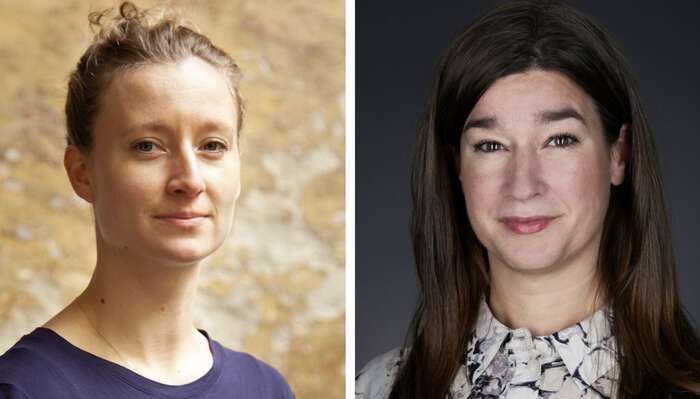
Hvordan forstår unge norske menn seksuelt samtykke som praksis, tillatelse til sex og grense mellom sex og voldtekt?

Her får du nyttige karrieretips og pizza. Denne ganger kommer Ph.d Victoria Ariel Bjørnestad og MSc. Ola Krogseth. Victoria oppdaget under stipendiatperioden at hun elsket å undervise. Ola tok en master og valgte sin drømmekombinasjon av kjemi og biologi – kjemisk livsvitenskap med bio-inspirerte materialer og bioanalytisk kjemi. Her deler de fra sine erfaringer om karrierevei og gir deg innblikk i deres jobbhverdag. Velkommen!

Kvinneidealet har endret seg fra antikken til i dag, men idealer har fremdeles en sentral rolle i samfunnet og kulturen vår. Kan Afrodite eller Barbie hjelpe oss å forstå hvordan disse rollene oppstår? Velkommen til panelsamtale i regi av masterstudenter i historie!

Doctoral candidate Giulia Monopoli at the Department of Mathematics will be defending the thesis AI Tools and Computational Modeling for Mitral Valve Disease: from Image-based Detection to Mechanistic Insights for the degree of Philosophiae Doctor.

Har du spørsmål om utveksling? Kom innom oss i MN studieinfo!

Doctoral candidate Sri Nivas Chandrasekaran at the Department of Informatics, Faculty of Mathematics and Natural Sciences, is defending the thesis A Generalized Mathematical Framework to Model Geoacoustic Properties of the Seabed for the degree of Philosophiae Doctor.

Andrew is a postdoctoral researcher in Statistical Machine Learning at the University of Limerick, Ireland. His research interests centre on developing methods at the intersection of statistical modelling and machine learning. He completed his PhD in 2024 where his research focused on statistically-based methods for neural networks, with a particular focus on model selection and interpretation. After his PhD, he spent some time in the pharmaceutical industry, working on Phase 3 clinical trials in the immunology therapeutic area.

Have you ever wondered if there is an idea for an innovation project or even a start-up buried in your piles of research data? Or, how to know if that idea is any good? Then this interactive and reflective workshop is for you!
Professor Francesco Massel will continue his lectures on quantum sensing.

Doctoral candidate Erik Hide Sæternes at the Department of Informatics, Faculty of Mathematics and Natural Sciences, is defending the thesis "I shall be too late!" Enhancing the efficiency and robustness of reservoir simulations through automated parameter tuning and adaptive time stepping for the degree of Philosophiae Doctor.

As the world transitions toward a less carbon-intensive and more electrified energy system, demand for copper and other critical minerals is expected to far outstrip current supply. One proposed solution is to mine polymetallic nodules found on the abyssal plains of the ocean floor.