Tidlegare arrangement - Side 69

Michael Doser (CERN): Seminar on Quantum Detectors for high energy physics by Michael Doser (CERN) on the 5th of March at 14.00
Joakim Bergli (Physics, UiO): Synchronization in two-level quantum systems
Joanna Dziadkowiec (Njord, UiO): "REACT project: in-situ mineral growth under confinement."
Fabian Barras (Njord, UiO): "Slip Slidin' Away: the theme of the UNLOC project."

Doctoral candidate Martin Myhre Jensen at the Department of Chemistry, Faculty of Mathematics and Natural Sciences, is defending the thesis "Synthesis, Characterization, and In situ / Operando Studies of Pt-Rh Model Catalysts for the NH3 Oxidation Reaction" for the degree of Philosophiae Doctor.
Engineering principles to develop advanced biomaterials and scaffolds. This study focuses on utilising engineering principles to facilitate new bone growth, specifically in designing and fabricating bone scaffolds. The core of our investigation lies in applying titanium dioxide (TiO2) scaffolds, which have emerged as promising candidates due to their osteoconductive properties and the potential for enhancing bone tissue engineering.
Our research aims to bridge the gap between engineering and biology by harnessing fluid mechanics and material science to create scaffolds that mimic the natural bone environment. By comparing TiO2 scaffolds with commercial porous calcium phosphate biomaterials under simulated perfusion culture conditions, we delve into the mechanical and fluidic stimuli that are crucial for bone regeneration. The study emphasises the role of fluid dynamics to make better “spare-parts” for the human body, highlighting the importance of permeability, mechanical load transfer and wall shear stress with a porous ceramic.
Furthermore, we validate our fluid mechanic simulations with the impact of dynamic seeding techniques. Our findings demonstrate the superiority of dynamic culture conditions in enhancing the expression of bone-related proteins and genes, thereby facilitating more effective bone regeneration. In addition, the study presents a clinical trial that shows that these porous bioceramic functions well in patients. The trial's outcomes confirm the potential of TiO2 scaffolds for in vivo bone formation and showcase the successful integration of engineering principles in the development of biomaterials for tissue engineering.
This research underscores the pivotal role of engineering in advancing tissue engineering and biomaterials science. By leveraging engineering principles to optimise scaffold design and functionality, we pave the way for innovative strategies in bone regeneration, offering new hope for patients requiring bone tissue reconstruction.

Join us for this Open Science Lunch to hear about instantly available research data on humans and society in Norway

Doctoral candidate Rafael Riudavets Puig at the Department of Informatics, Faculty of Mathematics and Natural Sciences, is defending the thesis Deciphering transcriptional regulation and its role in cancer for the degree of Philosophiae Doctor.

Doctoral candidate Bruno Guilherme Fischer Eggert at the department of chemistry, Faculty of Mathematics and Natural Sciences, is defending the thesis “Composition tuning microstructure and magnetic properties of High Entropy Alloys and MnNiSi-based compounds” for the degree of Philosophiae Doctor.

The Electrochemistry group at UiO – on behalf of the Group for Inorganic and Materials Chemistry of the Norwegian Chemical Society (NKS-FUM) – organises and hereby invites you to register for the annual meeting 2024!
Joakim Bergli (Physics, UiO): Introduction to quantum error correction
Henning Vinjusveen Myhrehagen:
As of 2023, Norway has implemented a new science curriculum which explicitly includes programming as a part of education in science and mathematics. However, the curriculum documents do not provide clear-cut guidelines on how and to what extent programming should be used for science learning, and it is also unclear how far teachers have come with their implementation of programming in education.
To understand the effects of the new curriculum, we have surveyed Norwegian upper secondary science teachers to find out what affordances they see with the use of programming, and what challenges they are experiencing.

Line Gaard Pedersen will defend her thesis “Nuclear structure along the Z = 28 and Z = 50 shells — Shell evolution and shape coexistence in 74,76,78Cu and 126Sn” for the degree of Philosophiae Doctor at the University of Oslo, Faculty of Mathematics and Natural Sciences.
Paper cuts are a minor nuisance, but they can lead to life-threatening microbial infections. The physical processes that determine whether paper cuts into the skin, however, remain poorly understood. To explore skin-paper interactions, we designed an experiment in which a piece of paper contacts an artificial finger made from ballistic gelatin. Our experiments suggest that the paper thickness is one of the most important parameters in determining cutting efficacy. A relatively thin sheet often buckles before cutting is initiated, whereas the predominant interaction with thick sheets is indentation. Our preliminary data indicate that a successful paper cut is physically impossible outside a relatively narrow range of thicknesses for a given angle. Finally, the optimal paper cut is explored, and the influence of skin properties and cutting angle is discussed.
Prasanta Gorai, Rosseland Centre for Solar Physics, Institute of Theoretical Astrophysics, University of Oslo.
C*-algebra seminar by Corey Jones (North Carolina State University)
Morten Hjorth-Jensen (Physics, UiO): Parametric Matrix Models and Machine Learning
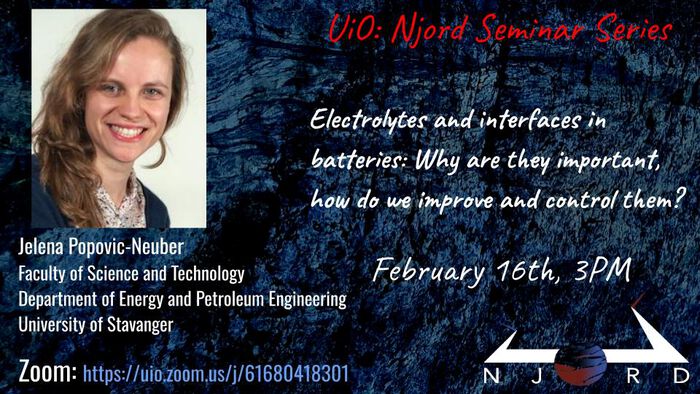
Jelena Popovic-Neuber is an Associate Professor in Battery Technology at the Department of Energy and Petroleum Engineering, Faculty of Science and Technology, University of Stavanger.

Doctoral candidate Espen Volnes at the Department of Informatics, Faculty of Mathematics and Natural Sciences, is defending the thesis Distributed Stream Processing: Performance Evaluation and Enhanced Operator Migration for the degree of Philosophiae Doctor.

Abbas Tariverdi will defend his thesis “Modeling and Control of a Continuum Manipulator for Clinical Automation” for the degree of Philosophiae Doctor at the University of Oslo, Faculty of Mathematics and Natural Sciences.

Doctoral candidate Svein Gunnar Kjøde at the Department of Informatics, Faculty of Mathematics and Natural Sciences, is defending the thesis Entanglement of Systemic Design and Sustainability Transitions for the degree of Philosophiae Doctor.
Tittel: Sequential Monte Carlo in High Dimension
Challenges and Promising Algorithms
Controlling the spontaneous ruptures of nanoscale liquid thin films is crucial to various applications such as solar cell manufacturing. Over the past few decades, theoretical work based on the long-wave theory of thin liquid films has successfully identified a critical film height, below which the surface nanowaves become linearly unstable, leading to spontaneous rupture. This dewetting in the ‘spinodal regime’ has been repeatedly confirmed in experiments using atomic force microscopy on polymer films. However, ruptures are also observed for thicker films (linearly stable) in a different manner. It is believed that the random (Brownian) movement of particles is the cause of dewetting in this ‘thermal regime’ but the theoretical framework predicting the rupture is missing. In this talk, we present a theory to account for the rupture of a two dimensional linearly stable thin film by utilizing fluctuating hydrodynamics and rare events theory. By modelling the film dynamics with the stochastic thin-film equation (STF) and solving it numerically, we observe rupture in the linearly stable thermal regime and record the average waiting time for rupture. We show that the STF can be rearranged into the form of a gradient flow, which allows us to apply Kramer’s law from the rare events theory to obtain a theoretical prediction of the average waiting time. Molecular dynamics (MD) simulations are also performed and we find good agreements between the numerics, the prediction, and the MD.

Farbod Hassani, Cosmology and Extragalactic Astronomy research group, Institute of Theoretical Astrophysics, University of Oslo.

INTED - senter for tverrfaglig utdanning - utvikler prosjekter og aktiviteter for og med studenter. Om du ønsker å høre mer om hvilke muligheter vi har for studenter, kom og bli med!