Tidlegare gjesteforelesninger og seminarer - Side 22
The Deep learning seminar will be held on Thursdays at 10:15–12:00. Please register to this mailing list if you would like updates.

Fluid efflux from the brain plays an important role in solute waste clearance. Current experimental approaches provide little spatial information or data collection is limited due to short duration or low frequency of sampling. One approach shows tracer efflux to be independent of molecular size, indicating bulk flow, yet also decelerating like simple membrane diffusion. In an apparent contradiction to this report, other studies point to tracer efflux acceleration following infusions. In this talk, I will share a stylized advection-diffusion model for clearance of waste, which reconciles the apparent contradiction, and discuss methods to validate it with novel MRI data. Being stylized, it is also simple enough to permit a dimensional analysis which indicates that clearance of waste from the brain is governed by three dimensionless quantities including a potential bottle-neck for clearance due to transport across the surface membranes.

Øystein Elgarøy, Professor at Institute of Theoretical Astrophysics, University of Oslo.

Cavitation is a ubiquitous and sometimes destructive, phenomenon. For instance, cavitation bubbles may interrupt water flow in plants or severely damage the surfaces of machines such as pumps and propellers. The so-called tribonucleation of vapor bubbles has been proposed to be responsible for the cracking sound produced by the manipulation of human synovial joints. To study cavitation up close we have developed an experimental setup where a sphere in water abruptly leaves a flat surface starting from a separation of only 10 nm.
Upon upward movement of the spherical surface, a cavitation bubble forms and develops branched fingers through the Saffmann-Taylor instability. Simultaneously, negative liquid pressures in the range of ∼10atm are observed. These large tension values occasionally lead to secondary nucleation events. The bubble sizes satisfy a predicted Familiy-Vicsek scaling law where the bubble area is proportional to the inverse bubble lifetime. The fact that creeping flow cavitation bubbles are more short lived the larger they are separate them from bubbles that are governed by inertial dynamics.

Ana Belen Grinon Marin, Postdoctoral Fellow at Rosseland Centre for Solar Physics, Institute of Theoretical Astrophysics, University of Oslo.

QOMBINE seminar by Satvik Singh (University of Cambridge): The PPT2 conjecture for diagonal unitary covariant map

Self-assembly is the spontaneous generation of order in systems driven by thermal agitation and interactions. At the molecular level, self-assembly plays an important role in the formation of giant com- plex macromolecules, being quite relevant for living systems. At the mesoscopic level, capillary driven self-assembly has been proposed for building structures in the gap between classical bottom-up and top-down fabrication methods, i.e. at the scales in between 10 micrometers and 1 millimeter. Although the method was proposed 20 years ago, only regular or simple structures were achieved so far. Using both experimental and statistical physics ideas, we demonstrate how to exploit subtle capillary interactions to create elaborate complex structures, as well as functional micromachines. On top of that, we show how such mescoscopic systems can be the analogues of many different physical systems such as folding molecules, molecular locks and keys, and crystal formation.
Welcome to an afternoon of Neuroscience Seminar with coffee, tea & buns. With Professor Emre Yaksi and Professor Tommaso Pizzorusso.
C*-algebra seminar talk by Suvrajit Bhattacharjee (University of Oslo)

Active solids consume energy to allow for actuation and shape change not possible in equilibrium. In this talk, I will focus on the elasticity of systems as wide-ranging as far-from-equilibrium hydrogels, nanoparticles, and mechanical structures composed of active robotic components. First, I will introduce our recent work on hydrogel spheres being lowered onto a hot plate. As the bottom vaporises, the resulting flow couples tightly to elastic deformations within the sphere, giving either spontaneous bouncing or steady-state floating as manifestations of the so-called elastic Leidenfrost effect. I will present theory and simulations of the floating case, which demonstrate a remarkable phenomenon: the heavier the solid, the higher it floats. I will then discuss the general competition between active boundary stresses and an elastic bulk, giving rise to so-called active elastocapillarity. Finally, I will discuss our current work on using non-reciprocal interactions in active elastic media to program robust mechanical actuation and locomotion. In each case, our results provide theoretical underpinning for recent experimental advances, and point to the design of novel soft machines.
Mingle meeting at ITA with updates and cake.
I will discuss the “geometric method” for syzygies and discuss applications to the study of tautological bundles of linear spaces. From this, I will explain how to pass from realizable matroids to all matroids via initial degenerations. This is joint work in progress with Alex Fink and Chris Eur.
A finite graph determines a Kirchhoff polynomial, which is a squarefree, homogeneous polynomial in a set of variables indexed by the edges. The Kirchhoff polynomial appears in an integrand in the study of particle interactions in high-energy physics, and this provides some incentive to study the motives and periods arising from the projective hypersurface cut out by such a polynomial.
From the geometric perspective, work of Bloch, Esnault and Kreimer (2006) suggested that the most natural object of study is a polynomial determined by a linear matroid realization, for which the Kirchhoff polynomial is a special case.
I will describe some ongoing joint work with Delphine Pol, Mathias Schulze, and Uli Walther on the interplay between geometry and matroid combinatorics for this family of objects.
QOMBINE seminar by Roy Araiza (University of Illinois Urbana-Champaign)
By Franck L. P. Lejzerowicz, Postdoc at AQUA, IBV

Innovations in fluid mechanics are leading to better food since ancient history, while creativity in cooking inspires applied and fundamental science. In this talk, I will discuss how recent advances in hydrodynamics are changing food science, and how the surprising phenomena that arise in the kitchen lead to discoveries and technologies across the disciplines, including rheology and soft matter. Central topics include cocktails and champagne (multiphase flows), whipped cream (complex fluids) and pancake making (viscous flows). For every topic, I will present the state-of-the-art knowledge, the open problems, and likely directions for future research.
Publications:
Mathijssen, A. J., Lisicki, M., Prakash, V. N., & Mossige, E. J. (2023). Culinary fluid mechanics and other currents in food science. Reviews of Modern Physics, 95(2), 025004.
Fuller, G. G., Lisicki, M., Mathijssen, A. J., Mossige, E. J., Pasquino, R., Prakash, V. N., & Ramos, L. (2022). Kitchen flows: Making science more accessible, affordable, and curiosity driven. Physics of Fluids, 34(11).
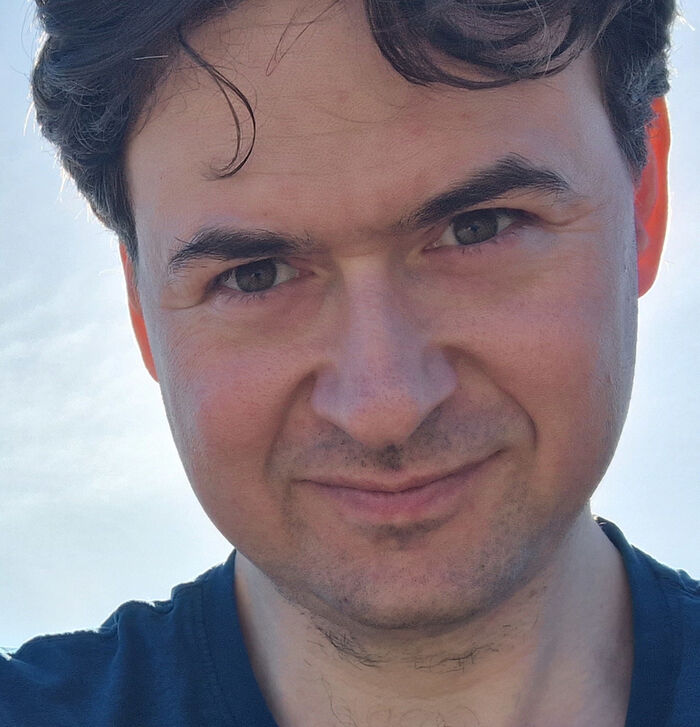
Sigurd K. Næss, Researcher at Institute of Theoretical Astrophysics, University of Oslo.
Felleskollokvium by Dr. Antoine Camper, Dept. of Physics, UiO
C*-algebra seminar talk by Valerio Proietti (University of Oslo)
By Sally Otto and Michael Whitlock from the University of British Columbia, Vancouver, Canada

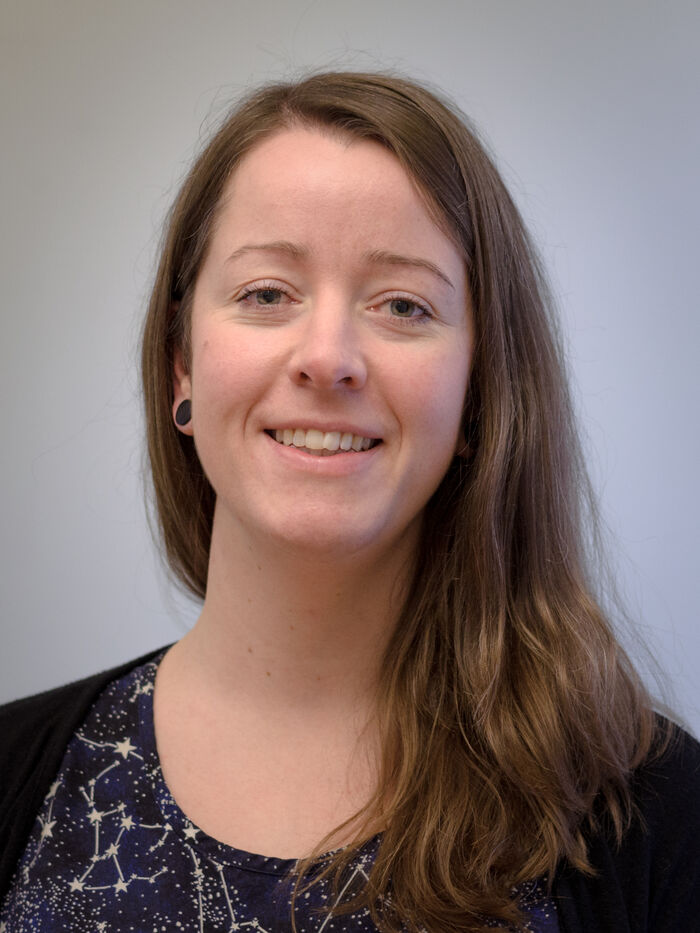
Ragnhild Aurvik, Ph.D student at Institute of Theoretical Astrophysics, University of Oslo.
QOMBINE seminar talk by Ruben Bassa (SINTEF)
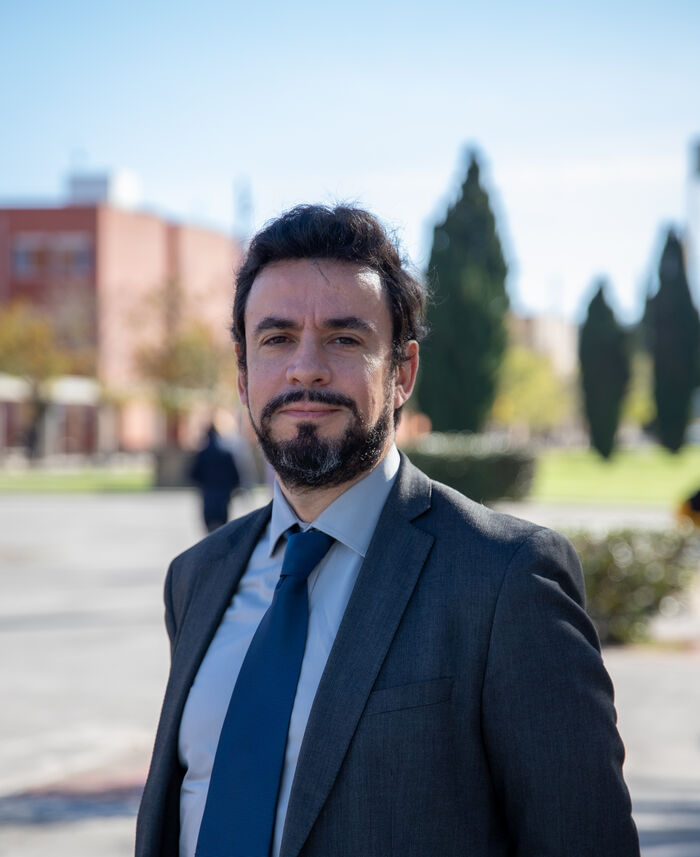
Carlos A.R. Herdeiro, Professor in the Gravitational Geometry and Dynamics Group, Mathematics Department, Aveiro University (Portugal).