Tidlegare gjesteforelesninger og seminarer - Side 26
Finding the optimal shape is a vivid research area and has a wide range of applications, e.g., in fluid mechanics and acoustics. Moreover, there is also a close link to image registration and image segmentation. In this talk, we consider shape optimization tasks as optimal control problems that are constrained by partial differential equations. From this perspective, state-of-the-art methods can be motivated by the choice of the metric on the set of admissible shapes. Moreover, a new approach for density based topology optimization is presented in the setting of Stokes flow. It is based on classical topology optimization and phase field approaches, and introduces a different way to relax the underlying infinite-dimensional mixed integer problem. We give a theoretically founded choice of the relaxed problems and present numerical results. Moreover, in order to show the potential of the new approach, we do a comparison to a classical approach. (joint work with Michael Ulbrich and Franziska Neumann)
A tropical curve is a graph embedded in R^2 satisfying a number of conditions. Mikhalkin's celebrated correspondence theorem establishes a correspondence between algebraic curves on a toric surface and tropical curves. This translates the difficult question of counting the number of algebraic curves through a given number of points to the question of counting tropical curves, i.e. certain graphs, with a given notion of multiplicity through a given number of points which can be solved combinatorially. To get an invariant count, real rational algebraic curves are counted with a sign, the Welschinger sign and there is a real version of the correspondence theorem. Furthermore, Marc Levine defined a generalization of the Welschinger sign that allows to get an invariant count of algebraic curves defined over an arbitrary base field. For this one counts algebraic curves with a certain quadratic form.
In the talk I am presenting work in progress joint with Andrés Jaramillo Puentes in which we provide a version Mikhalkin's correspondence theorem for an arbitrary base field, that is a correspondence between algebraic curves counted with the above mentioned quadratic form and tropical curves counted with a quadratic enrichment of the multiplicity. Then I will explain how to use this quadratic correspondence theorem to do the count of algebraic curves over an arbitrary base field.
C*-algebra seminar talk by Lucas Hataishi (University of Oslo)
By José Pablo Vázquez-Medina from the University of Bekerley
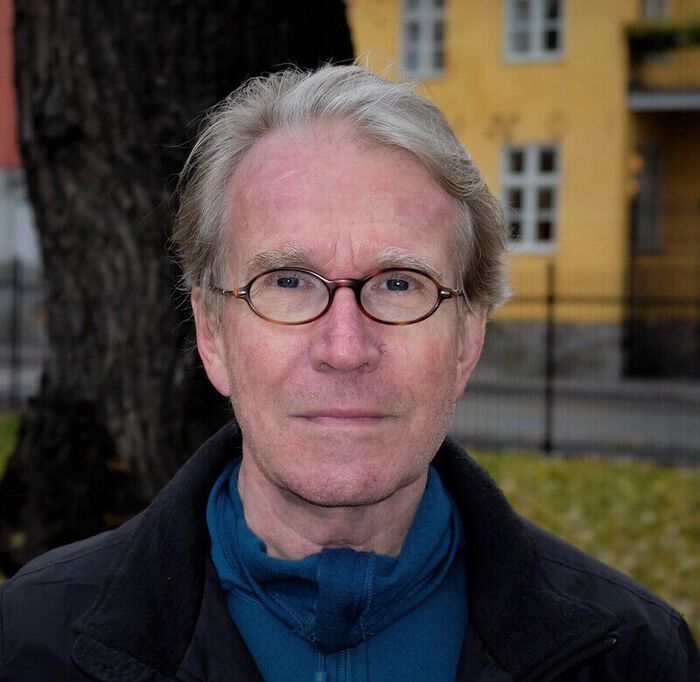
Jan Eivind Myhre, Professor Emeritus at the Department of Archaeology, Conservation and History, University of Oslo.
Following Givental, enumerative mirror symmetry can be stated as a relation between genus zero Gromov-Witten invariants and period integrals. I will talk about a relative version of mirror symmetry that relates genus zero relative Gromov-Witten invariants of smooth pairs and relative periods. Then I will talk about how to use it to compute the mirror proper Landau-Ginzburg potentials of smooth log Calabi-Yau pairs.
I will go through my PhD work at DTU. It is about the development of a fully-nonlinear finite difference based potential flow solver which imposes all of the fluid boundaries via an immersed boundary method. The convergence and stability of this approach is first established for various linear and nonlinear wave propagation problems. When it comes to the wave-body interaction problem, cautious attention is paid to the intersection point between free surface and body surface, and a scheme which meets the accuracy and stability requirements best is picked from several proposals. With the scheme introduced in this paper, piston type wave maker and forced heaving cylinder cases with high oscillation frequency have been simulated successfully.
Internal solitary waves (ISWs) are underwater waves of great amplitude moving horizontally in the layered ocean. The waves induce a velocity field which is felt both at the ocean surface, throughout the entire water column, and at the bottom. When of great amplitude, the waves induce a vortex wake in the bottom boundary layer behind the wave and transport water in the vertical direction displacing, e.g., sediments from the bottom. A fundamental mechanism in the ocean ecosystem is the vertical mixing and movement of particles, e.g., biological materials. In this talk, we present numerical simulations of ISWs of depression and of large amplitude by replicating a laboratory experiment. Furthermore, we discuss the dynamics of ISW-sediment interactions and illustrate particle movements, trajectories, and particle distribution in the water column under the influence of ISWs of large amplitude.
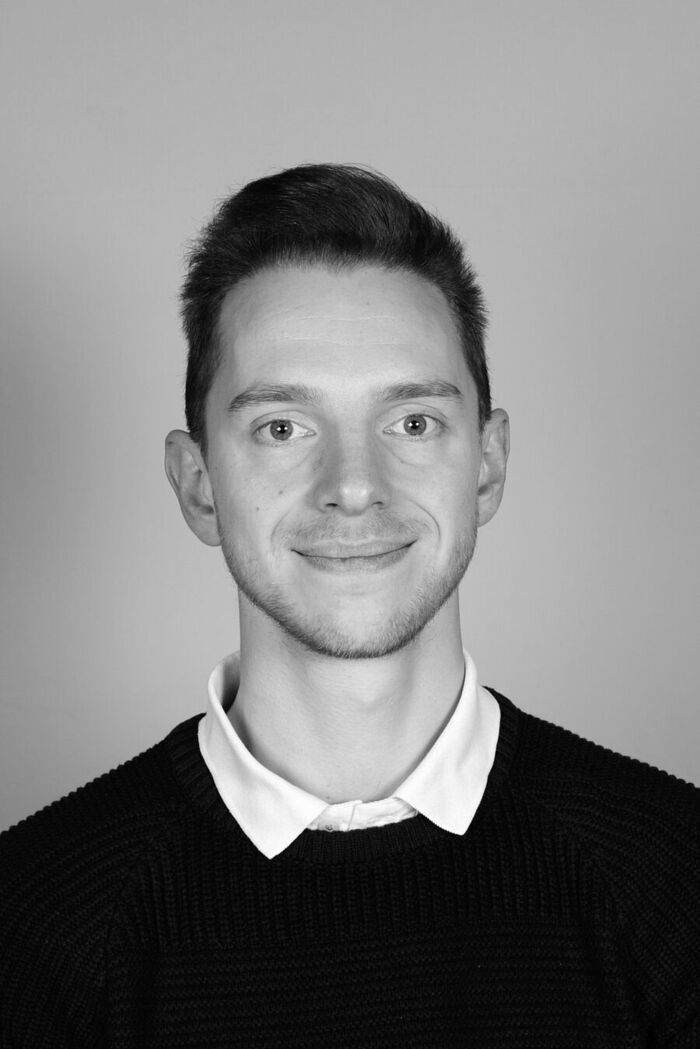
Quentin Noraz, Postdoctoral Fellow at Rosseland Centre for Solar Physics, University of Oslo.
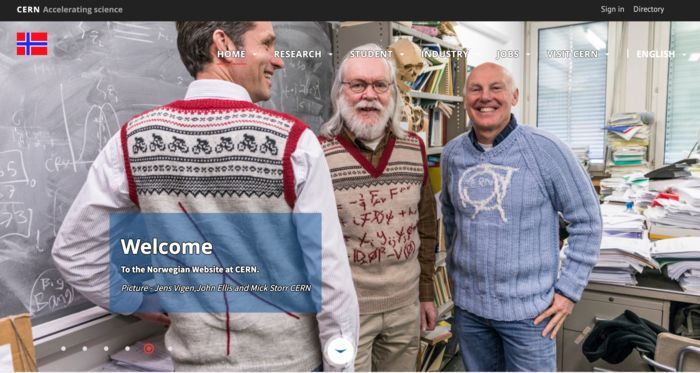
Felleskollokvium by Heidi Sandaker, Head of the Norwegian Center for CERN-related research (NorCC)
C*-algebra seminar by Ole Brevig (University of Oslo)
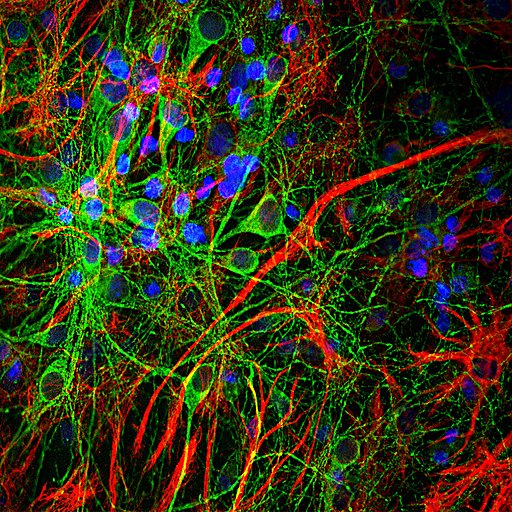
Welcome to the first seminar of the semester, where we will host a talk by Dr. Elise H. Thompson (Fyhn Group, FYSCELL, IBV)
Why is deep learning so successful in many applications of modern AI? This question has puzzled the AI community for more than a decade, and many attribute the success of deep learning to the implicit regularization imposed by the Neural Network (NN) architectures and the gradient descent algorithm. In this talk we will investigate the implicit regularization of so-called linear NNs in the simplified setting of linear regression. Furthermore, we will show how this theory meets fundamental computational boundaries imposed by the phenomenon of generalized hardness of approximation. That is, the phenomenon where certain optimal NNs can be proven to exist, but any algorithm will fail to compute these NNs to an accuracy below a certain approximation threshold. Thus, paradoxically, there will exist deep learning methods that are provably optimal, but that can only be computed to a certain accuracy.
Vegard Antun is a postdoctoral fellow at the University of Oslo, department of Mathematics.
Harald Thommesen, Postdoctoral Fellow at Institute of Theoretical Astrophysics, University of Oslo.
By Turk Rhen, University of North Dakota, USA
Rubinur Khatun, Postdoctoral Fellow at Institute of Theoretical Astrophysics, University of Oslo.

QOMBINE seminar by Snorre Bergan (UiO)
By Ludovic Orlando, University of Toulouse, France (Notice the time!)
Atul Mohan, Postdoctoral Fellow at Rosseland Centre for Solar Physics, University of Oslo.
The Section 4 seminar for the Autumn of 2022 will be held on Thursdays from 10:15–12:00 (see the schedule)