Tidlegare arrangement - Side 129
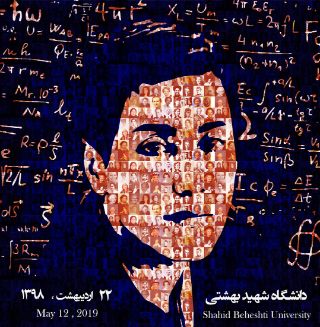
Dagen 12. mai arrangeres det verden rundt aktiviteter som belyser og feirer kvinner i matematikk og deres bidrag til feltet. Bli med!
After having taught computing in a mathematical setting for many years, I have collected a number of observations and hypotheses about how students develop their understanding. In particular I have seen many examples of how computing triggers understanding of mathematical concepts. Some of these are quite standard, eg. numerical integration as a tool to extend the understanding of the definition of the integral. In this talk I will discuss some fairly obvious examples of this kind, but I will focus on some less obvious examples. Hopefully, this will illustrate that computing can be integrated fruitfully with mathematics in areas far beyond what we do today.
C*-algebra seminar talk by Ulrich Pennig

Doctoral candidate Tao Ma at the Department of informatics, Faculty of Mathematics and Natural Sciences, is defending the thesis Executable Model Based Testing for Self-Healing Cyber-Physical Systems Under Uncertainty for the degree of Philosophiae Doctor.
"Solid state precipitation of spinels in zinc oxide -
A microstructure study"
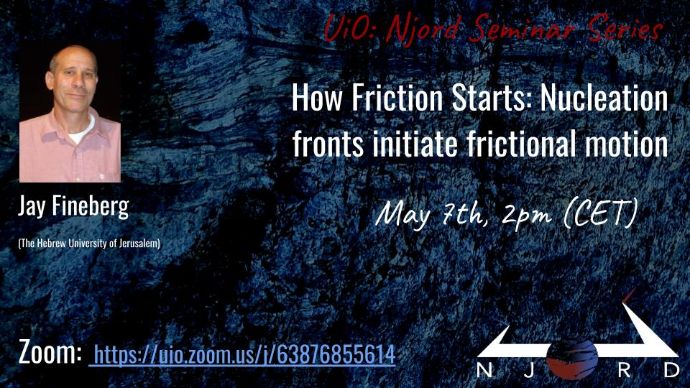
Jay Fineberg (The Hebrew University of Jerusalem): How Friction Starts: Nucleation fronts initiate frictional motion

Hylleraas seminar, hosted in Oslo
Abstract: Graphics processing units, or GPUs, offer significantly increased performance for some scientific computing workloads. But in the case of finite element simulations on unstructured meshes, the benefits of using GPUs are still the subject of an ongoing discussion for which there is no clear conclusion. We describe our work on improving the GPU acceleration of a finite element solver framework called FEniCS, where code is automatically generated for the user from a high-level description of their finite element problem. We use automated code generation to offload the assembly of linear systems to a GPU, while taking care that data transfers between CPU and GPU do not become a performance bottleneck. We provide examples to show that GPUs and automated code generation can be used to accelerate finite element solvers. Even though more work is needed to find efficient GPU-based linear solvers, our improvements to FEniCS can be used as a starting point for exploring the potential of GPU acceleration for finite element simulations.
This talk is part of the Mechanics Lunch Seminar series. That means 20min talks plus discussion in an informal setting.
Zoom: To obtain the Zoom meeting details please contact Timo Koch (timokoch at math.uio.no).
Mingle meeting at ITA with updates and quiz.

Doctoral candidate Shiji Bijo at the Department of informatics, Faculty of Mathematics and Natural Sciences, is defending the thesis Formal Modelling of Cache Coherent Multicore Architectures for the degree of Philosophiae Doctor.

The Information System Seminar Series features, M. Lynne Markus, Professor, Information and Process Management, Bentley University, Massachusetts USA
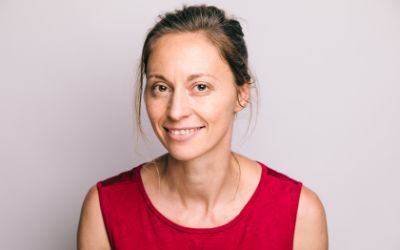
Every second Tuesday, CBA staff gather for lunch and a talk. On May 4th, the talk will be given by postdoctoral fellow Manjana Milkoreit from the Department of Sociology and Human Geography.
Title: Time is of the Essence - Investigating beliefs about the future among climate change negotiators
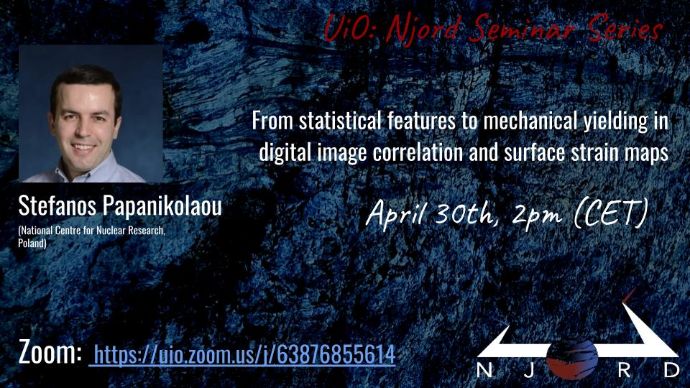
Stefanos Papanikolaou (National Center for Nuclear Research, Poland): From statistical features to mechanical yielding in digital image correlation and surface strain maps
Hylleraas seminar, hosted in Tromsø

Ph.d.-kandidat Håvard Tveit Ihle ved Institutt for teoretisk astrofysikk, Det matematisk-naturvitenskapelige fakultet, vil forsvare avhandlingen "Bayesian Data Analysis for Intensity Mapping and CMB Experiments" for graden Philosophiae Doctor.
Tittel:
Nonlinear model for waves on water covered by ice
Resonant interaction equations and analytical solution of zeroth harmonic “group line” measured in experiments
C*-algebra seminar talk by Rufus Willett

In the new CompSci MSCA PhD program we will educate 32 PHD-students across the faculty. They will all have a 20 ECTS intensive introduction course in computing and data science. This will open new opportunities to develop PhD-level courses in the spirit of the CS program. I will introduce a discussion of what the contents and level of such courses should be with a particular focus on how Fys4150 and Fys-stk4155 can be adapted to students with diverse computational skills.
Tittel: Finite-volume methods with dense neural networks

The Information System Seminar Series features, Richard Heeks, Professor of Digital Development at Global Development Institute, University of Manchester, UK
This topic will be presented by Frank Eliassen, Geir Horn, Yan Zhang, Sabita Maharjan / DIS
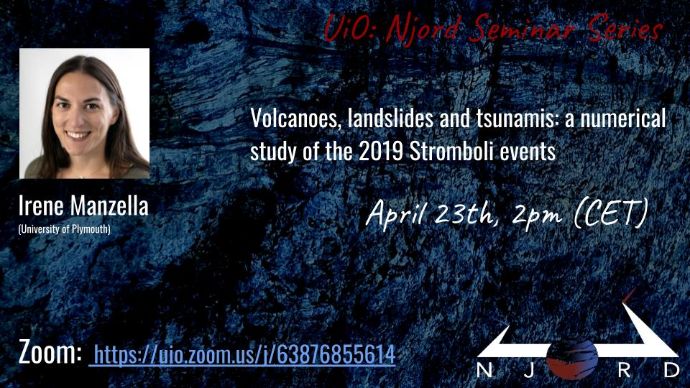
Irene Manzella (University of Plymouth): Volcanoes, landslides and tsunamis: a numerical study of the 2019 Stromboli events

Hylleraas seminar, hosted in Oslo

Doctoral candidate Karl Erik Holter at the Department of informatics, Faculty of Mathematics and Natural Sciences, is defending the thesis Robust preconditioning of multiphysics problems and interstitial fluid flow for the degree of Philosophiae Doctor.

Benjamin Racine, the Marseille Particle Physics Centre (CPPM).