Tidlegare arrangement - Side 91
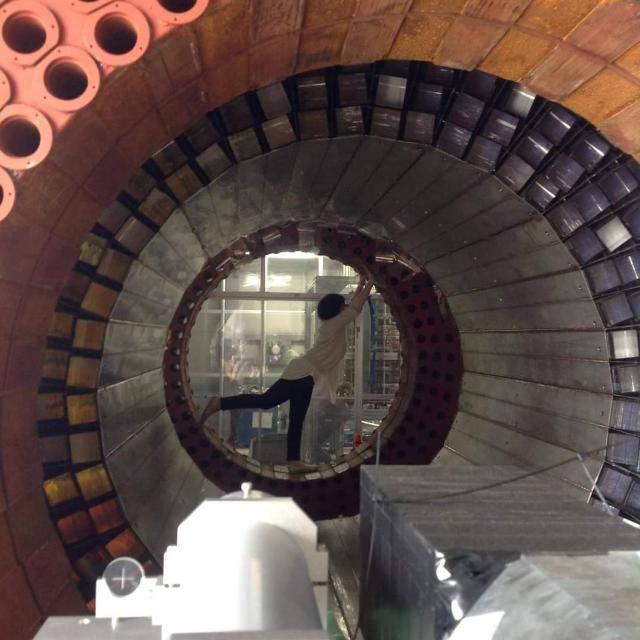
Azusa Inoue, PhD candidate at Research Center for Nuclear Physics (RCNP), Osaka University, Japan.
Fano manifolds are complex projective manifolds having positive first Chern class. The positivity condition on the first Chern class has far reaching geometric and arithmetic implications. For instance, Fano manifolds are covered by rational curves, and families of Fano manifolds over one dimensional bases always admit holomorphic sections. In recent years, there has been some effort towards defining suitable higher analogues of the Fano condition. Higher Fano manifolds are expected to enjoy stronger versions of several of the nice properties of Fano manifolds.
In this talk, I will discuss higher Fano manifolds which are defined in terms of positivity of higher Chern characters. After a brief survey of what is currently known, I will present recent joint work with Carolina Araujo, Roya Beheshti, Kelly Jabbusch, Svetlana Makarova, Enrica Mazzon and Nivedita Viswanathan, regarding toric higher Fano manifolds. I will explain a strategy towards proving that projective spaces are the only higher Fano manifolds among smooth projective toric varieties.

For millennia, origami and kirigami artists have used folds and cuts to create beautiful shapes from a simple sheet of paper. I will describe our recent scientific attempts to catch up with these remarkably imaginative arts phrased as inverse problems in physical geometry that aim to control the shape and rigidity of a thin surface. Using discrete operations that vary the number, size, orientation and coordination of folds and cuts, I will show how to create piecewise isometric kirigami and origami tessellations and control their local and global morphology and mechanical response, mixing experimental, computational and theoretical approaches.
We are happy to invite to a 3 day-workshop on CNES (the French National Centre for Space Studies) tools, from 21st of March to 23rd of March. The workshop is open to all interested!
The event is free of charge for members of the CENSSS Consortia, students and representatives from Academia.
For industry partners outside of CENSSS there will be a small fee to cover the expenses of food.
The workshop will take place at UiO at Gunnar Randers vei 19, 2007 Kjeller.
Coffee and simple lunches will be served.

Rellie Goddard is a Postdoc in geology and geophysics at The Woods Hole Oceanographic Institution.

Hylleraas seminar, hosted in Tromsø

Carlos José Díaz Baso, Postdoctoral Fellow at Rosseland Centre for Solar Physics, University of Oslo.
Er du usikker på hvilket masterstudium du vil søke på, eller bare har lyst til å høre litt mer om masterprogrammene som tilbys ved Matematisk institutt? Vi inviterer til informasjonsmøte for masterprogrammene i Data Science og i Stokastisk modellering, statistikk og risikoanalyse!
På informasjonsmøtet får du et innblikk i masterprogrammene våre, samt muligheten til å stille spørsmål som du sitter inne med direkte til programledererne. For studenter som fremdeles har ett år igjen, vil vi også si noe om hvilke kurs som en bør velge det siste året.

"Syntese av lavvalent kompleksfluorider"
Er du usikker på hvilket masterstudium du vil søke på, eller bare har lyst til å høre litt mer om masterprogrammene som tilbys ved Matematisk institutt? Vi inviterer til informasjonsmøte for masterprogrammene i Matematikk og i CS:Applied Mathematics and Risk Analysis!
På informasjonsmøtet får du et innblikk i masterprogrammene våre, samt muligheten til å stille spørsmål som du sitter inne med direkte til programledererne. For studenter som fremdeles har ett år igjen, vil vi også si noe om hvilke kurs som en bør velge det siste året.
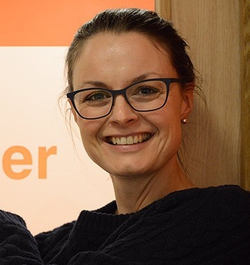
Maria Vetleseter Bøe: We need students to engage in the learning activities that work. However, many students resist active learning activities and believe they learn more from traditional lectures.
We have studied how students’ motivation interacts with different learning activities, using focus group data from Norwegian physics students.
The findings suggest that students develop forms of motivation that promote learning in active learning situations when they feel competent, either through mastery, perceived learning, or comparison with peers, and that relatedness to a community of learners often helps enable development of such motivation.
Sakarias Frette: The standard model is the most accurate theory to date, with incredible precision measurements done at multiple detectors. It has however some shortcommings, not being able to explain phenomena such as the hierarchy problem, gravity, dark matter, etc.. Additional theories have been put forward to try to cover these issues, but for now, it has yielded no luck.
The strategy until recently has been to take such a model, and do a targeted search, resulting in large exclusion plots and no new physics. This is effective and fast for a single model, but very biased, and takes a lot of time if you want to try on 100 og 1000 models.
My thesis will instead try to apply a semi unsupervised technique to separate out anomalous data such that we can reduce the uninteresting SM background and focus on possible new physics that might be hidden in the data. The data analysis model used is an autoencoder.

This coming Friday (March 10th) Simen Kvaal will give a presentation of the DFT research at the Hylleraas Centre.
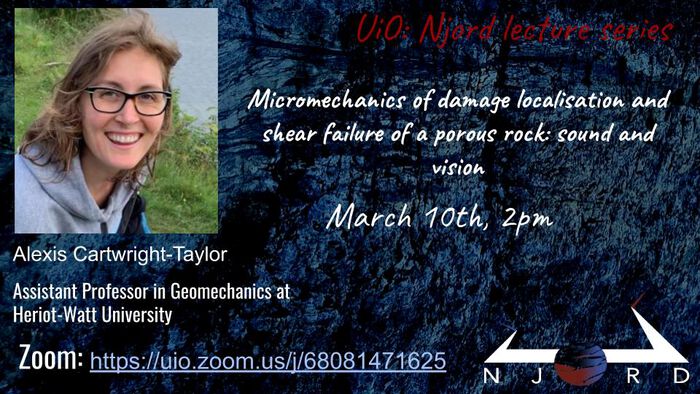
Alexis Cartwright-Taylor is an Assistant Professor in Geomechanics at Heriot-Watt University
After a brief introduction to the main physical characteristics of tsunami events, the recently developed Iterative Filtering technique is presented and applied to the decomposition of tsunami signals from pressure and tide gauges. It is shown how these signals are successfully decomposed into components of different physical origins. Then, the time-frequency representation of these time series is obtained by using the IMFogram algorithm, which computes instantaneous amplitudes and frequencies for the previously obtained components. Finally, possible applications to tsunami science are discussed, such as possible applications to real time detection in early warning context.
Hylleraas seminar, hosted in Oslo
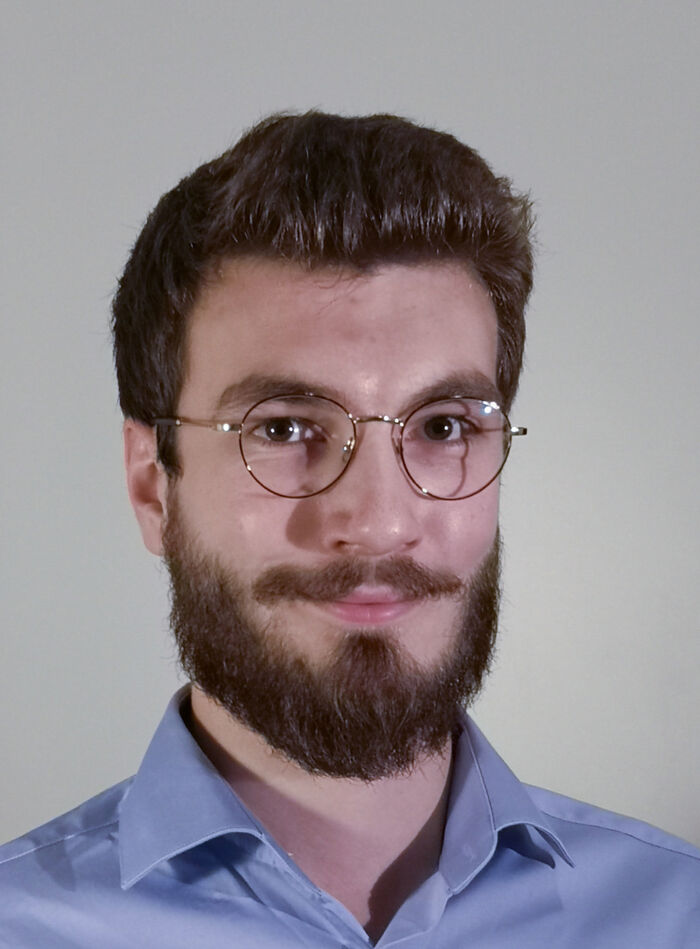
Nils-Ole Stutzer, PhD Fellow at Institute of Theoretical Astrophysics, University of Oslo.

Det er viktig at du orienterer deg mot arbeidslivet før du er ferdig med studiene. Som masterstudent inviteres du til å delta på aktuelle kurs med Karrieresenteret ved UiO.
We have the pleasure of hosting Professor Jelena Popovic-Neuber from the Department of Energy and Petroleum Engineering, University of Stavanger on Thursday, 9 March.
Det er viktig at du orienterer deg mot arbeidslivet før du er ferdig med studiene. Som masterstudent inviteres du til å delta på aktuelle kurs med Karrieresenteret ved UiO.
Estimates of environmental extremes are needed for a multitude of applications. For example, buildings, roads, bridges and dams must be designed to withstand extreme precipitation and flooding events of a certain size. Obtaining such estimates requires a combination of statistical theory and environmental process understanding to overcome data deficiencies: data on extremes are by definition sparse and regulations often require estimates for events that have yet to be observed. We will present approaches to obtain consistent estimates across spatial locations and accumulation periods, and discuss a few open questions on this topic.

Hvordan får vi TV-seerne interesserte i vitenskap? Hva skal til for å skape spenning og visualisere komplekse fakta?