Tidlegare gjesteforelesninger og seminarer - Side 24

A flexible predictive density combination is introduced for large financial data sets which allows for model set incompleteness. Dimension reduction procedures that include learning allocate the large sets of predictive densities and combination weights to relatively small subsets. Given the representation of the probability model in extended nonlinear state-space form, efficient simulation-based Bayesian inference is proposed using parallel dynamic clustering as well as nonlinear filtering, implemented on graphics processing units. The approach is applied to combine predictive densities based on a large number of individual US stock returns of daily observations over a period that includes the Covid-19 crisis period. Evidence on dynamic cluster composition, weight patterns and model set incompleteness gives valuable signals for improved modelling. This enables higher predictive accuracy and better assessment of uncertainty and risk for investment fund management.

Welcome to the next seminar of the semester, where we will host a talk by Krubeal Danieli (PhD candidate, Fyhn Group, FYSCELL, IBV).
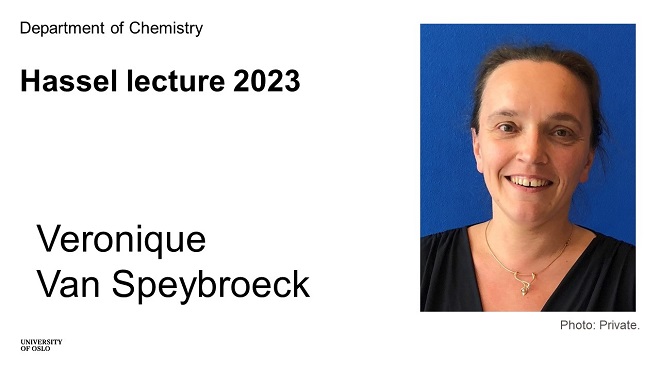
This year's Hassel lecture is headed by Professor Veronique Van Speybroeck. The second day Professor Speybroeck will present the lecture "From quantum mechanics to machine learning: Bridging length and time scales in modeling nanoporous materials at operating conditions."
This year's Hassel lecture is headed by Professor Veronique Van Speybroeck. The second day Professor Speybroeck will present the lecture "From quantum mechanics to machine learning: Bridging length and time scales in modeling nanoporous materials at operating conditions."

Florian Niedermann, Nordic Institute for Theoretical Physics, Stockholm University.
Felleskollokvium by Prof. Sverre Holm, Dept. of Physics, UiO
This year's Hassel lecture is headed by Professor Veronique Van Speybroeck. The first day Professor Speybroeck will present the lecture "Operando modeling of functional nanostructured materials for sustainable chemistry, nanosensing and clean energy."
This year's Hassel lecture is headed by Professor Veronique Van Speybroeck. The first day Professor Speybroeck will present the lecture "Operando modeling of functional nanostructured materials for sustainable chemistry, nanosensing and clean energy."
Online changepoint detection algorithms based on likelihood-ratio tests have excellent statistical properties. However, a simple exact online implementation is computationally infeasible as, at time T, it involves considering O(T) possible locations for the change. To improve on this, we use functional pruning ideas to reduce the set of changepoint locations that need to be stored at time T to approximately log T. Furthermore, we show how we need only maximise the likelihood-ratio test statistic over a small subset of these possible locations. Empirical results show that the resulting exact online algorithm, which can detect changes under a wide range of models, has a constant-per-iteration cost on average. We consider applications of this algorithm in the context of detecting increases in radiation count that represent astronomical or nuclear events of interest.

The Kolmogorov N-width describes the best possible error one can achieve by elements of an N-dimensional linear space. Its decay has extensively been studied in Approximation Theory and for the solution of Partial Differential Equations (PDEs). Particular interest has occurred within Model Order Reduction (MOR) of parameterized PDEs e.g. by the Reduced Basis Method (RBM). While it is known that the N-width decays exponentially fast (and thus admits efficient MOR) for certain problems, there are examples of the linear transport and the wave equation, where the decay rate deteriorates to N-1/2. On the other hand, it is widely accepted that a smooth parameter dependence admits a fast decay of the N-width. However, a detailed analysis of the influence of properties of the data (such as regularity or slope) on the rate of the N-width seems to lack. In this work, we use techniques from Fourier Analysis to derive exact representations of the N-width in terms of initial and boundary conditions of the linear transport equation modeled by some function g for half-wave symmetric data. For arbitrary functions g, we derive bounds and prove that these bounds are sharp. In particular, we prove that the N-width decays as cr N(-r-1/2) for functions in the Sobolev space, g ∈ Hr. Our theoretical investigations are complemented by numerical experiments which confirm the sharpness of our bounds and give additional quantitative insigh.
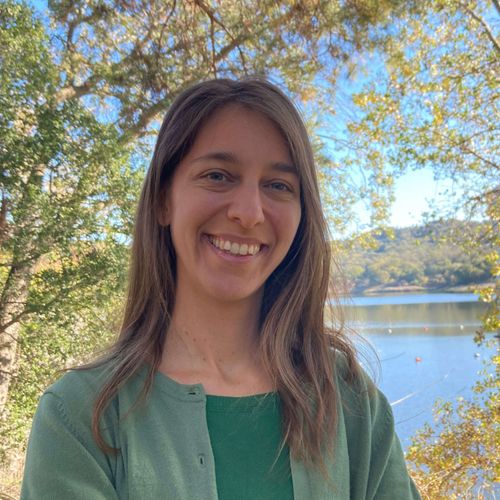
Gina Panopoulou, Assistant Professor at Division of Astronomy and Plasma Physics, Chalmers University of Technology, Gothenburg.
On Thursday the 11th of May at 13:30, we host a double AQUA/CEES seminar! Katerina Guschanski and David Richardson are visiting our department as opponents for the disputation of Oliver Kersten and they were happy to give a talk the day before.
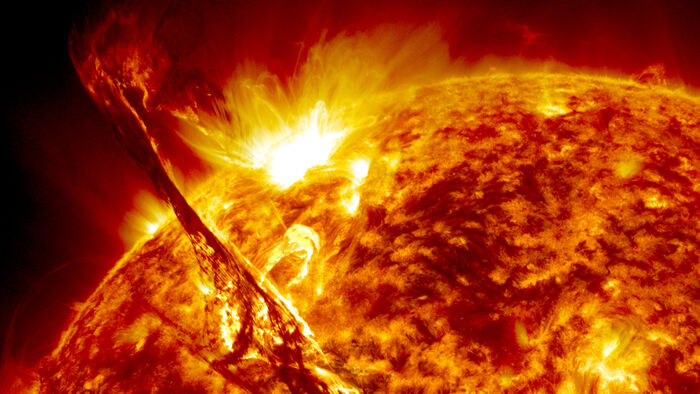
Til minne om Norges fremste astrofysiker og grunnlegger av Institutt for teoretisk astrofysikk, professor Svein Rosseland (1894 – 1985), arrangerer Institutt for teoretisk astrofysikk hvert år en Rosselandforelesning.

This talk will introduce a recent suite of research focussed on the statistical detection of anomalous structure in online data settings. The challenge of efficiently identifying anomalies in data sequences is an important statistical problem that now arises in many applications. Whilst there has been substantial work aimed at making statistical analyses robust to outliers, or point anomalies, there has been much less work on detecting anomalous segments, or collective anomalies, particularly in those settings where point anomalies might also occur. This is the challenge we seek to address, demonstrating theoretical results in both the offline and online settings as well as introducing some applied case studies.
Øystein Håvard Færder, Ph.D. student at Rosseland Centre for Solar Physics, University of Oslo.
C*-algebra seminar talk by Makoto Yamashita (University of Oslo)
By Alexander Eiler, University of Oslo, IBV, AQUA. Note the time.
Duncan Watts, Postdoctoral Fellow at Institute of Theoretical Astrophysics, University of Oslo.
Felleskollokvium by Oskar Idland, Ralv G. S. Holmsen, and Jannik Eschler, Dept. of Physics, UiO
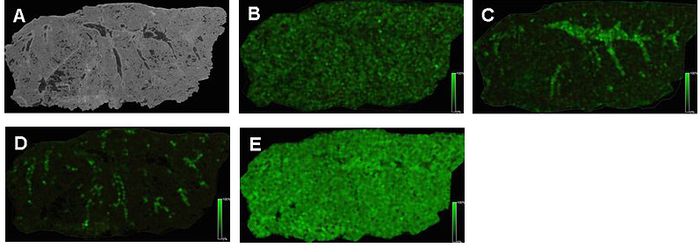
Welcome to the next seminar of the semester, where we will host a talk by Sebastian Krossa (Senior Engineer, MR Core Facility, Department of Circulation and Medical Imaging, NTNU).

We discuss discretizations and solvers for a class of numerical methods for convection diffusion equations in arbitrary spatial dimensions. Targeted applications include the Nernst-Plank equations for transport of species in a charged media. We illustrate how such exponentially fitted methods are derived. A main step in proving error estimates is showing unisolvence for the quasi-polynomial spaces of differential forms defined as weighted spaces of differential forms with polynomial coefficients. We show that the unisolvent set of functionals for such spaces on a simplex in any spatial dimension is the same as the set of such functionals used for the polynomial spaces. We are able to prove our results without the use of Stokes' Theorem, which is the standard tool in showing the unisolvence of functionals in polynomial spaces of differential forms.
This is joint work with Shuonan Wu (Beijing University)
Davide Decataldo, Postdoctoral Fellow at Institute of Theoretical Astrophysics, University of Oslo.
I will talk about some new examples of varieties where the coniveau and strong coniveau filtrations are different. This is joint work with Jørgen Vold Rennemo.