Tidlegare gjesteforelesninger og seminarer - Side 2
By Gabriel Blouin-Demers from the Université d’Ottawa, Canada
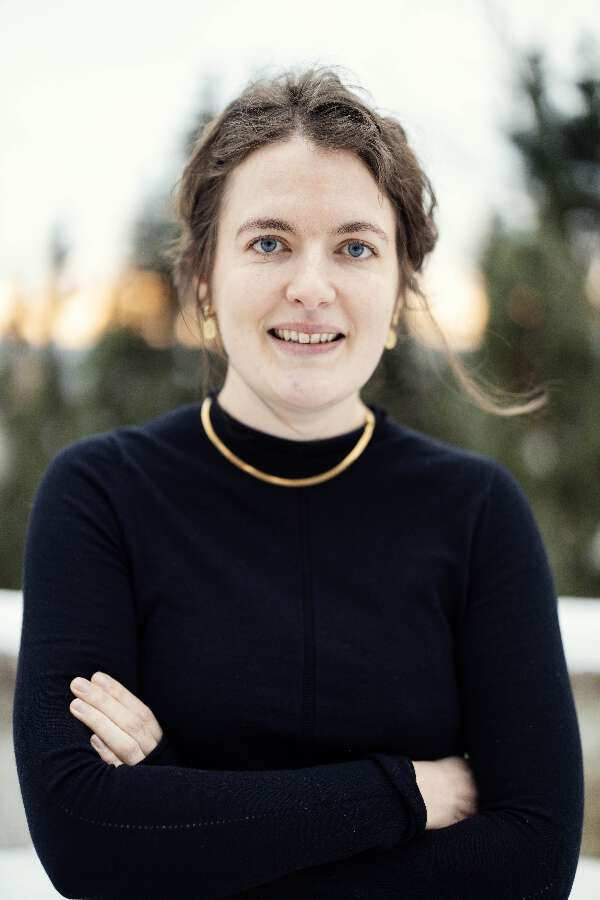
Céline Cunen is a researcher at the Oslo Centre for Biostatistics and Epidemiology (OCBE) at the Oslo University Hospital. There she works on a variety of topics within methodological and applied statistics, including clinical trials. She also holds a part-time position at Peace Research Institute Oslo (PRIO) where she does research on the evaluation of conflict forecasts. She received her PhD in statistics from the University of Oslo in 2018.
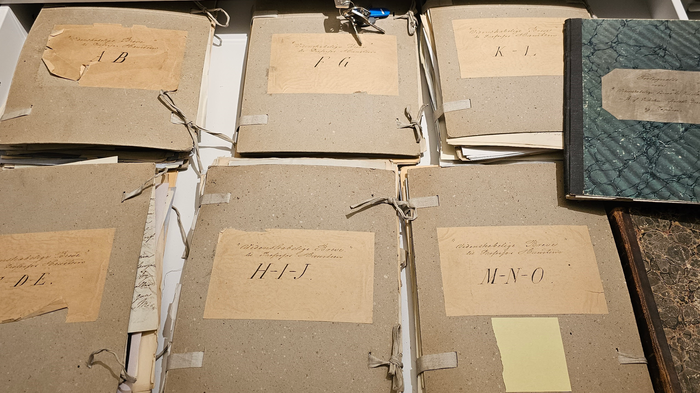
Bli med oss og hør på Line Nybakk Akerholt, fagbibliotekar for ITA ved Universitetsbiblioteket — seksjonen for åpen forskning og spesialsamlinger!
A primitive element of a Galois field F is a generator of the group of units F*. Finding such elements is entirely non-trivial and this search has given rise to many interesting results in number theory. If one is willing to assume the generalised Riemann hypothesis, then every (non-silly) integer is primitive to infinitely many prime order fields. Moreover, the least primitive element in such fields is less than the square root of the order. I will present an effective method for finding primitive elements in Galois fields with prime-power order. This method is an amalgamation of my hybrid bound on prime divisors and joint work with J. Punch on prime sieves. I will also discuss some of my recent work on least primitive elements.

QOMBINE seminar by Markus Grassl (International Centre for Theory of Quantum Technologies, University Gdansk)

PDE seminar by Konstantina Trivisa (University of Maryland)
Jan Skotheim is Professor of Biology at Stanford University and Professor, by courtesy, of Chemical and Systems Biology. His research focuses on understanding how cells grow and how cell growth triggers cell division, a fundamental process with important implications for normal physiology and diseases such as cancer.
Skotheim leads an interdisciplinary research program that combines mathematics, physics, engineering, biochemistry, genetics, and cell and systems biology. His laboratory primarily studies cell-size control and the cell cycle using budding yeast as a model organism, with the goal of uncovering the molecular mechanisms that connect cellular growth to division.
He did his PhD in Applied Mathematics from the University of Cambridge in 2004. He subsequently conducted postdoctoral research in genetics, cell biology, and systems biology at The Rockefeller University before joining Stanford’s faculty.

José Ricardo Correia, Institute of Theoretical Astrophysics, University of Oslo.
By Frode Strisland, Senior scientist at the Health Department at SINTEF Digital. Associate Prof II at the Electronics group at Physics
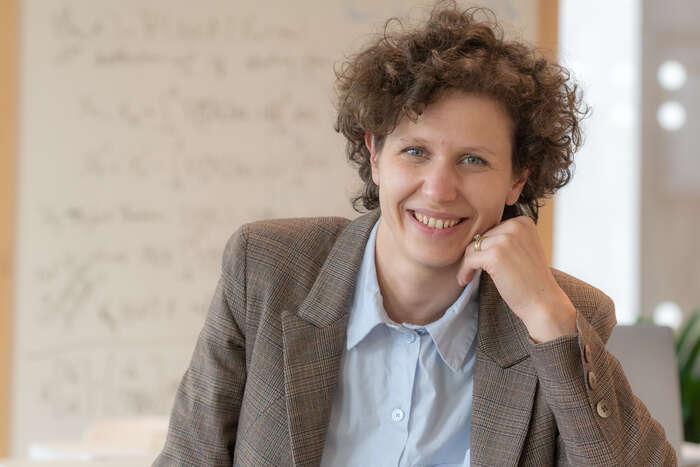
Alice Corbella is an Assistant Professor in Applied Statistics at the University of Warwick. Her research centres on Markov chain Monte Carlo (MCMC) methods, with a particular focus on Zig-Zag sampling and its application to Bayesian inference of infectious disease dynamics from epidemic data.
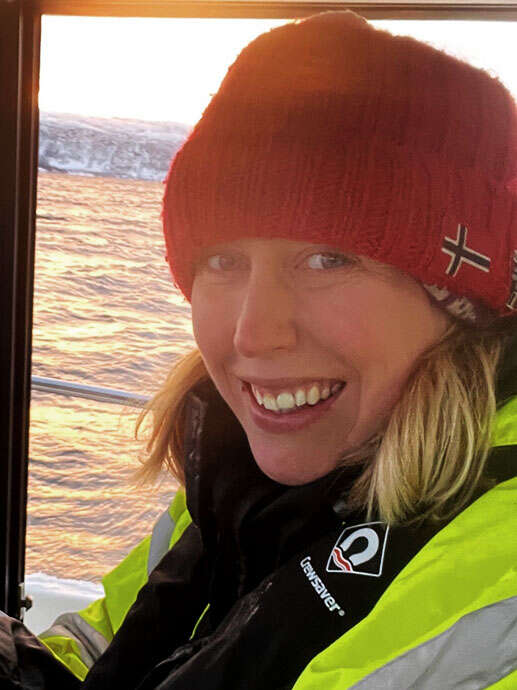
PhD candidate Clare Margaret Andvik at the Department of Biosciences, Faculty of Mathematics and Natural Sciences, is defending the thesis 'Multiple stressors in Norwegian killer whales: Integrating the effect of chemical pollution with other anthropogenic stressors' for the degree of PhD.
By Elisa Bonaccorso and Juan Manuel Guayasamin from Universidad San Francisco de Quito
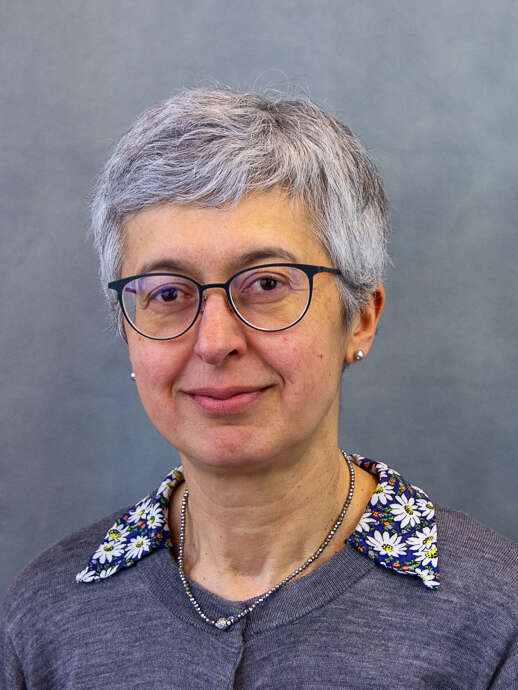
Nadia S. Larsen tildeles pris fra Professor Ingerid Dal og søster Ulrikke Greve Dals legat for fremragende arbeid innen teoretisk matematikk.
C*-algebra seminar by Seung-Hyeok Kye (Seoul National University)
PDE seminar by Konstantina Trivisa (University of Maryland)

Bli med oss og hør på Dr. Boy Lankhaar!
PDE seminar by Konstantina Trivisa (University of Maryland)