Tidlegare gjesteforelesninger og seminarer - Side 23

Franz Fuchs (Sintef/UiO) will give a talk with title "Hamiltonians with time evolution restricted to subspaces"
By Olli Hyvärinen, postdoc in the AQUA section, IBV

We have developed a pump-less recirculation Organ-on-Chip (rOoC) platform that generates a directional gravity-driven flow. This platform can be adapted to various flow conditions and enables the study of endothelial lining, blood vessel sprouting, circulation of immune cells, pathogens or other particles, and incorporation of 3D cell models like organoids. Additionally, we have developed a computational model to predict shear stress and mass transport within the rOoC, allowing for customization of the platform for various use-cases.
The rOoC platform is very versatile and can be used to model for instance drug-induced liver-injury (DILI) that mimics the complex interaction between resident human stem cell-derived liver organoids (3D-HLO) and circulating immune cells. Moreover, we show the functional crosstalk between 3D-HLOs and human pancreatic islets to model the onset of type-2 diabetes.

Samantha Stever, Assistant Professor in the Department of Physics, Okayama University (Japan).
Hans Arnold Winther, Institute of Theoretical Astrophysics, University of Oslo.
Markus Spitzweck (Universität Osnabrück) will present the talk «Representation categories and motives».

This seminar will consist of two separate presentations, each about 15-minute long.
1) Magnetic Quincke Rollers with tunable single particle dynamics and collective states
2) Electrically controllable ferrofluids
Unfortunately, the seminar by Olli Hyvärinen, AQUA, IBV, is cancelled.

It is well known that if the singular values of a matrix are distinct, then its best rank-n approximation in the Frobenius norm is uniquely determined and given by the truncated singular value decomposition. On the other hand, this uniqueness is in general not true for best rank-n approximations in the spectral norm. In this talk we relate the problem of finding best rank-n approximations in the spectral norm to Kolmogorov n-widths and corresponding optimal spaces. By providing new criteria for optimality of subspaces with respect to the n-width, we describe a large family of best rank-n approximations to a given matrix. This results in a variety of solutions to the best low-rank approximation problem and provides alternatives to the truncated singular value decomposition. This variety can be exploited to obtain best low-rank approximations with problem-oriented properties.
We further discuss the generalization of these results to compact operators in L2, and explain how they can be used to both describe the out-performance of smooth spline approximations of solutions to differential equations when compared to classical finite element methods, and to solve the outlier-problem in isogeometric analysis.
This talk is based on work done in collaboration with Michael Floater, Carla Manni and Hendrik Speleers.
The Section 4 seminar for the Spring of 2023 will be held on Wednesdays at 10:15–12:00 (see the schedule)
C*-algebra seminar talk by John Quigg (Arizona State University)
By Mathieu Lutier, AQUA, IBV

I will discuss some of our recent results on active chiral and nematic membranes. The chiral stresses we consider give rise to a novel form of odd elasticity. To outline this phenomenology I will give explicit calculations outlining spontaneous flow transitions and shape instabilities. I will discuss the relevance of these results in developmental biology and their relation to active nematics, in particular how certain limits of active nematic membranes can reduce to a theory of an isotropic membrane with an active stress defined by the deviatoric part of the shape operator.
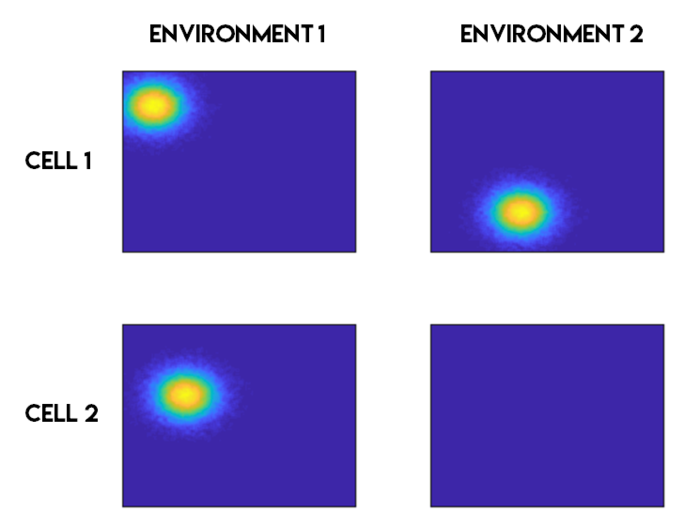
Welcome to seminar by Mikkel Elle Lepperød (Researcher, Cinpla Group, FYSCELL, IBV).
C*-algebra seminar talk by Roberto Conti (Sapienza University of Rome)
By Sara Goodacre from the University of Nottingham, UK
Luca Amendola, Institut für Theoretische Physik, Heidelberg University.
Many have tried to adapt Clemens and Griffiths's approach to irrationality of cubic threefolds to higher dimensions, using different invariants in place of H^3(X,Z): the transcendental part of H^4, derived categories, quantum cohomology... I will report on my attempt to use higher algebraic K-theory, which turns out to be strictly weaker than what Voisin and Colliot-Thélène have already gotten from Bloch-Ogus theory, but (I think) in an interesting way. For a positive result, I can show that the higher K-theory of Kuznetsov's K3 category for a cubic or Gushel-Mukai 4-fold looks the same as that of an honest K3 surface.
This is a half-day online workshop on PDEs in physical systems. Abstracts and Zoom link can be found here!
This talk will focus on recent work about the sequential detection of anomalies within partially observed functional data, motivated by a problem encountered by an industrial collaborator. Classical sequential changepoint detection approaches look for changes in the parameters, or structure, of a data sequence and are not equipped to handle the complex non-stationarity and dependency structure of functional data. Conversely, existing functional data approaches require the full observation of the curve before anomaly detection can take place. We propose a new method, FAST, that performs sequential detection of anomalies in partially observed functional data. This talk will introduce the approach, and some associated theoretical results, and highlight its application on telecommunications data.
This is joint work with Idris Eckley and Lawrence Bardwell.
Welcome to seminar by Omer Faruk Kuzu (Researcher, Saatcioglu Group, BMB, IBV).

The human brain has no lymphatic vessels, so how does the brain clear metabolic waste? In 2012, Iliff et al. proposed a theory about waste clearance of the brain, called the "glymphatic" theory. The theory suggest that the waste clearances is bio-mechanical, and that impaired clearance may be the cause of some neurodegenerative diseases and disorders. The inaccessibility of the human brain have been a hurdle in the research, as experiments on rat brains do not translate to the human brain. Researchers at Oslo university hospital Rikshospitalet have shown clearance using tracers visible in magnetic resonance images (MRI). However, the MRI only provide snapshots of different states in time, therefore computational modeling is needed to fill in the gaps. In this presentation, we will look at computational modeling with the MRI to infer material parameters in the brain.
Mats Ola Sand, Ph.D. student at Rosseland Centre for Solar Physics, University of Oslo.

Stalagmites grow on the floor of caves by precipitation of calcium ions found in the residual water film covering the top of the stalagmite, which is progressively drained away. Drops dripping from stalactites ensure the renewal of these ions.
Previous models of stalagmite growth assumed that drops fall on a straight vertical line from stalactites. Through high-speed imaging during field experiments in caves, we however observe that the impact point position of the drops is scattered. Using a Langevin-like equation to describe the fall of drops in response to gravity and aerodynamic forces, we then propose a prediction of the impact point dispersal. We show that measured stalagmite widths are correlated to the impact point dispersal of the drops.
In a second time, we focus on the mixing of calcium ions between the drop and the film during impact. The drop produces a crown when impacting the film, accompanied by a large amount of secondary droplet ejections. This is at the very heart of the film thickness variability post-impact. We record high-speed imaging of drop impacts on films of controlled thickness in a lab environment and assess the mixing between the drop and the film. We deduce how much liquid coming from the initial drop remains in the film.
By Ian Barnes from the Natural History Museum, London, UK