Tidlegare gjesteforelesninger og seminarer - Side 9
Led by Assistant Professor Louisa H. Smith, this workshop addresses the methodological challenges of analyzing time-varying exposures in pregnancy outcomes research through a causal inference framework.

Susanne Liese is a postdoctoral researcher at University of Augsburg and part of the "mesoscopic physics of life" group. Her research interests lie in wetting phenomena and membrane dynamics within living systems.

Hidde Jense, Cardiff Hub for Astrophysics Research and Technology (UK).
C*-seminar by Roberto Conti (Sapienza Università di Roma)
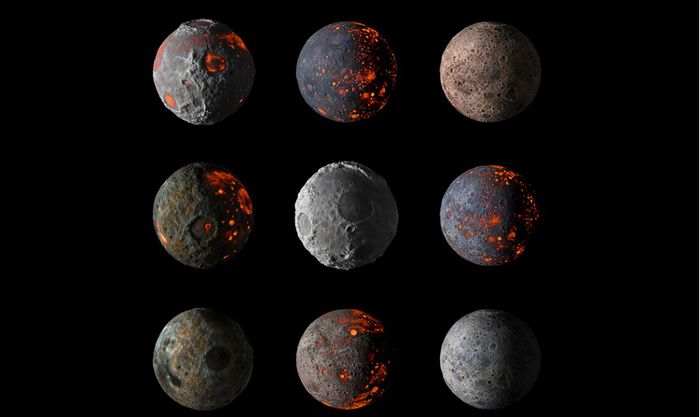
by Eric Gaidos, Professor, Department of Earth Sciences, University of Hawaii at Manoa

QOMBINE seminar by Lyudmila Turowska (Chalmers University of Technology and University of Gothenburg)
The derived category of a Fano variety will often have a semiorthogonal decomposition consisting of a sequence of exceptional line bundles and a remaining subcategory, which we will call the Kuznetsov category. The categorical Torelli problem asks whether knowing this category up to exact equivalence is enough to determine the variety up to isomorphism. We will explain how a technique based on a computation of the Hochschild-Serre algebra of the category shows that the answer is yes in many cases, including many weighted hypersurface and a Veronese double cone. This is joint work with Xun Lin and Shizhuo Zhang.

Alessandra R. Brazzale is an Associate Professor of Statistics in the
Department of Statistical Sciences at the University of Padova. Her research interests include parametric likelihood-based inference, higher-order asymptotics, small-sample inference, measurement error, and clustering, with applications spanning the life sciences and astro-physics.
This seminar features presentations by three esteemed guests from Kyoto University, Japan on various topics within pharmacoepidemiology and public health.

Jose Beltran Jimenez, Professor of Physics, University of Salamanca, Spain.
The Section 4 seminar for Autumn 2025 will be held on Fridays at 10.15 am in room 1020.
C*-seminar by Hannes Wendt.

By Nalini Puniamoorthy, Department of Biological Sciences at the National University of Singapore (NUS)
It is time for our monthly mingle meeting. Students and employees at the institute will meet up for informal chat.

Aldo Solari is Professor of Statistics at the Department of Economics, Ca’ Foscari University of Venice. He holds a degree and Ph.D. in Statistics from the University of Padova and began his academic career at the University of Milano-Bicocca, where he was appointed Professor in 2020. His research centers on the development of statistical methods with applications in biostatistics, genomics, and neuroscience. He has received the Hans van Houwelingen Biometry Award and the Rita Levi Montalcini Award.
By Lynn Martin from the Department of Global, Environmental, and Genomic Health Sciences, University of South Florida, USA
Virasoro constraints were recently formulated for moduli of sheaves. The main difference compared to Gromov-Witten theory lies in the linearity of the former which allowed us (B.-Lim-Moreira) to derive sheaf-theoretic constraints from the geometric vertex algebras of Joyce. Our approach applies to more general linear categories. For both sheaves and representations of quivers, I will explain that Virasoro costraints determine primary states of the vertex algebra. This is already sufficient to illustrate the formulation for any linear theory, and it leads to the proof of many results via wall-crossing.
By Simon Martin from the University of Edinburgh

Halim Kusumaatmaja is a Professor at the School of Engineering of the University of Edinburgh. His research group is interested in Multiscale Fluid Mechanics, Soft Matter and Biophysics at the interface between Engineering, Physics, Applied Mathematics, Chemistry, and Biology.
C*-algebra seminar by Haripada Sau (IISER Pune)
By Roger Pielke Jr. from the American Enterprise Institute and University of Colorado Boulder

Umberto Picchini is interested in Bayesian inference for stochastic modelling, stochastic differential equations, simulator-based methods for inference, applications in biology and medicine. He prefers music pre 2000s. He is a professor in Mathematical Statistics at Dept Mathematical Sciences in Göteborg.

By Dr. Holger Klinck from Cornell University, USA

Mattia Gazzola is Associate Professor in the Mechanical Science and Engineering Department at the University of Illinois Urbana-Champaign. His work lies at the interface between mechanics, biology, robotics, and computing.