Tidligere arrangementer - Side 7

Konstantin Holzhausen will defend his thesis "Learning Robust Representations in Neural Network Models" for the degree of Philosophiae Doctor at the University of Oslo, Faculty of Mathematics and Natural Sciences.
Experimental Characterization and Analysis of an Electron Emitter for Spacecraft Applications
Binding, internalization and retention kinetics of ²¹²Pb-labelled PSMA ligand in PC-3 PIP cells

Doctoral candidate Jack William Whattam at the Department of Geosciences, Faculty of Mathematics and Natural Sciences, is defending the thesis Volcanic evolution in continental-rift settings: New constraints from the eruptive and compositional evolution of volcanism in the Oslo Rift for the degree of Philosophiae Doctor.

Patrick is a Professor and Directior of Undergraduate Studies at the university of Minesota

Katarzyna Michałowska will defend her thesis "Physics-Informed Machine Learning for Scientific and Industrial Applications" for the degree of Philosophiae Doctor at the University of Oslo, Faculty of Mathematics and Natural Sciences.
By Dr. Eirik Gramstad, researcher, High energy physics, UiO.

How can machines and humans learn together to improve rehabilitation outcomes? In this seminar, Associate Professor Ulysse Côté-Allard will present cutting-edge research on the use of wearable biosensors and machine learning to create adaptive, intuitive control systems for rehabilitation technologies. Learn how co-learning and self-learning approaches enable these systems to respond dynamically to muscle activity, paving the way for more personalized and effective human-computer interaction in assistive technology.

by Joanna Dziadkowiec
NJORD, UiO
Recipient of the Else-Ragnhild Neumann Award 2024

Join us at the dScience Lunch Seminar where Andreas Carlson, Professor at the Department of Mathematics, will present how fiber geometry can be used to control droplet flow. He will discuss how droplets move on fibers, the flow regimes on twisted fibers, and how these insights can be applied to improve water harvesting with fog nets.

Roland is a Professor at Chalmers University of Technology in Göteborg.

The PhD special event highlights a diverse spectrum of research topics, ranging from statistical methods for change detection and methane emission analysis using drones, to the role of electric vehicles in renewable energy integration, trustworthy AI through explainability and fairness, and advances in data-constrained language modeling.
Join us at the Science Library on May 8, 2025, from 12:00 PM to 1:15 PM.
Anna Pachol, Universitetet i Sørøst-Norge
Weekly Theory Seminar.

Mariana is an assistant professor in the Laboratory of Complex Systems at the National University of Distance Education (UNED).
Immunogenic p-STAT1 Signaling in Two Mouse Oral Cancer Cell Lines after X-ray and Proton Irradiation
Cecilie Glittum, Helmholtz-Zentrum Berlin
Weekly Theory Seminar.


How can ethical principles keep pace with rapidly evolving AI in healthcare? In this seminar, PhD researcher Jonathan Adams presents structured methods that combine philosophical foundations with practical tools to guide ethical AI development.
Immunogenic Signalling and Survival of Mouse Oral Cancer Cells Following X-ray and Proton Irradiation
Neural Encoding in the Medial Entorhinal Cortex of Mice: Exploring Spatial and Non-Spatial Encoding through Computational Methods

Ph.d.-kandidat Stephen Paul Michalchuk ved Institutt for geofag, Det matematisk-naturvitenskapelige fakultet, vil forsvare avhandlingen Fracturing, fluid-rock interactions, and metamorphism in lower-crustal pseudotachylyte-bearing faults for graden Philosophiae Doctor.
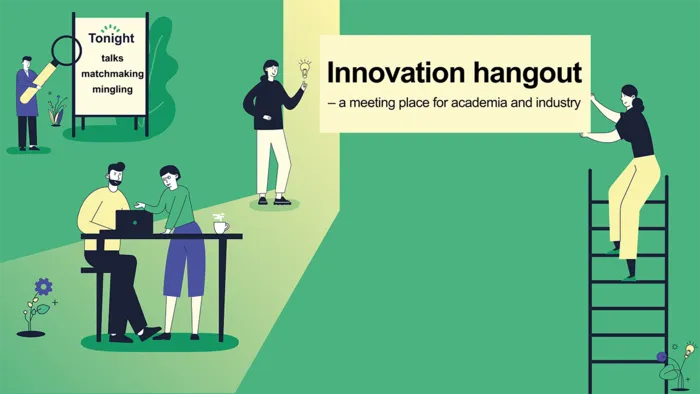
Welcome to this meeting place where we want to inspire researchers and students, give them self-confidence and knowledge about the innovation process, help them build networks, and facilitate collaboration between academia and industry. This hangout is a collaboration with Oslo Cancer Cluster and Oslo Cancer Cluster Incubator.

This talk delves into the use of large language models (LLMs) for text production, critically examining the consequences of using generative AI for PhD candidates and master’s students.
Elena Mamonova, PhD fellow at the Centre for Planetary Habitability (PHAB), University of Oslo

Join us at the Science Library on April 3, where theoretical physicist Morten Hjorth-Jensen explores how Quantum Technology and Artificial Intelligence are shaping the world of tomorrow. Learn how these powerful tools intersect, what they mean for science and society, and where the frontier of innovation is headed.

Nibir Mandal is currently a senior professor in the Department of Geological Sciences at Jadavpur University in India.

Discover the Tsetlin Machine, an AI method that learns logical, human-understandable rules while matching neural networks in performance. Led by Prof. Ole-Christoffer Granmo, this seminar covers its fundamentals, applications, and recent advancements.
Open to students and researchers. Free event sponsored by Norwegian AI Cloud (NAIC). Register now!

How can we make sense of messy, limited data in the search for better cancer treatments? In this week’s dScience Lunch Seminar, Professor Manuela Zucknick presents a powerful probabilistic modeling approach that tackles the challenges of small, noisy datasets in high-throughput drug combination screens—paving the way for more precise and reliable predictions in oncology.

Sarah is a research director and professor, working at NORCE Energy and the University of Bergen.

How can we integrate complex models with real-world data under uncertainty? At this week’s dScience Lunch Seminar, Berent Ånund Strømnes Lunde from Equinor will discuss ensemble-based data assimilation, a method used in fields like weather forecasting and subsurface modeling. He will introduce the Ensemble Information Filter (EnIF), an approach that improves statistical efficiency, removes ad-hoc localization, and addresses key challenges in large-scale systems. Join us for a discussion on the future of data assimilation and its applications.

DSTrain Workshop at Thon Hotel Opera, Oslo. The workshop covers key transferable skills, including open science and data sharing strategies and how to conduct interdisciplinary research. With expert talks, postdoctoral presentations, and discussions.
Invitation-only workshop.

Charlotte is a professor at the Institute of Light and Matter (ILM).

How do we communicate with chatbots, and how does artificial intelligence influence democracy? Join us at the dScience Lunch Seminar at the Science Library for a discussion on these pressing questions. Linguists Ingrid Lossius Falkum and Nicholas Allott will explore how humans perceive and interact with AI-powered language models, while political scientist Rune Karlsen will present research from the KnowAI project, investigating AI’s role in shaping political knowledge, public opinion, and democratic processes.
by Prof Sunniva Siem, NNRC director, UiO

Equinor invites dScience Partner Program members to a closed Thematic Working Group (TWG) workshop on AI/ML for anomaly detection in time series. Partners will share insights from key projects, discuss common challenges, and explore solutions for the future. The goal is to foster collaboration and identify potential joint research initiatives.
Invitation-only workshop.

Cyprien is an associate scientist at the French National Centre for Scientific Research(CNRS), Europe’s largest fundamental science agency.

Masih Mojarrad will defend his thesis "Synergy of Superconductivity with Liquid Hydrogen in the Maritime Industry" for the degree of Philosophiae Doctor at the University of Oslo, Faculty of Mathematics and Natural Sciences.

Join us in the dScience Lounge for a talk by Ágnes Király on the anisotropic mechanical behavior of rocks—how their textures influence deformation from the Earth’s crust to its core.
Seismic anisotropy is often discussed, but what about viscous anisotropy? Ágnes will explain how rock textures shape both elastic and viscous behaviour and discuss modeling techniques.

We invite all levels of students in the Electronics, Informatics and Technology (ELITE) study program (and others that are interested) to company presentations. Do you want to see some possibilities you'll have in the job market? Apply for a summer job? Meet and greet your future self?
Then come and listen and talk to representatives of technology companies in Norway that develop microelectronics and sensor technology!

Ph.d.-kandidat Paiman Shafabakhsh ved Institutt for geofag, Det matematisk-naturvitenskapelige fakultet, vil forsvare avhandlingen Imaging and Numerical Modeling of Fluid Mixing in Rocks with Evolving Porosity for graden Philosophiae Doctor.

The forum will unite leaders, management and decision makers from universities, public sector and industry to benchmark and share policies and best practices for impactful research and development collaborations.

Harish Pruthviraj Jain will defend his thesis "Collective Emergent Behaviour of Active Cellular Systems" for the degree of Philosophiae Doctor at the University of Oslo, Faculty of Mathematics and Natural Sciences.

Doctoral candidate Harish Jain at the Department of Physics, Faculty of Mathematics and Natural Sciences, is defending the thesis "Collective emergent behaviour of active cellular systems" for the degree of PhD.

Join us for our weekly lunch seminar with Øystein Sørensen. Learn how intensive longitudinal data from apps and wearables can reveal complex patterns in psychological research. Øystein Sørensen will present a method to improve dynamic structural equation models (DSEMs) using regression splines, making them more flexible and accurate. He will also discuss the benefits of using Stan and key challenges in analysing such data.
Informasjonsmøte for kunstnere om årets utlysning i MN-fakultetets gjestekunstnerprogram REAL kunst.
.jpg?alt=listing)
Alexander is Professor of music technology and Director of RITMO Centre for Interdisciplinary Studies in Rhythm, Time and Motion (IMV) at the University of Oslo.
Karrieredagen ved Fysisk institutt har tidligere blitt organisert av studenter fra Fysisk Fagutvalg, men nå ønsker vi å starte en egen forening for å organisere denne dagen. Bli med!
by Assoc Prof Judith Reindl, Biophysics and Medical Physics, Department of Physics, UiO.

Join us for this week’s dScience Lunch Seminar with Krubeal Danieli as he explores how bio-inspired AI enables flexible navigation. His research, drawing on neuroscience, models how the brain forms internal maps in real time, allowing agents to explore and navigate without extensive training. This talk bridges the gap between neuroscience and AI. Complimentary lunch included!