Tidlegare arrangement - Side 94

Arnold Mathijssen is an Assistant Professor at the Department of Physics & Astronomy at the University of Pennsylvania.

Hylleraas seminar, hosted in Tromsø
I will go through my PhD work at DTU. It is about the development of a fully-nonlinear finite difference based potential flow solver which imposes all of the fluid boundaries via an immersed boundary method. The convergence and stability of this approach is first established for various linear and nonlinear wave propagation problems. When it comes to the wave-body interaction problem, cautious attention is paid to the intersection point between free surface and body surface, and a scheme which meets the accuracy and stability requirements best is picked from several proposals. With the scheme introduced in this paper, piston type wave maker and forced heaving cylinder cases with high oscillation frequency have been simulated successfully.
Internal solitary waves (ISWs) are underwater waves of great amplitude moving horizontally in the layered ocean. The waves induce a velocity field which is felt both at the ocean surface, throughout the entire water column, and at the bottom. When of great amplitude, the waves induce a vortex wake in the bottom boundary layer behind the wave and transport water in the vertical direction displacing, e.g., sediments from the bottom. A fundamental mechanism in the ocean ecosystem is the vertical mixing and movement of particles, e.g., biological materials. In this talk, we present numerical simulations of ISWs of depression and of large amplitude by replicating a laboratory experiment. Furthermore, we discuss the dynamics of ISW-sediment interactions and illustrate particle movements, trajectories, and particle distribution in the water column under the influence of ISWs of large amplitude.
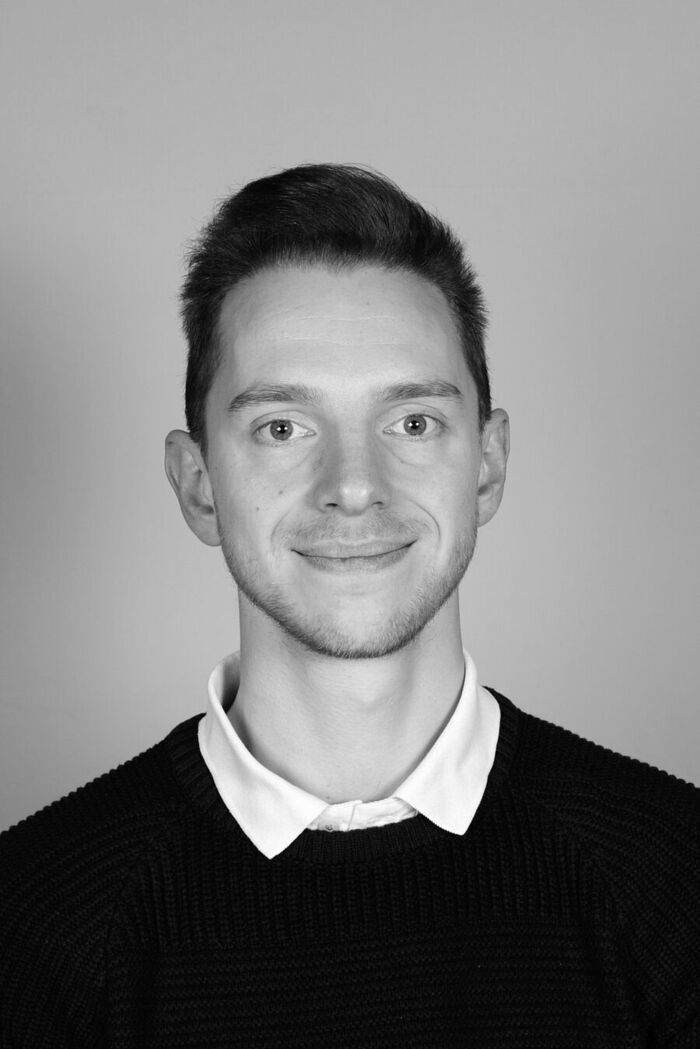
Quentin Noraz, Postdoctoral Fellow at Rosseland Centre for Solar Physics, University of Oslo.

Doctoral candidate Eleonora Piersanti at the Department of Mathematics will be defending the thesis Parameter-robust formulation and preconditioning of poroelasticity equations for brain modelling for the degree of Philosophiae Doctor.
A two-days meeting of the Steering Council for Centre International de Mathématiques Pures et Appliquées (CIMPA).
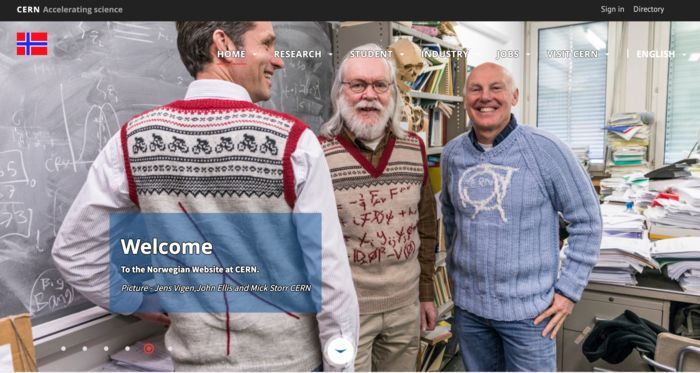
Felleskollokvium by Heidi Sandaker, Head of the Norwegian Center for CERN-related research (NorCC)

Vi ønsker bedrifter samt studenter fra Det medisinske fakultet og Det matematisk-naturvitenskapelige fakultet velkommen til matchmakingsarrangement. I etterkant av arrangementet kan studentene søke sommerjobb i bedriftene.
C*-algebra seminar by Ole Brevig (University of Oslo)

Would you like to improve your skills and knowledge in English for academic purposes?

GEMINI-senter for småsatellitter ved SFI Senter for romsensorer og –systemer (CENSSS), NTNU og SINTEF inviterer norske aktører, studenter og interessenter i småsatellitter til Norsk mikrosatellittkonferanse 2023, tirsdag 7. februar fra 10.00-18.30.

Vivek Prakash is an Assistant Professor in the Department of Physics, and a secondary faculty in the Departments of Biology, and Marine Biology & Ecology (RSMAS) at the University of Miami.
Why is deep learning so successful in many applications of modern AI? This question has puzzled the AI community for more than a decade, and many attribute the success of deep learning to the implicit regularization imposed by the Neural Network (NN) architectures and the gradient descent algorithm. In this talk we will investigate the implicit regularization of so-called linear NNs in the simplified setting of linear regression. Furthermore, we will show how this theory meets fundamental computational boundaries imposed by the phenomenon of generalized hardness of approximation. That is, the phenomenon where certain optimal NNs can be proven to exist, but any algorithm will fail to compute these NNs to an accuracy below a certain approximation threshold. Thus, paradoxically, there will exist deep learning methods that are provably optimal, but that can only be computed to a certain accuracy.
Vegard Antun is a postdoctoral fellow at the University of Oslo, department of Mathematics.

Hylleraas seminar, hosted in Oslo
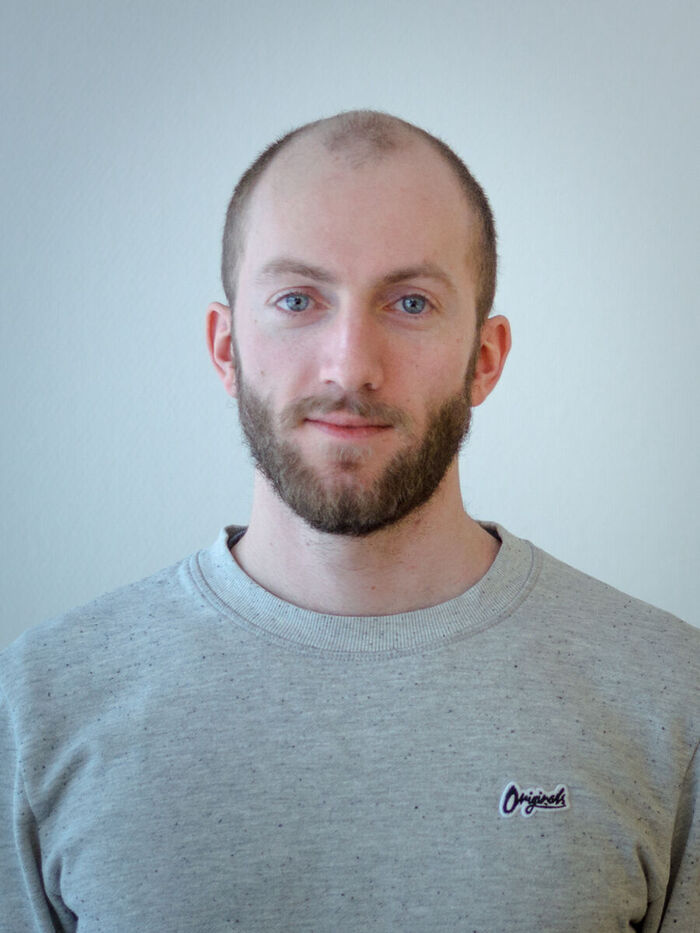
Harald Thommesen, Postdoctoral Fellow at Institute of Theoretical Astrophysics, University of Oslo.

Doctoral candidate Julian Fuhrer at the Department of Informatics, Faculty of Mathematics and Natural Sciences, is defending the thesis Implicit Encoding of Seemingly Unstructured Auditory Stimuli for the degree of Philosophiae Doctor.

Dag Hessen forteller om sin metode for formidling på Formidlingsforum på MN på Realfagsbiblioteket, der du kan møte kollegaer med interesse for formidling, for gjensidig inspirasjon og erfaringsutveksling.
Niklas Karlsen: How do we prepare pre-service teachers to teach the use of programming in a subject-specific context? Should they first learn programming independently of subjects? How do they navigate the challenges related to the learning and teaching of programming? How can programming be integrated into subjects?

Matej Pec is a Victor P. Starr CD Assistant Professor at
Massachusetts Institute of Technology Dept. of Earth, Atmospheric & Planetary Sciences
Boris Odinot, Head of Growth of grasple.com, a non-profit Ed-tech company in the Netherlands, will present about how their platform can be used to help students practice mathematic and statistics, and for teachers to monitor their students' performance.

Hylleraas seminar, hosted in Tromsø

Doctoral candidate Farzan Majeed Noori at the Department of Informatics, Faculty of Mathematics and Natural Sciences, is defending the thesis Multimodal Deep Learning Approaches for Human Activity Recognition for the degree of Philosophiae Doctor.

På fjerde arrangement i seminarrekken Perspektiver på tenkning skal Brynulf Bakkenget (Høgskolen i Innlandet) fortsette samtalen om Paul Ricoeurs metode og tenkning.