Tidlegare gjesteforelesninger og seminarer - Side 29
Stephen Hladky presents work in collaboration with Margery A. Barrand (both Department of Pharmacology, University of Cambridge).
Abstract: Extravascular fluxes of marker substances and some wastes are sufficiently fast that there is almost certain to be a component of flow augmenting their diffusion in the parenchyma. There have been two major proposals for how this flow is produced and where it is important. The evidence for the classical and glymphatic hypotheses will be reviewed. Extravascular, and in particular perivascular, routes for fluid movement out of the parenchyma to lymphatics may be important in the development of hydrocephalus.

Benjamin Keller, Department of Physics and Materials Science, University of Memphis.
I will explain how motivic homotopy theory can be used to attack problems regarding finite projective modules over smooth affine k-algebras. I will recall in particular the foundational theorem of Morel and Asok-Hoyois-Wendt, and the construction of the Barge-Morel Euler class. Time permitting, I will explain recent progress on Murthy's splitting conjecture.
C*-algebra seminar talk by Marco Matassa (OsloMet)
Dr. Douglas Rowland, NASA/Goddard Space Flight Center
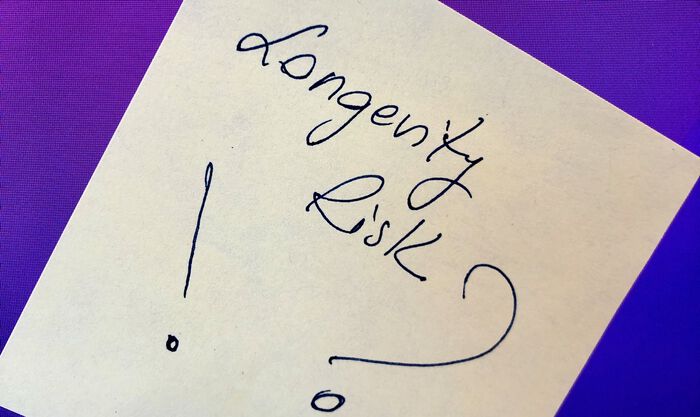
Financial risk arising from the increasing of life expectancy. This is all in a nutshell. To know more, come to the lecture: forecasting, modelling, quantification.
We combine a systematic approach for deriving general a posteriori
error estimates for convex minimization problems using convex duality relations with a recently derived generalized Marini formula. The resulting a posteriori error estimates are essentially constant-free and apply to a large class of variational problems including the p-Dirichlet problem, as well as degenerate minimization, obstacle and image de-noising problems.
For the p-Dirichlet problem, the a posteriori error bounds are equivalent to the classical residual type a posteriori error bounds and, hence, reliable and efficient.
By Kristian Ebbesen Hanghøj from the University of Copenhagen, Denmark

Saghir Bashir, ilustat & Centre of Statistics and its Applications (CEAUL), Faculty of Sciences, University of Lisbon.
Abstract (PDF)
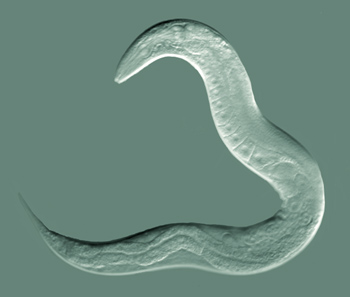
Welcome to the first seminar of the semester, where there will be a light lunch and talks Dr. Pooja Kumari (Ciosk group) and Alexandre Gidon (Progida group).
José Carlos Nieto Borge is a marine physicist and associate professor at the Universidad de Alcalá de Henares, Spain.

Daniel Herman, PhD student at Institute of Theoretical Astrophysics, University of Oslo.
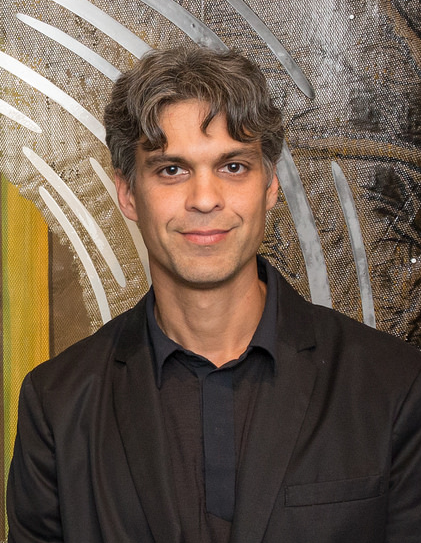
Enrico Ramirez-Ruiz, Astronomy & Astrophysics Department, University of California, Santa Cruz
We consider the linearized elasticity equations, discretized using multi-patch Isogeometric Analysis. To solve the resulting linear system, we choose the Dual-Primal Isogeometric Tearing and Interconnecting (IETI-DP) Method with a scaled Dirichlet preconditioner. We are interested in a convergence analysis. See more details below.
We will present the results of numerical experiments that demonstrate our theoretical findings.

Romain Teyssier, Department of Astrophysical Sciences, Princeton University (USA).
By Carl André, University of Gothenburg, Sweden
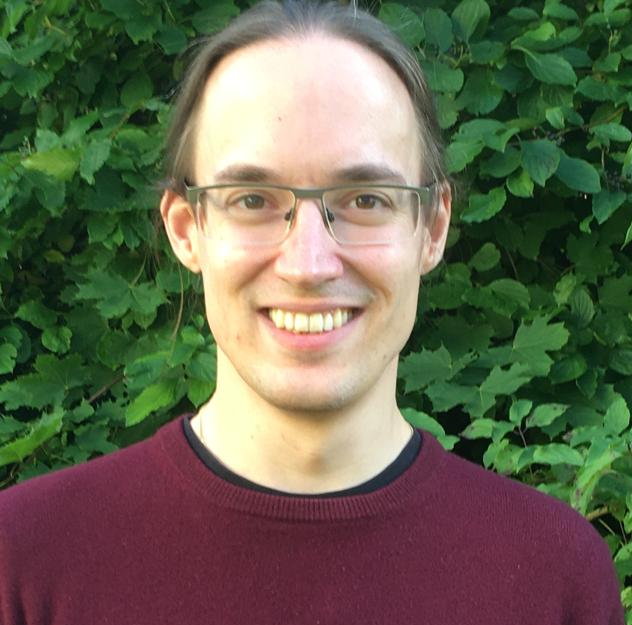
Rüdiger Pakmor, Max Planck Institute for Astrophysics, Germany.
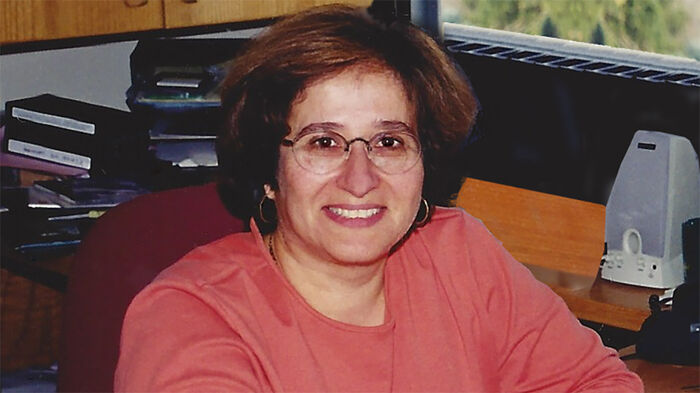
Professor Elaine Cohen (University of Utah) kreeres til æresdoktor ved UiO. I den forbindelse vil hun holde en forelesning: Mathematics and Geometric Modeling: Similar Ingredients, Distinct Goals.

Juan Camilo Guevara Gomez, PhD student of Rosseland Centre for Solar Physics (RoCS), Institute of Theoretical Astrophysics, UiO.
I will discuss the question in the title. This is joint work with Alex Degtyarev and Ilia Itenberg. This will be a talk involving very classical topics in algebraic geometry. I will try to make the talk accessible to students at master- and PhD level.
QOMBINE seminar by Daniel Stilck Franca (ENS Lyon)
C*-algebra seminar talk by Pinhas Grossman (University of New South Wales)
By Leif Egil Loe, NMBU, Ås