Tidlegare arrangement - Side 118

Matematikken er en viktig faktor i det store samfunnsregnskapet.
IMO 2022 inviterer, sammen med sine partnere, til en rekke frokostseminarer der matematikkens betydning belyses fra flere perspektiver.
We have the pleasure of having three speakers, Miria Grisot, Jens Kaasbøll, and Sundeep Sahay, presenting some of the latest research projects on digitalization and health.
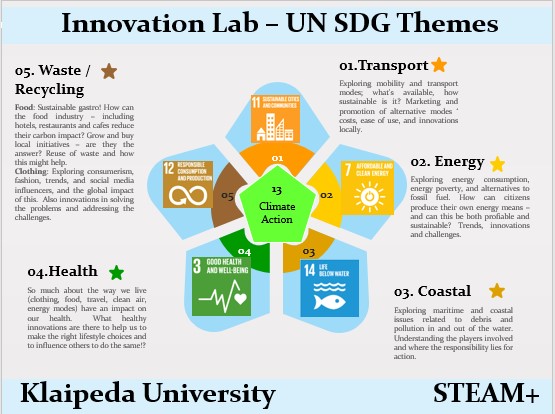
Please join our new digital transdisciplinary lab organized by our Klaipeda University partner. The main topic will be Sustainable Solutions for a Harbour City. We invite 3 to 5 students and one teacher to join our new transdisciplinary lab that will take place online during 22 of November-3 of December. The first 2 days students and teachers will attend lectures from different speakers and after that they will have to choose one or more topics from the picture under, identify such a challenge in the University campus and work together with others in order to find innovative solutions.

Doctoral candidate Bente Konst, at the Department of Physics, Faculty of Mathematics and Natural Sciences, is defending the thesis Development of novel methods for quality control and optimization of digital planar X-ray and fluoroscopic imaging for the degree of Philosophiae Doctor.

Hylleraas seminar, hosted in Oslo
Abstract: Swimming bacteria, growing cell tissues, molecular motors, and microtubule systems confined to a substrate are examples of active matter films that exhibit long-range nematic (orientational) order. Intrinsic activity in these systems builds mechanical stresses that tend to destroy local nematic order through topological defects, which act as sources of persistent active flows. The overall evolution and functionality of biological matter is greatly influenced by these orientational defects. Yet, their formation and dynamics are driven by a complex interplay between topological singularities in the nematic order and active flow instabilities, and this is not completely understood.
Click title to continue reading abstract...

Prof. Per Barth Lilje, Institute of Theoretical Astrophysics, UiO.


Msc. Julie Denise Josette Héron at the Department of Chemistry, Faculty of Mathematics and Natural Sciences, is defending the thesis «C-H Activation and CuAAC Reactions with 1,8-Naphthyridine Based Dicopper Complexes from a Computational Perspective» for the degree of Philosophiae Doctor.
Recently graduated PhD students will share experiences of their own career paths, and you will get feedback on your CV.

Doctoral candidate Jonas van den Brink at the Department of informatics, Faculty of Mathematics and Natural Sciences, is defending the thesis Computing Microscopic Structure-Function Relationships in Contraction of the Heart for the degree of Philosophiae Doctor.
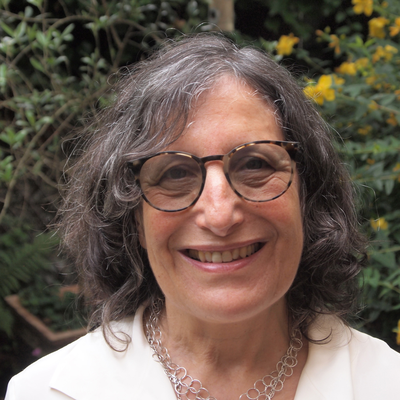
The Information System Seminar Series features, Elaine Unterhalter, Professor of Education and International Development, UCL Institute of Education, University College London, UK
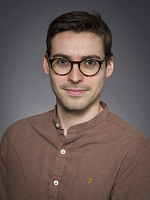
Louison Thorens will defend his thesis Unstable drainage of frictional fluids and magnetic control of the mechanical behavior of confined granular media for the double degree of Philosophiae Doctor at the University of Oslo, Faculty of Mathematics and Natural Sciences and Docteur en Physique de l'Université de Lyon.
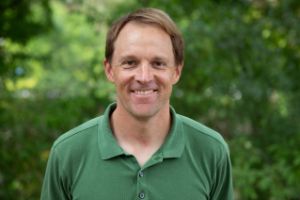
While “science practices” are featured heavily in current reform efforts, such efforts do not automatically result in opportunities for students to actively shape science knowledge practices.
When students are denied opportunities to shape science knowledge practices, and receive messages that their ideas, experiences, and communities are unscientific,philosophers name such harm as epistemic injustice.
To disrupt epistemic injustice, I use lenses from fields such as the History and Philosophy of Science to examine how students become transformative epistemic agents in their schools and communities by co-developing science knowledge and practices with teachers.

For many real-life phenomena one may assume that the units of observation, typically patients, transition through a set of discrete states on their way towards an absorbing state. The states often constitute various stages of a disease, from perfect health through various stages of dementia for example. Multi-state models are a class of statistical models which allow us to study the time spent in different states, the probability of transitioning between states, and the relationship between these quantities and covariates of interest. In many applications the transition times between states are not observed exactly; instead, the current state of the patients is queried at arbitrary times. The transition times are therefore interval censored, and this makes inference and modelling challenging. Most current approaches are based on the Markov assumption, for example the simplest parametric model available - the time-homogeneous Markov model. Here, we propose a new, general framework for parametric inference with interval censored multi-state data. Our models allow non-Markovian behaviour. I will present the framework and an algorithm for the automatic construction of the likelihood function, along with real-data examples. This talk is based on joint work with Marthe Aastveit and Nils Lid Hjort.
Teachers hold immense power in classrooms to open up or constrain opportunities for student learning.
While watching teachers enact equitable instruction is wonderful, we know that teachers are not born being able to help all students learn. How, then, can we prepare new teachers to enact equitable instruction?
Here, I will describe teacher educator pedagogies as we design and enact opportunities for preservice teachers to learn about, rehearse, and receive feedback regarding their emerging instruction. I will also describe design-based research conducted with preservice teachers to examine extended opportunities to rehearse equitable instruction in methods courses.
David Stroupe, en av forfatterne av boka Preparing science teachers through practice-based teacher education. Og her betyr ikke «practice» bare/først og fremst skolepraksis, men praksiser – altså ting læreren gjør i klasserommet – som fremmer læring, basert på boka Ambitious science teaching.
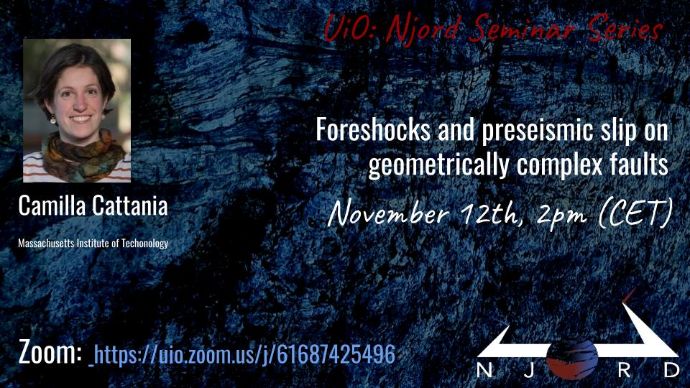
Njord Seminar with Camilla Cattania (Massachusetts Institute of Technology): How do earthquakes begin? Numerical and theoretical insights into the nucleation processes of small and large earthquakes
In US higher education—and especially the STEM (science, technology, engineering and mathematics) disciplines - women, first-generation college students, and students belonging to certain racial or ethnic groups enter exhibit greater attrition than do their male peers, a gap that continues throughout the professions.
Abstract: Exchange processes across a porous-medium free-flow interface occur in a wide range of environmental, technical, and bio-mechanical systems. In the course of these processes, flow dynamics in the porous domain and in the free-flow domain exhibit strong coupling, often controlled by mechanisms at the common interfaces. Such processes need to be analyzed on small scales and new scale-bridging modeling concepts need to be developed for an accurate description also on larger scales (REV scale). Recent developments within the Collaborative Research Center "Interface-Driven Multi-Field Processes in Porous Media – Flow, Transport and Deformation" and the Cluster of Excellence SimTech at the University Stuttgart regarding such aspects for coupled free-flow and porous-medium flow systems will be presented in this talk.
This talk is part of the Mechanics Lunch Seminar series. Bring-your-own-lunch and lots of questions.
Abstract: We present a second-order numerical scheme to compute capillary bridges between arbitrary solids by minimizing the total energy of all interfaces. From a theoretical point of view, this approach can be interpreted as the computation of generalized minimal surfaces using a Newton-scheme utilizing the shape Hessian. In particular, we give an explicit representation of the shape Hessian for functionals on shells involving the normal vector without reverting back to a volume formulation. From an algorithmic perspective, we combine a resolved interface via a triangulated surface for the liquid with a level-set description for the constraints stemming from the arbitrary geometry. The actual shape of the capillary bridge is then computed via finite elements provided by the FEniCS environment, minimizing the shape derivative of the total interface energy.
This talk is part of the Mechanics Lunch Seminar series. Bring-your-own-lunch and lots of questions.

Honorary Prof. Jean-Pierre Eckmann, University of Geneva, Switzerland.
The course focuses on raising awareness about and mapping your competency. Recently graduated PhD students will also share experiences of their own career paths.
Doctoral candidate Summaya Mumtaz at the Department of informatics, Faculty of Mathematics and Natural Sciences, is defending the thesis Hierarchy-based Similarity Measures and Embeddings — Supporting Machine Learning by Knowledge for the degree of Philosophiae Doctor.